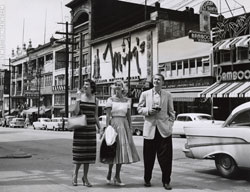
While
times are changing for the better, most men drink cheap beer,
highballs, or sugar-filled shots. Thanks to the growing classic cocktail
trends in today's large city bars, the growing number of small
distilleries and breweries, and television shows like Mad Men and
Boardwalk Empire, more and more are becoming interested in better
quality products and more traditional drinks. The mid to late 19th
century was the Golden Age of mixed drinks, led by the 'grandfather of
mixology,' Jerry Thomas, who in 1862 was the first to publish an
all-encompassing tome of bartending. Many great drinks and products were
lost during Prohibition, and while the practice of drinking well did
continue to a lesser extent from the 1930's until the 1960's, it is for
the most part the great classics from the Golden Age that survive today.
A distinguished gentleman appreciates these drinks for their taste and
history, and cares for the manner in which they are made. This
sophisticated man knows there is only one Martini, that anything called a
"cocktail" must contain bitters, and that an Old-Fashioned must never
contain juice or soda. Below are five classic drinks for this
distinguished gentleman.
(As
per the previous posts on Classic Cocktails for a Fancy Lady,
drink-preference should not be gender specific, and the purpose of this
post is historical. Furthermore, should any lady deem herself too
dangerous to be fancy, any of the following make excellent substitutes
as cocktails for a femme fatale.)
Old-Fashioned
This
is the drink with the most variations, the source of so many debates,
the biggest growing popularity, yet one of the most misunderstood.
Thanks to Donald Draper on TV's Mad Men (who, by the way, makes a terrible
Old-Fashioned), this drink is now ordered by droves of non-experienced
drinkers. This is an exciting trend. The disappointing news is that
practices from the dark ages of drinking (the 1970's to the 1990's) are
still alive today, and the drink is often ruined or just unrecognizable.
It is a finicky drink to maintain the balance of so few ingredients,
and of course most everyone prefers his or hers a slightly different
way. The drink’s history is a confusing one because it refers to a style
and not one particular drink. In the early to mid 19th century, The Sling
was a popular mixed drink that contained only spirit, sugar, water, and
perhaps a grate of nutmeg. At some point bitters was added to the mix,
birthing the “Bittered Sling,” which came be known as the “Cock-tail.”
Faster than you can mix one up, variations were born. Fruits here and
liqueurs there muddled up the original, and purists and old-farts began
to request their Cock-tails the “old-fashioned way.” Over time this
simply became an “Old-Fashioned.” Anything beyond the Bittered Sling
recipe is not an Old-Fashioned, though very small embellishments
included in Jerry Thomas’ variations (namely orange or lemon oil) are
welcomed. The recipe below is from “Modern American Drinks” by George
Kappeler in 1895, and is the best way to make a proper Old-Fashioned.
(Note the absence of juice, muddling, soda, or any liqueur.) The type of
bitters and spirit is up to the drinker and trying new combinations
makes for a multitude of exciting options (try brandy and Peychaud’s,
tequila and chocolate, or gin and Boker’s for example).
2oz whiskey
2 dashes Angostura bitters
1/2tsp of sugar (or one small sugar cube)
1 piece of lemon peel
Dissolve
the sugar with a little water in a whiskey-glass [Old-Fashioned or
rocks glass]; add bitters, a small piece ice, a piece lemon-peel, and
whiskey. Mix with a small barspoon and serve.
"A
small piece ice" can be substituted today with a few nice cubes (don't
ruin the drink with small, watery ones), and the lemon peel can be
swapped for orange if you please. Express the oil of the peel over top
of the drink for best effect. A common practice is to soak the sugar in
both water and bitters before adding ice and spirit.
Sazerac
Ordering
this drink more than five years ago would have gotten you strange
looks. Because of its history and fantastic taste, it was and is an
obscure favourite among cocktail enthusiasts. Many claims are made to it
being the oldest cocktail, but this is not true. We’ve tracked its
inception to 1850's New Orleans in a slightly different form than we
most often enjoy now. The Sazerac is the product of two smart men: one
who imported the Sazerac de Forge et Fils, and the other who changed the
name of his bar to "Sazerac House," where the cocktail was first made
and became popular, thus naming it the "Sazerac Cocktail." Peychaud's
bitters was literally made down the street, so it was the obvious
choice. The first printed recipe in 1908 called for “good whiskey”
(which in New Orleans means straight rye) at which point Cognac had
become less abundant. The drink's flavour is dry and spicy, and the
union of Peychaud's, absinthe, and rye (or Cognac for that matter) is
something truly special. Again, the process of making the drink is
important for both flavour and anticipation, so follow it closely. Use a
good quality spirit, preferably a higher-proof and spicy rye, absinthe
if you can, raw sugar, and lastly you can substitute Bitter Truth Creole
Bitters for Peychaud's (but go with one fewer dash as it's more
potent).
2 oz straight rye whiskey [or Cognac]
1 sugar cube
2-3 dashes Peychaud's bitters
Absinthe
Lemon peel
Fill
an Old-Fashioned or Sazerac glass with cracked ice. Put the sugar in a
mixing container, add the bitters and a little water and let dissolve.
Add the whiskey, fill with ice, and stir. Dump the ice out of the glass
and pour in a little absinthe, and roll around to coat the glass before
discarding. Strain the whiskey mixture into the glass, then express the
oil from the lemon peel over top and drop it into the glass.
Manhattan
This
one is the probably the most famous and enduring of all classics,
enjoyed by many in literature and film, particularly gentlemen, but also
by bad-news ladies like Marilyn Monroe in “Some Like It Hot.” Vermouth
entered the mixed drink equation sometime in the 1870's, drastically
changing things for generations to come. Suddenly cocktails weren't just
spirits with small additions of liqueurs, bitters, sugars, and
sometimes fruits. Now spirits shared the spotlight or even had a
supporting role in many popular drinks. Arguably the first of these was
the Manhattan, made at the Manhattan Club in, yes, Manhattan. Its first
mention was in the 1870’s, its first recipe in 1884, and the closest
recipe to what we use today appeared in 1892. Early incarnations
included maraschino, absinthe, gum syrup, and no whiskey specification,
but the drink simplified over time. The type of whiskey and bitters are
still optional, and like the Old-Fashioned make for very different
drinks. A higher-proof whiskey mixes better, with rye being drier and
spicier and bourbon being fuller and sweeter. Always stir, never shake,
serve up and not on the rocks, and the garnish is always optional.
2oz whiskey
1oz sweet vermouth
2-3 dashes bitters
Add
ingredients to a mixing glass, add ice, stir, and strain into a
cocktail glass. Garnish with a real cherry, or a citrus peel (optional).
Martini
The
Manhattan-style cocktail at times contained gin instead of whiskey,
which became known as the Martini - the same drink save the spirit
choice. The origins of the Martini are some of the most disputed of them
all, numerous ones appearing around the same time, but the concept
remained the same. The Turf Club is the simplest, while The Fourth Degree contained absinthe, and The Martinez contained maraschino and twice the amount of vermouth. The later and most popular incarnation, The Dry Martini,
made an important change in recipe: swapping Italian vermouth for
French. As time wore on after Prohibition, Martinis got drier and drier,
reducing the vermouth down to smaller and smaller amounts. In the later
half of the 20th century good-quality vermouths were harder to come by
and the lack of knowledgeable bartenders left it sitting on shelves
instead of fresh and in the fridge, and the vermouth became essentially
non-existent. Furthermore, James Bond confused many by calling his Kangaroo Cocktail
a "Vodka Martini" (which even confused the Bond girl). A classic
gentleman does not drink a Martini with vodka, though will sometimes
drink it dry. However, a Martini without dry vermouth or bitters is not a
Martini. Below is the classic 1890's version, in which you can reduce
the amount of vermouth and swap the orange peel for a lemon if you
please. The olive is a later addition, and can mask the flavours of the
drink, but to each his own. Be sure to use fresh
vermouth - it is wine and should be kept in the fridge and will spoil
and then ruin your drink. Choose a good gin and a great vermouth.
2oz gin (Old Tom traditionally, but London Dry works just fine)
1oz dry vermouth
1 dash orange bitters
Stir ingredients with ice and strain into a cocktail coupe. Squeeze a piece of orange peel over top.
Negroni
In
1860’s Italy, Gaspare Campari invented the most famous of amari, aptly
named Campari, before settling down and opening a cafe. The signature
drink there was the “Milano Torino,”
combining Campari from Milan and Cinzano vermouth from Turin then
topped with soda. The early 20th century brought an influx of American
tourists, among whom the drink found popularity and was renamed the “Americano.”
(It found popularity elsewhere too, even being the first drink James
Bond ever ordered). In 1919, Count Camillo Negroni asked the bartender,
Fosco Scarselli, at the Caffe Casoni for a stronger version of this
drink by swapping the soda with gin. This drink subsequently became
wildly popular in Europe. In 1947, iconic director/actor Orson Welles
was working on his film "Cagliostro" in Rome, and spoke to reporters
about his new favourite drink, The Negroni,
saying "the bitters are excellent for your liver, the gin is bad for
you - they balance each other." It wasn't long before the drink became
popular in the U.S., though in the more American style it was enjoyed up
rather than on the rocks. The three ingredients balance and accent each
other beautifully, and as such the Negroni structure has been used for
numerous variations and new concepts. The most notable - drinks also
worthy of a distinguished gentleman - are the Boulevardier, which replaces the gin with bourbon, and the Old Pal,
which switches gin for straight rye and Italian vermouth for French.
While Campari is very bitter and therefore an acquired taste, it's a
worthwhile one, and the Negroni is a drink bound to be in your life for
good.
1oz London Dry gin
1oz Italian vermouth
1oz Campari
Add
ingredients together and stir with ice. Strain over rocks in an
old-fashioned glass. Garnish with a slice of orange a piece of lemon
peel.
[Photo: Cary Grant]
Part of the fun of drinking cocktails is tapping into a history and a culture of a particular time. This is a discussion of drinks, spirits, bartending, and history for beginners and professionals alike. Follow me on Twitter for more! @RhettAWilliams
Showing posts with label orange bitters. Show all posts
Tuesday, 19 February 2013
Monday, 24 December 2012
Winter Cocktails: French 75 in New Orleans
It is with great appreciation and honour that I present a whopping total of four Christmas cocktails from the historic New Orleans bar, the French 75. The bar itself was built in the late 1800's, but was renovated in the 1970's, and reinvented in 2003 with an emphasis on premium spirits and cigars, and of course the new renaissance in cocktails. This award-winning bar is the first in New Orleans to grace this site, and they have graciously contributed a handful of recipes.
"The Winter Waltz," a rye, amaro, and Christmas spice mix, is named after head bartender Chris Hannah's favourite Frank Sinatra Christmas Carol. "The Contessa" is a nod to the character in Tennesse Williams' novel, "The Roman Spring of Mrs. Stone." Contessa was the swindler in the book who introduced the Negroni to the characters in tho novel.
Winter Waltz
2 oz Rye Whiskey
1/2 oz Averna Amaro
1/4 oz St. Elizabeth's Allspice dram
2 dashes Angostura bitters
Shake with ice, strain into cocktail glass, garnish with star anise.
Dicken's Toddy
2 oz Wild Turkey bourbon
1/2 oz Maple Syrup
3 dashes Angostura Bitters
Build like and Old-Fashioned in a rocks glass with ice, garnish with an orange peel and a cherry.
Contessa
3/4 oz London Dry Gin or Plymouth Gin
3/4 oz Aperol
3/4 oz Ruby Red Grapefruit juice
1/2 oz Cranberry Cordial
2 dashes Orange Bitters
Shake with ice, strain into chilled cocktail glass, garnish with an orange peel.
(We make the Cranberry cordial similar to making Cranberry Sauce)
A fairly simple alternative to making a cordial is making an infused simple syrup. By adding equal parts water to sugar (usually 1 cup) and adding fresh cranberries to the mix once the sugar dissolves over low heat, you can make a cranberry syrup to use in this and other similar Christmas cocktails).
Charante Hessian
1 1/2 oz Cognac
1 1/2 oz Pumpkin Butter
1/4 oz St. Elizabeth's Allspice dram
4 oz boiling hot water
Build in a tempered glass or mug, stir and garnish with grated cinnamon and nutmeg.
Pumpkin butter is a compound butter with added pumpkin puree.
Cheers to the French 75 team and their amazing bar in such a historically exciting city.
Merry Christmas everyone!
Labels:
allspice,
amaro,
angostura,
Aperol,
averna,
bourbon,
brandy,
christmas,
cranberry,
gin,
grapefruit,
holiday,
maple syrup,
new orleans,
orange bitters,
pumpkin,
rye whiskey,
seasonal,
whiskery,
winter
Sunday, 3 June 2012
The Vancouver Cocktail
Next in our little trip through Vancouver history is a
cocktail with a much more elusive origin - the aptly named "Vancouver."
There is no definitive record in print that I could find, no two
birthdates that matched, and only one person who claimed to have the
actual story behind it. I've only found one establishment in our city
that actually has this cocktail on the menu, and the date they list
doesn't match the only story I've found. To top it all off, despite this
cocktail achieving some popularity and it being one you can order in a
lot of craft cocktail bars, nobody seems to make it the same way.
Needless to say, this has been an interesting journey in tracking down
any information.
To start at my beginning with this drink, I first found it at West Restaurant on
South Granville, which is easily one of the best places to eat and
drink in the city. Award-winning veteran bar manager, David Wolowidnyk,
runs a solid program focusing on an even mix of classic and simple
modern cocktails using a very large selection of top-quality spirits.
His "Vancouver" is full-bodied, smooth and herbacious akin to a reverse
Martinez (i.e. two parts gin to one part vermouth) using Plymouth Gin, Punt e Mes, Angostura orange bitters, a little Benedictine, and a lemon twist. The menu lists the drink "circa 1966," yet no one there could tell me why. I did a little more hunting and tracked down a story from Steve Da Cruz, one of the minds behind the reimagining of the Waldorf Hotel (home to the oldest still-open Tiki bar in North America) and also the previous bar manager at Boneta and Chill Winston, among others. Da Cruz claims to be the one to bring this drink back to the public, and while his story overall is not without some gray areas, it's the only one I can find. In his words:
"Joe Bates dresses like one of The Dirty Dozen and drinks B&B like he owns stock in the company. He's kind of like Sean Connery and John Wayne rolled into one tough son of a bitch. His ostrich-skinned boots and ten-gallon hat are as recognizable as Gassy Jack and I've seen many women a third of his age hanging on his every word - not to mention his arm. I had already been good friends with him and one day he asked me if I had ever heard of a "Vancouver Cocktail." I said "No," so he wrote the recipe on the bar napkin for me and claimed that he used to drink them at the Sylvia Hotel when he first arrived in Vancouver in 1955."
When I asked Da Cruz about the validity of the story and if he believes it himself, he replied, "The main reason I believe him is three fold - one, he's a prison minister, two, he worked at the Bowmore distillery and is extremely knowledgeable about spirits, and three, it's too damn good to have been made up on the spot."
The final part to this tale is that actor Errol Flynn consumed two of this particular drink before flinging himself off the roof of The Sylvia in 1959, but unfortunately this is another false Flynn death story (others include him dying in the arms of an underage prostitute at Maxine's Hideaway in the West End, and another features his friends propping up his lifeless body in the lobby of the Hotel Georgia for fans to see). His death certificate simply indicates natural, if premature causes of death, namely a heart attack, but he did die in the West End of downtown Vancouver near the Sylvia Hotel and it is entirely possible he was drinking a Vancouver Cocktail at the time.
The last step of my journey took me to beautiful English Bay in the West End to visit the Sylvia Hotel itself, which, despite its hundred-year history, has fairly little to offer in a display of heritage other than its reputation. I even ended up contacting both the general manager and owner to ask if there is any record or rumour about this drink and neither of them had any idea. The hotel claims to be "Vancouver's first cocktail bar," which again didn't make sense to me because obviously Vancouverites were drinking before 1954 when the Sylvia got its license, and there are many accounts of old establishments such as the Hotel Georgia and The Cave having mixed drinks. But, that is not to say that they were serving them legally, and there is a difference between a liquor license, a liquor and dining license, and a cocktail license. I therefore can't say this is false, but perhaps a more honest wording would be "Vancouver's first legally licensed cocktail bar" - but that doesn't exactly have the same ring to it.
The 1950's marked a shift in alcohol culture in Vancouver, with legislation being passed to allow liquor, beer, and wine to be legally sold with food in restaurants for the first time in 1952, and in 1954 the famed musical venue, The Cave, became the first nightclub to be granted a "dining-lounge liquor license." Before this, Vancouver had sort of a twisted speakeasy-type of nightlife, with cabarets selling ice and soda while allowing customers to bring in their own concealed booze, and some nightclubs selling bootlegged liquor. Police raided establishments regularly, confiscating any visible liquor, which led to patrons pouring the booze into half empty soda bottles, or in Chinatown - teapots. More racially -diverse nightclubs on the East Side didn't get these kinds of licenses until 1969, again drawing out the post-Prohibition transition - a practice that in some ways continues even today. Is this perhaps the reason that it's so difficult to find details on Vancouver's cocktail history aside from law and distribution struggles? Or is it because it seems common practice to remove, "improve," and update all semblances of history that we have here in the city? From our oldest buildings, such as the aforementioned Maxine's Hideaway, which dates back to 1905 and has a colourful history filled with brothels and secret tunnels, to literally towing away our Trader Vic's and giving it to Victoria, it often seems like Vancouver has no real sense of history because we don't let anything get old enough to become historical. This makes our cocktail scene fascinating, as Vancouver is years ahead of any other Canadian city and many American cities and has become a recognized mecca for food and drink, even hosting Tales of the Cocktail for the second straight year (and a third one is already planned). The youngest coast of Canada with the harshest liquor laws and most expensive liquor prices is home to the biggest boom in cocktails and mixology. Strange.
The Vancouver Cocktail
Here is Da Cruz', or rather Bates' Vancouver recipe. As always,
particularly with simpler, older drinks, variations are about, so feel
free to experiment. A 1:1 Martinez with Benedictine instead of
Maraschino gives a sweeter, fuller drink, while the West's version
mentioned above is a very balanced and soft pre-dinner sipper, and the
one below is much more boozy but light. Da Cruz suggests Cinzano to
let it "dance lightly," but should you decide to try a West-style one,
use Punt e Mes to avoid the drink becoming too sweet. - 2 oz gin
- 0.5 oz sweet vermouth
- Dash orange bitters
- Dash Benedictine
"No stupid garnish."
(Though the lemon twist on West's version was a nice addition for balance, so take this as you will).
I always like to pair a good drink with a good song, and while the 1950's marked the explosion of rock and roll north of the border, with Bill Haley and the Comets touring through in 1956 followed by Elvis Presley and Buddy Holly the following year, I am much more interested in the lingering era of music. Sticking with Bates' 1955 and the sophisticated taste of the Vancouver Cocktail, I've chosen Doris Day, whose best-selling album and most critically-acclaimed film were both released that year - "Love Me Or Leave Me." Here is the title track from this album by one of the greatest voices in American music, Miss Doris Day.
Originally published on www.shakestir.com by Rhett Williams
Photography:
Vancouver cocktail photo by David Wolowydnik at West Restaurant
Sylvia Hotel photo by J. Dobbins Photography
Thursday, 19 April 2012
Amaro April: "Bad Apple" and "Jackson Ward" from Amor y Amargo
Through collecting new cocktails, new information, and engaging in some conversations for Amaro April I found out about a very fitting and very awesome new bar in New York called Amor y Amargo ("love and bitters") from barman Sother Teague. "AyA" is the first bar in New York (and the first I've heard of at all, actually) to "focus solely on exploring the richness of the world's bitters" - from amari, to amer, to Kräuterlikör, and so on. They have their own creations as well, including house-made vermouth on tap (for real), and being in partnership with Bittermens means they have a lot of bottlings that we'll probably never see over here (or up here - take your pick). You can even buy some of these bitters in their store, or take a class on making your own syrups and a tinctures, so it's a must if you're into bitter or trying to get there (and you should, if this month's series is any indication).
They've already racked up awards from numerous magazines and websites, and just looking at the menu and pictures of the bitters collection was inspiring me to do a little post on AyA on its own - then Sother sent me six recipes instead of just one when I asked him to contribute this month, which means I simply must do something on them and share all these delicious drinks. (The truly sad part is that all but one of the recipes include ingredients you can't buy in Canada, but some craft bars will have the good stuff and so will Washington if you take a booze-stop on your next road trip).
I'm going to share two different cocktails today, neither of which are on the menu at AyA yet, featuring two different base spirits and two different amari from two different bartenders (and it took me a long time to decide which ones to print first). One thing we haven't seen all month is any kind of brandy, so I had to go with Sother's "Bad Apple," which he describes as "floral and slightly fruity, but with a bitter punch." The amaro is familiar territory - Averna - but the bitters are an interesting one from Bittermens - the Hellfire Shrub, with flavours of spice and pepper and being a shrub, vinegar. Thankfully you can get all but one of the ingredients for this one at Legacy, Averna at $48, Antica at $75, and Yellow Chartreuse at $44, and the Bittermens are only $16 at Gourmet Warehouse. As for the apple brandy, I can't seem to find Laird's anywhere, but to substitute, there are several kinds of Calvados available at $40-50. I should also mention that the Antica is only $28, Averna is $33, and the Laird's is only $24, but surprisingly Yellow Chartreuse goes for a whopping $61. Score one for us!
Bad Apple
2oz Laird's Bonded Apple Brandy
0.75oz Averna
0.75oz Carpano Antica
1 dash Hellfire Shrub (Bittermens)
Stir with ice and strain into a Yellow Chartreuse-rinsed glass.
The next is one that really fits my tastes as a variation on the Manhattan, but, as Sother puts it, "with some lovely dark tobacco flavours and a funky bitterness." This drink comes from another AyA barman by the name of Chris Elford, who is also a distiller at King's County, a certified cicerone (beer extraordinaire), and is currently opening another two bars in Manhattan. He named his drink after a neighbourhood in Richmond, Virginia, that was named "the Harlem of the South" for its African-American arts scene. Rittenhouse and Nardini is a combination I've actually tried before at Cin Cin to great success, but unfortunately the Nardini is unavailable in Canada. It's only $28 in Washington though! Gosh I'm getting tired of writing that sort of thing. I may give up on offering buying advice soon because it's really depressing me...
As for the wormwood bitters, you can get them from Cocktail Kindgom.
Jackson Ward
2oz Rittenhouse Rye
0.75oz Amaro Nardini
0.25oz Sweet Vermouth
3 dashes Wormwood Bitters
1 dash Regan's Orange Bitters
Stir with ice. Serve up in a chilled coupe. Garnish with expressed lemon peel.
Thank you kindly to Sother and Chris for these originals, and thanks to AyA for doing something so cool and exciting!
Check out their new site here, and follow them @BRAINSNYC
Sother Teague is @CreativeDrunk
Chris Elford is @ChrisElford
and AyA can be found at @amoryamargo
Cheers!
[[ See my post on amaro digestivos here ]]
[[ See my post on amaro aperivos here ]]
[[ See a buying guide for amaro here ]]
[[ See "The One Hit Wonder" from L'abattoir in Vancouver here ]]
[[ See "The Penny Farthing" from Pourhouse here ]]
[[ See an introduction to amaro here ]]
[[ See "The Imperial Eagle" from Bourbon & Branch here ]]
[[ See "Sevilla" from Beretta here ]]
[[ See "Fallow Grave" from the Toronto Temperance Society here ]]
[[ See "The Black Prince" from Phil Ward here ]]
[[ See "The Four Horsemen" from Jay Jones at Shangri-La here ]]
[[ See Colin MacDougall from Blue Water Cafe here ]]
[[ See "Debbie Don't" from Dutch Kills here ]]
[[ See "Welcome to the Dark Side" from Cin Cin here ]]
[[ See "Foolish Games" from Russell Davis here ]]
[[ See "Intro To Aperol" from Audrey Saunders at Pegu Club here ]]
Monday, 16 April 2012
Amaro April: "The Black Prince" from Phil Ward
Today's cocktail took a little tracking down. I first heard about it from my brother in San Francisco, and got to taste it when I visited there. It's currently on the menu at Smuggler's Cove - possibly the coolest bar I've ever been to - so I naturally contacted them and asked to use it in this series. The bar manager there informed me that it was actually created at Death & Co. in New York, but the man who came up with it now works at Mayahuel - Phil Ward. Well, the good news is that I already had Phil Ward kindly clarify his recipe for The Division Bell during Maraschino March, so I contacted him again and asked for this one, and he once again was kind enough to contribute.
First, I have to take a moment to talk a bit about Smuggler's Cove since that's where I tried this drink. Finding the place is almost impossible unless someone who's been there takes you, as the entrance has basically no label or sign or anything, and the entire side of the building is black (from across the street, I didn't even notice that there was a door). Stepping inside, you walk into a dimly-lit three-level bar with twisting stairs, covered in Tiki-decor. Downstairs is the main bar, which has just a ridiculous collection of rum (I would not be surprised if it was the biggest in the country), and is backed by a whirling dervish of mixological speed, pouring about 8 drinks at once faster than I can pinpoint what ingredients are being used. The menu is separated by historical era, and of course, all rum-centric. One of the modern selections is "The Black Prince," a drink my brother loves so much he bought a bottle of Averna and Zacapa rum specifically to make it at home.
Phil Ward from Mayahuel, which you can read more about in The Division Bell post, created the drink while at Death & Co. in New York, which is definitely one of the biggest bar names in the cocktail scene. The name is quite fitting as it's a very dark, dense drink. It looks black, and it tastes black, and it's awesome - especially if you enjoy the New York family of drinks (Manhattan, Brooklyn, Red Hook, etc, and the one even closer in ingredients, the Boulevardier).
There are 2 bottlings of Zacapa rum (somewhat) readily available, the 23-Year-Old, and the XO. In B.C., I've only found the 23., where you can find it at Legacy for $100, or some government stores for $80. However, it is available in Washington State liquor stores for $49. If you choose to use a different dark rum (I assume for price reasons), I wouldn't suggest using something like Gosling's, which has a lot of fruit flavours, but rather something darker and more molasses-y, maybe like the Flor De Cana 7-Year-Old (for $30), or if you're in the states I bet Cruzan Black Strap would work well. Punt E Mes is available at Legacy and Viti and probably other independent stores, and runs $38 here, and $16 in Washington, and Averna is sometimes in the B.C. government stores, but otherwise is again available at Legacy for $48, or $34 in Washington. While Phil doesn't name the orange bitters he uses by name, I would imagine that Fee's would actually work well here, whereas Regan's may be too bitter and throw the balance a little bit, but Bitter Truth might make a perfect middle ground. Try them all!
[[ edit: I updated some prices above, and I've now tried this at home with Fee's and can say that they work nicely but easily overpowered the drink, so be very careful. I plan to try again tonight with Regan's and I'll update if it works better ]]
The Black Prince
2oz Zacapa Rum
3/4oz Punt e Mes
1/2oz Averna Amaro
Dash orange bitters
Stir with ice, strain and serve up in a cocktail coupe.
Thanks again to Phil Ward at Mayahuel, as well as Smuggler's Cove, which should always be mentioned in the same breath as the word "rum."
[[ See my post on amaro digestivos here ]]
[[ See my post on amaro aperivos here ]]
[[ See a buying guide for amaro here ]]
[[ See "The One Hit Wonder" from L'abattoir in Vancouver here ]]
[[ See "The Penny Farthing" from Pourhouse here ]]
[[ See an introduction to amaro here ]]
[[ See "The Imperial Eagle" from Bourbon & Branch here ]]
[[ See "Sevilla" from Beretta here ]]
[[ See "Fallow Grave" from the Toronto Temperance Society here ]]
[[ See "Bad Apple" and "Jackson Ward" from Amor y Amargo here ]]
[[ See "The Four Horsemen" from Jay Jones at Shangri-La here ]]
[[ See Colin MacDougall from Blue Water Cafe here ]]
[[ See "Debbie Don't" from Dutch Kills here ]]
[[ See "Welcome to the Dark Side" from Cin Cin here ]]
[[ See "Foolish Games" from Russell Davis here ]]
[[ See "Intro To Aperol" from Audrey Saunders at Pegu Club here ]]
First, I have to take a moment to talk a bit about Smuggler's Cove since that's where I tried this drink. Finding the place is almost impossible unless someone who's been there takes you, as the entrance has basically no label or sign or anything, and the entire side of the building is black (from across the street, I didn't even notice that there was a door). Stepping inside, you walk into a dimly-lit three-level bar with twisting stairs, covered in Tiki-decor. Downstairs is the main bar, which has just a ridiculous collection of rum (I would not be surprised if it was the biggest in the country), and is backed by a whirling dervish of mixological speed, pouring about 8 drinks at once faster than I can pinpoint what ingredients are being used. The menu is separated by historical era, and of course, all rum-centric. One of the modern selections is "The Black Prince," a drink my brother loves so much he bought a bottle of Averna and Zacapa rum specifically to make it at home.Phil Ward from Mayahuel, which you can read more about in The Division Bell post, created the drink while at Death & Co. in New York, which is definitely one of the biggest bar names in the cocktail scene. The name is quite fitting as it's a very dark, dense drink. It looks black, and it tastes black, and it's awesome - especially if you enjoy the New York family of drinks (Manhattan, Brooklyn, Red Hook, etc, and the one even closer in ingredients, the Boulevardier).
There are 2 bottlings of Zacapa rum (somewhat) readily available, the 23-Year-Old, and the XO. In B.C., I've only found the 23., where you can find it at Legacy for $100, or some government stores for $80. However, it is available in Washington State liquor stores for $49. If you choose to use a different dark rum (I assume for price reasons), I wouldn't suggest using something like Gosling's, which has a lot of fruit flavours, but rather something darker and more molasses-y, maybe like the Flor De Cana 7-Year-Old (for $30), or if you're in the states I bet Cruzan Black Strap would work well. Punt E Mes is available at Legacy and Viti and probably other independent stores, and runs $38 here, and $16 in Washington, and Averna is sometimes in the B.C. government stores, but otherwise is again available at Legacy for $48, or $34 in Washington. While Phil doesn't name the orange bitters he uses by name, I would imagine that Fee's would actually work well here, whereas Regan's may be too bitter and throw the balance a little bit, but Bitter Truth might make a perfect middle ground. Try them all!
[[ edit: I updated some prices above, and I've now tried this at home with Fee's and can say that they work nicely but easily overpowered the drink, so be very careful. I plan to try again tonight with Regan's and I'll update if it works better ]]
The Black Prince
2oz Zacapa Rum
3/4oz Punt e Mes
1/2oz Averna Amaro
Dash orange bitters
Stir with ice, strain and serve up in a cocktail coupe.
Thanks again to Phil Ward at Mayahuel, as well as Smuggler's Cove, which should always be mentioned in the same breath as the word "rum."
[[ See my post on amaro digestivos here ]]
[[ See my post on amaro aperivos here ]]
[[ See a buying guide for amaro here ]]
[[ See "The One Hit Wonder" from L'abattoir in Vancouver here ]]
[[ See "The Penny Farthing" from Pourhouse here ]]
[[ See an introduction to amaro here ]]
[[ See "The Imperial Eagle" from Bourbon & Branch here ]]
[[ See "Sevilla" from Beretta here ]]
[[ See "Fallow Grave" from the Toronto Temperance Society here ]]
[[ See "Bad Apple" and "Jackson Ward" from Amor y Amargo here ]]
[[ See "The Four Horsemen" from Jay Jones at Shangri-La here ]]
[[ See Colin MacDougall from Blue Water Cafe here ]]
[[ See "Debbie Don't" from Dutch Kills here ]]
[[ See "Welcome to the Dark Side" from Cin Cin here ]]
[[ See "Foolish Games" from Russell Davis here ]]
[[ See "Intro To Aperol" from Audrey Saunders at Pegu Club here ]]
Labels:
amaro,
averna,
dark rum,
new york,
orange bitters,
punt e mes,
rum,
san francisco
Saturday, 14 April 2012
Amaro April: "Fallow Grave" from The Toronto Temperance Society
Today takes us to an entirely brand new destination for this blog - Toronto! While the city doesn't have the reputation or the scene for cocktails and mixology that New York, San Francisco, Seattle, or Vancouver has, it is not without a couple great bars and bartenders, and Robin Kaufman from the speakeasy-style Toronto Temperance Society has donated a brand new amaro cocktail for us to enjoy during Amaro April. A good example of what they're about, which is quite similar in spirit (pun intended) to New York speakeasies or Needle & Thread in Seattle, check out their House Rules.I didn't have the pleasure of visiting the place myself, so I will pass the torch to my partner-in-crime - the lovely and talented Leah - who recently made the trip to T dot and not only asked Robin for an original cocktail, but also passed along her review...
"It was a relatively bad week for good alcohol. I was staying in Barrie, rather than Toronto, and as such, my only other bar experiences up to that point involved:
- An Irish Pub/Sports Bar that specialized in greasy dudes with Manwich-stained Polo's drinking draught (wherein I ordered a thoroughly underwhelming dry gin martini that was wet with cheap vermouth and regret)
- A charming local music venue full of suburban hipsters where I ordered Jack Daniels with no ice because it was literally the best thing I could see behind the bar. It was served in a plastic cup, and took me back to my late teens, where alcohol came in plastic cups, Pabst Blue Ribbon was served on ice, and Lucky Beer was 2$ a can. Memories, both misty and water-coloured. So, you can imagine how Sidecar and the subsequent visit to the Toronto Temperance Society was a most welcome delight.
I arrived early, following a long day of museums and history-dork stuff, and sat at the bar. Sidecar has a respectable cocktail menu, though the walk from the ROM and heat made me somewhat undecided. The friendly bartender, whose name escapes me, recommended a Sailor Jerry Sour which I ended up ordering, it was nice enough for a hot day (and just after 5:00), if not too sweet and dessert-y for my tastes. (Not that he can be faulted; when you're female and blonde and wear frilly dresses bartenders are right to assume you're looking for something sweet and light - or so I find) We talked briefly about Toronto tourist attractions (he recommended axe-throwing, which wasn't in the free 'Discover Toronto' guide I picked up from the airport), and I asked, politely, whether a visitor would be allowed to visit the TTS, above Sidecar.
And so I did. Through a little door and up a narrow staircase is the wondrous Toronto Temperance Society. It's a beautiful space, all dark wood and pastoral wallpaper, playing 20s-30's pop music, and nearly empty (it was early and a holiday weekend). I tried to decide what I wanted from their top notch menu of classic cocktails (with handy variations under each listing). The bartender, Robin (a fellow Vancouverite, incidentally), introduced the menu, and wanted to discuss my drink order – after a week of plastic cups of JD and $8 bottles of wine, finally, a real bartender - the kind who cares about what you're drinking as much as you do.
First, a side-note. TTS has a terrific selection. As a victim of the BC Liquor Distribution Board, such a selection is overwhelming.
...Aaand, back to the review. Robin made me an original of his – the "Fallow Grave," the recipe for which you will find below. I requested Bourbon, and the "Fallow Grave" happened to be exactly what I was in the mood for-- Buffalo Trace, Amaro Ninino (a first for me – like tasty cough medicine), Crème Yvette, Bittermen's Grapefruit Bitters and Regan's Orange Bitters. (As an aside, isn't Bittermen's Grapefruit Bitters lovely? It's like proper Grapefruit, rather than the more synthetic tasting Fee's-- synthetics have their place, of course, like Joan Rivers' immovable face or 70's fabric that lasts until the end of time, but there's something to be said for subtlety). The "Fallow Grave" is a kindler, gentler Bourbon cocktail with interesting depth from the Amaro and the coriander of the Regan's Orange. It's floral, but not without balls. Robin thought it may be a little too Crème Yvette heavy, and you could back it off just a hair if you plan to make it yourself (which I think you should), or embrace the Crème Yvette - I think it's quite nice for a spring evening.
My second drink was another lovely surprise. Tromba Tequila, Dolin Sweet Vermouth, and Boker's Bitters. Three all new ingredients - all delicious. Tromba Tequila was surprisingly smooth and versatile, a little floral – interesting enough to sip on its own and adaptable enough that it would probably be a nice addition to nearly any Tequila cocktail. Dolin Vermouth may be one of my new favorites. A future of being a shuffleboard-playing blue-hair who drinks straight Vermouth seems pretty great with either Dolin Sweet or Dry. (Sorry. I've known a lot of Grandmas who drink a lot of Vermouth) - and the inclusion of delicious Boker's Bitters makes this drink exciting. TTS is generous with tasters, and I finished the evening off with a barrel-aged Boubon concoction with my newfound favorites – Dolin vermouth, Boker's bitters, and a bit of Fee's Peach. (See? Small quantities. The 70s leisure-suit lives.)
And the TTS experience? Really, one of my favorites! The service is impeccable, the atmosphere is classic and the company is great. Don't be fooled by their membership-only policy – Robin, Oliver, and the other fellow who's name I didn't catch but who was kind enough of draw me a map are utterly without attitude or airs. The members-only policy, as I gather, is to maintain the unique atmosphere, and I would certainly say enjoying an amazing cocktail in civilized company without girls with orange tans and fake Coach bags all hopped up on flavored-vodka Flirtini's and their gold-chained man-friends ordering rounds of Hypnotiq for the table has a certain cache.
So, if you're visiting Toronto, put down that plastic cup of JD and take it from me – visit Sidecar, and maybe, if you ask nicely, you'll find yourself at the Temperance Society. Lucky you!
(In addition to drinking alcohol and writing, I make and enjoy movies. Follow me on my new Twitter: @traitorfilms)."
A note on ingredients: Creme Yvette is NOT the same as Creme de Violette. People often make this mistake. While they are somewhat similar, using violet flowers as flavour components, Yvette is much more complex, also using vanilla and other spices. The makers of St. Germain have created a new brand (after it being quite impossible to get anywhere since the late 1960's), but you'll be stuck with finding it in the states as far as I can tell. If anyone knows where to find it in Canada, please comment!
Amaro Nonino is available at Legacy, where it will run you $50.
Regan's Bitters are available at Legacy for $11, and Bittermen's as well for $27 (they're only $16 at Gourmet Warehouse, though).
Fallow Grave
1.75oz Buffalo Trace Bourbon
1oz Amaro Nonino
1-2 barspoons Creme Yvette
2-3 dashes Bittermen's Grapefruit Bitters
1 dash Regan's Orange Bitters #6
Stir all ingredients over ice and strain into a cocktail coupe. Flame a grapefruit peel over top.
Thanks to Robin and TTS for the contribution!
[[ See my post on amaro digestivos here ]]
[[ See my post on amaro aperivos here ]]
[[ See a buying guide for amaro here ]]
[[ See "The One Hit Wonder" from L'abattoir in Vancouver here ]]
[[ See "The Penny Farthing" from Pourhouse here ]]
[[ See an introduction to amaro here ]]
[[ See "The Imperial Eagle" from Bourbon & Branch here ]]
[[ See "Sevilla" from Beretta here ]]
[[ See "The Black Prince" from Phil Ward here ]]
[[ See "Bad Apple" and "Jackson Ward" from Amor y Amargo here ]]
[[ See "The Four Horsemen" from Jay Jones at Shangri-La here ]]
[[ See Colin MacDougall from Blue Water Cafe here ]]
[[ See "Debbie Don't" from Dutch Kills here ]]
[[ See "Welcome to the Dark Side" from Cin Cin here ]]
[[ See "Foolish Games" from Russell Davis here ]]
[[ See "Intro To Aperol" from Audrey Saunders at Pegu Club here ]]
Friday, 13 April 2012
Amaro April: "Sevilla" from Beretta in San Francisco
For the next cocktail, I'm going to head south to San Francisco's Mission District for a first-time contributor. You might not have heard of it if you're more of a cocktail nerd, like me, and less of a food nerd, (and you don't live in San Francisco) but the more reading I did on the SF scene the more a name started to pop up as a 'surprisingly' good, and fairly new cocktail bar: Beretta. Known seemingly first and foremost for their food, being named consistently one of the best Italian restaurants in the city, if not one of the best overall, and getting impressive reviews in The New York Times, The San Francisco Chronicle, Gourmet and Details magazines, and the list goes on. It was even recently named by Food & Wine to be one of the top 50 bars in America. So why 'surprising' when it comes to drinks? I think mostly it's just that the food reputation was so high that people came to eat and then were surprised at how great the cocktails were. Either way, Beretta is being recognized for both, and that's great news.
The barstaff has all the good kinds of experience, coming from other big names like Bourbon & Branch and Slanted Door, the service is consistently reviewed as impeccable, and despite the buzz that's been heard around this place since it opened in 2008, the consensus is again and again that it lives up to the hype. Southern Italian cuisine is really what they do, in particular pizza, so make sure you go for a drink and a snack.
The menu is short and simple, which I always appreciate. Rifling through pages and pages of complicated concoctions, as creative or delicious as they may be, makes me want to ignore the menu altogether. It's supposed to be a good starting point, a few suggestions, and more importantly, a show of what the bar staff enjoy to make right now. That's how I feel anyway. Yes, yes, digression...
The majority of the drinks on the menu are very refreshing, like "Nuestra Paloma," using Tequila, elderflower, Cointreau, grapefruit, and bitters, or the "Lonsdale," using gin, apple, basil, and honey. Others are simple, like their "Anejo Sour," and they have a classic or two as well, including one of my go-to drinks at home, the "Monte Carlo," with American rye, Benedictine, and bitters.
The head of the cocktail program, Ryan Fitzgerald, sticks with this mentality for his Amaro April cocktail, keeping things very simple. We again see Tequila (those SF'ers sure love their agave, but they have copious amounts of good quality stuff, so it makes sense), pairing it with Averna, then using Cointreau and orange bitters to really pull the citrus out. Ryan prefers to use Pueblo Viejo Tequila, and Angostura Orange bitters (which you better grab fast because I hear they're being pulled off the market - in Canada, anyway), which is much more dense and spicy than any other orange bitters I've tried. Using these will really lengthen the taste of any cocktail, opposed to using one like Regan's, which - while excellent - is much drier and dies quicker on the palate. Averna has some subtle citrus character that will play well with the orange in the cocktail, and being quite thick and fairly sweet, will change the texture of the drink and balance everything out.
Without further adieu, here is "Sevilla," named after the bitter variety of orange, from Ryan Fitzgerald at Beretta in San Francisco.
Sevilla
2 oz Pueblo Viejo Añejo Tequila
0.5 oz Averna Amaro
0.5 oz Cointreau
2 dashes Angostura Orange Bitters
Stir over ice, then strain into a small old fashioned glass over ice. Squeeze an orange twist over top and add it to the drink.
[[ Photography by "Cooking With The Single Guy," and Beretta ]]
[[ See my post on amaro digestivos here ]]
[[ See my post on amaro aperivos here ]]
[[ See a buying guide for amaro here ]]
[[ See "The One Hit Wonder" from L'abattoir in Vancouver here ]]
[[ See "The Penny Farthing" from Pourhouse here ]]
[[ See an introduction to amaro here ]]
[[ See "The Imperial Eagle" from Bourbon & Branch here ]]
[[ See "Fallow Grave" from the Toronto Temperance Society here ]]
[[ See "The Black Prince" from Phil Ward here ]]
[[ See "Bad Apple" and "Jackson Ward" from Amor y Amargo here ]]
[[ See "The Four Horsemen" from Jay Jones at Shangri-La here ]]
[[ See Colin MacDougall from Blue Water Cafe here ]]
[[ See "Debbie Don't" from Dutch Kills here ]]
[[ See "Welcome to the Dark Side" from Cin Cin here ]]
[[ See "Foolish Games" from Russell Davis here ]]
[[ See "Intro To Aperol" from Audrey Saunders at Pegu Club here ]]
The barstaff has all the good kinds of experience, coming from other big names like Bourbon & Branch and Slanted Door, the service is consistently reviewed as impeccable, and despite the buzz that's been heard around this place since it opened in 2008, the consensus is again and again that it lives up to the hype. Southern Italian cuisine is really what they do, in particular pizza, so make sure you go for a drink and a snack.
The menu is short and simple, which I always appreciate. Rifling through pages and pages of complicated concoctions, as creative or delicious as they may be, makes me want to ignore the menu altogether. It's supposed to be a good starting point, a few suggestions, and more importantly, a show of what the bar staff enjoy to make right now. That's how I feel anyway. Yes, yes, digression...The majority of the drinks on the menu are very refreshing, like "Nuestra Paloma," using Tequila, elderflower, Cointreau, grapefruit, and bitters, or the "Lonsdale," using gin, apple, basil, and honey. Others are simple, like their "Anejo Sour," and they have a classic or two as well, including one of my go-to drinks at home, the "Monte Carlo," with American rye, Benedictine, and bitters.
The head of the cocktail program, Ryan Fitzgerald, sticks with this mentality for his Amaro April cocktail, keeping things very simple. We again see Tequila (those SF'ers sure love their agave, but they have copious amounts of good quality stuff, so it makes sense), pairing it with Averna, then using Cointreau and orange bitters to really pull the citrus out. Ryan prefers to use Pueblo Viejo Tequila, and Angostura Orange bitters (which you better grab fast because I hear they're being pulled off the market - in Canada, anyway), which is much more dense and spicy than any other orange bitters I've tried. Using these will really lengthen the taste of any cocktail, opposed to using one like Regan's, which - while excellent - is much drier and dies quicker on the palate. Averna has some subtle citrus character that will play well with the orange in the cocktail, and being quite thick and fairly sweet, will change the texture of the drink and balance everything out.
Without further adieu, here is "Sevilla," named after the bitter variety of orange, from Ryan Fitzgerald at Beretta in San Francisco.
Sevilla
2 oz Pueblo Viejo Añejo Tequila
0.5 oz Averna Amaro
0.5 oz Cointreau
2 dashes Angostura Orange Bitters
Stir over ice, then strain into a small old fashioned glass over ice. Squeeze an orange twist over top and add it to the drink.
[[ Photography by "Cooking With The Single Guy," and Beretta ]]
[[ See my post on amaro digestivos here ]]
[[ See my post on amaro aperivos here ]]
[[ See a buying guide for amaro here ]]
[[ See "The One Hit Wonder" from L'abattoir in Vancouver here ]]
[[ See "The Penny Farthing" from Pourhouse here ]]
[[ See an introduction to amaro here ]]
[[ See "The Imperial Eagle" from Bourbon & Branch here ]]
[[ See "Fallow Grave" from the Toronto Temperance Society here ]]
[[ See "The Black Prince" from Phil Ward here ]]
[[ See "Bad Apple" and "Jackson Ward" from Amor y Amargo here ]]
[[ See "The Four Horsemen" from Jay Jones at Shangri-La here ]]
[[ See Colin MacDougall from Blue Water Cafe here ]]
[[ See "Debbie Don't" from Dutch Kills here ]]
[[ See "Welcome to the Dark Side" from Cin Cin here ]]
[[ See "Foolish Games" from Russell Davis here ]]
[[ See "Intro To Aperol" from Audrey Saunders at Pegu Club here ]]
Labels:
amaro,
averna,
cointreau,
orange bitters,
san francisco,
tequila
Tuesday, 10 April 2012
Amaro April: "The Penny Farthing" From Pourhouse
I was going to continue on with another Aperol cocktail from Pegu Club in New York, which in hindsight would have been the best cocktail to start everything off (being an introduction to Aperol, which is a great introduction itself to amaro), but I've decided instead to head a couple blocks west of L'Abattoir in Gastown and visit my good friends at Pourhouse.
This is one of my favourite Pourhouse originals (again a creation by bar manager Christopher Flett, the man who brought us both "The Bittercup" for Fernet February and the amazingly delicious "Don't Mind If I Do") and actually the reason I bought my first bottle of Averna. It's fairly unique in its choice of base spirit - gin - because amari are typically darker and denser in taste and body, which means that they will typically be paired with darker and denser spirits, like whiskey or dark rum. Lighter spirits are usually overpowered by more potent ingredients, so Flett's choice of gin with a dark amaro here makes for an immediately intriguing drink, and a great showcase for amaro's versatility.
The specific ingredients here are key - I've tried it with other gins and it's still a great cocktail, but not quite the same, and I've tried it with other orange bitters, but Fee's is the one that without a doubt really makes this work. While not my favourite orange bitters at all, as it's much less complex and interesting, it does work exceptionally better in certain cocktails, plus will only run you $8 at Gourmet Warehouse. Victoria Gin from Victoria Spirits in, yes, Victoria, is one of my favourite gins (as you may have already seen in my Beginner's Guide to Buying Gin in B.C.) and is probably very different from what you've had before. It has a much softer juniper component, which allows its other spices and citrus to really create a different balance than you're used to in a London Dry-style gin, and despite its higher proof has a really soft and buttery feel in your mouth. Using Averna brings out certain botanicals in the gin, and using the very orange Fee's orange bitters brings out the citrus notes. Maraschino cuts through as you would expect, but in the spirit of a cocktail like the Martinez, doesn't overpower and almost makes a seemingly dark drink taste and smell lighter.
While the ingredients are not all cheap (with Victoria gin coming in at $45-$50 in B.C.), they're all worth every penny, and this drink is true evidence of this. (I should also note that you can get a half bottle at 375mL of Victoria Gin for $28 should you want to save a little and try it out, but only non-government stores carry it).
Cheers to Flett and the boys at Pourhouse for continually mixing high-quality, classic-style cocktails. Head to Pourhouse immediately for this and many other a cocktail whenever you're in Vancouver.
The Penny Farthing
1.5oz Victoria Gin
1/2oz Averna Amaro
1/4oz Luxardo Maraschino
2 dashes Fee's Orange Bitters
Stir over ice and strain into a cocktail coupe.
[[ See my post on amaro digestivos here ]]
[[ See my post on amaro aperivos here ]]
[[ See a buying guide for amaro here ]]
[[ See "The One Hit Wonder" from L'abattoir in Vancouver here ]]
[[ See an introduction to amaro here ]]
[[ See "The Imperial Eagle" from Bourbon & Branch here ]]
[[ See "Sevilla" from Beretta here ]]
[[ See "Fallow Grave" from the Toronto Temperance Society here ]]
[[ See "The Black Prince" from Phil Ward here ]]
[[ See "Bad Apple" and "Jackson Ward" from Amor y Amargo here ]]
[[ See "The Four Horsemen" from Jay Jones at Shangri-La here ]]
[[ See Colin MacDougall from Blue Water Cafe here ]]
[[ See "Debbie Don't" from Dutch Kills here ]]
[[ See "Welcome to the Dark Side" from Cin Cin here ]]
[[ See "Foolish Games" from Russell Davis here ]]
[[ See "Intro To Aperol" from Audrey Saunders at Pegu Club here ]]
Wednesday, 15 February 2012
Fernet February: "The Denny Triangle" from Jamie Boudreau at Canon
Today's drinks come from one of the bigger names in bartending and "mixology," Mr. Jamie Boudreau. Who is Jamie? Well, I'll let him do the talking himself here on his blog.His online show Raising The Bar is a great resource for creative cocktails and learning some new and fancy things outside of the norm, his blog has been filling up my journal with delicious new libations to test out, and he's dedicated a newer blog only to cocktails involving St. Germain. These are all great resources for experimenting at home, but also good resources for trying and learning new things on the job if you're a professional.
One thing that is obvious from reading his blogs and recipes is how much he loves his bitters (he even makes and sells his own cherry bitters), and this includes amari. Some of his wild and crazy creations include the Zim Zala Bim, which uses a 1/4oz of orange bitters, and the Aromatic Collins, which uses a full ounce of aromatic bitters. Lots of others use amari, and his site even has a recipe for creating your own amaro at home in an attempt to recreate the taste of the ever-elusive Amer Picon.
Jamie currently runs the bar at Canon in Seattle, a new but renowned establishment with a ridiculous selection of booze and bitters (check this out), which is also apparently the new home to Murray "The Blur" Stenson.
Anyway, on to the drinking...
The one I wanted to share today I found on Raising The Bar, and it's one I often enjoy at home when I'm thirsty and have grapefruits around (and hopefully it's after noon). Gin holds a solid base underneath a lot of juice, and a lot of sweetness from the Benedictine, so Fernet comes out as subtle as I feel it should be in a drink.
When I emailed Jamie and asked for his permission to share this cocktail on this blog, he sent me another recipe for something that looks ridiculous at a glance. I actually mixed one as soon as I was finished the email because I was so curious. Look at the recipe below, you'll see what I mean...
First, here is
Denny Triangle Cocktail
2oz Beefeater gin
3/4oz Benedictine
1/4oz Fernet Branca
2oz grapefruit juice
Shake all ingredients with ice and strain into a cocktail glass.
You can see Jamie make the drink himself here on Raising The Bar.
And here is the the little present he gave me... a seriously interesting and complex bunch of flavours, and while the Fernet is super forward here, it's actually not as overpowering as I thought it would be...
Miseria Cocktail
1 part Carpano Antica
1 part Fernet Branca
3 dashes orange bitters
Stir with ice, serve into a chilled rocks glass, garnish with flamed orange zest
Thanks for the recipes, Jamie!
[[ see the Fernet February introduction here ]]
[[ see the "Gastown Swizzle" from L'Abattoir here ]]
[[ see the "Chinatown Sour" from The Keefer here ]]
[[ see "Pandemonium" from Veneto Tapa Lounge here ]]
[[ see "The Bittercup" from Pourhouse here ]]
[[ see "The Vested Bartender" from Boneta here ]]
[[ see "The Parliament" from The Diamond here ]]
[[ see "Parliament Hill" from The Hideout here ]]
[[ see "The Lucky Lady" from The Refinery here ]]
Jamie's photo by Antoinette Bruno, ICC Food Porn Gallery
Thursday, 9 February 2012
Fernet February: "The Vested Bartender" from Boneta
Welcome back to Fernet February, where we will be enjoying a new, original cocktail each post from the creative minds of bartenders in the Pacific Northwest.
The Vested Bartender
The next best thing to having one at home...
45ml Beefeater gin
20ml Ramazzotti Amaro
10ml Maraschino liqueur
5ml Fernet Branca
2 dashes Regan’s Orange bitters
Stir and serve in a cocktail coupe with a small twist of orange zest.
Now for those of you (like me) who use jiggers with ounce measurements rather than mL measurements, here is the basic translation (though note that these had to be approximated a little bit, and using the mL measurements is the proper way to go to achieve the taste that was intended):
1.5oz Beefeater gin
2/3oz Ramazzotti Amaro
1/3oz Maraschino liqueur
1/6oz Fernet Branca
2 dashes Regan’s Orange bitters
Now that is a little tough to accomplish as most jiggers only have 1/4 and 1/2 measurements, but you can guess at it by doing a little less than 3/4oz Ramazzotti, a little less than 1/2 Maraschino, and a little less than 1/4 Fernet. Taste as you're stirring. I found I overdid the Maraschino a little bit, and added too little Ramazzotti.
In the end, you should definitely head down to Boneta and taste this drink as properly made by the staff at Boneta, and stick around and try some other drinks as well because they have some great selections on their menu. If Mathieu is there to make you "The Vested Bartender" himself, have him also make you a Brooklyn or be adventurous and try a Trinidad Sour (Boneta is where I tried my first one). If you don't know what that is, you're in for a delicious surprise.
Thank you to Mathieu for this cocktail, and thank you to Simon Kaulback, the general manager of Boneta, for submitting the recipe and for running such an excellent establishment.
Sante, my friends!
Please share your favourite Fernet cocktails, or your original creations below in the comments section!
And, be sure to stop by again in a few days for another original creation using Fernet by another local bar...
[[ see the Fernet February introduction here ]]
[[ see the "Gastown Swizzle" from L'Abattoir here ]]
[[ see the "Dark and Fernet-y" from Rob Roy here ]]
[[ see the "Chinatown Sour" from The Keefer here ]]
[[ see "Pandemonium" from Veneto Tapa Lounge here ]]
[[ see "The Bittercup" from Pourhouse here ]]
[[ see "The Parliament" from The Diamond here ]]
[[ see "Parliament Hill" from The Hideout here ]]
[[ see "The Lucky Lady" from The Refinery here ]]
[[ see "The Denny Triangle" from Jamie Boudreau / Canon here ]]
Today's cocktail comes from the lovely bar and restaurant, Boneta, hidden in the brick alleys of Vancouver's Gastown. It has one of the best cocktail programs in Vancouver, and some of the best service I've had here in the city as well. You can see my review of Boneta here.
The cocktail was created by Mathieu Faure, an excellent bartender in skill and service, and also one of the few ways to get Amer Picon in Vancouver (as he has his father send over a couple bottles occasionally from France). "The Vested Bartender," as he calls it, has an interesting bitter bite to it along with a lot of herbal texture, but is also balanced nicely by the sweetness from the amaro and Maraschino. It makes a great aperitif before dinner, or just a nice early evening sipper. The Vested Bartender
The next best thing to having one at home...
45ml Beefeater gin
20ml Ramazzotti Amaro
10ml Maraschino liqueur
5ml Fernet Branca
2 dashes Regan’s Orange bitters
Stir and serve in a cocktail coupe with a small twist of orange zest.
Now for those of you (like me) who use jiggers with ounce measurements rather than mL measurements, here is the basic translation (though note that these had to be approximated a little bit, and using the mL measurements is the proper way to go to achieve the taste that was intended):
1.5oz Beefeater gin
2/3oz Ramazzotti Amaro
1/3oz Maraschino liqueur
1/6oz Fernet Branca
2 dashes Regan’s Orange bitters
Now that is a little tough to accomplish as most jiggers only have 1/4 and 1/2 measurements, but you can guess at it by doing a little less than 3/4oz Ramazzotti, a little less than 1/2 Maraschino, and a little less than 1/4 Fernet. Taste as you're stirring. I found I overdid the Maraschino a little bit, and added too little Ramazzotti.
In the end, you should definitely head down to Boneta and taste this drink as properly made by the staff at Boneta, and stick around and try some other drinks as well because they have some great selections on their menu. If Mathieu is there to make you "The Vested Bartender" himself, have him also make you a Brooklyn or be adventurous and try a Trinidad Sour (Boneta is where I tried my first one). If you don't know what that is, you're in for a delicious surprise.
Thank you to Mathieu for this cocktail, and thank you to Simon Kaulback, the general manager of Boneta, for submitting the recipe and for running such an excellent establishment.
Sante, my friends!
Please share your favourite Fernet cocktails, or your original creations below in the comments section!
And, be sure to stop by again in a few days for another original creation using Fernet by another local bar...
[[ see the Fernet February introduction here ]]
[[ see the "Gastown Swizzle" from L'Abattoir here ]]
[[ see the "Dark and Fernet-y" from Rob Roy here ]]
[[ see the "Chinatown Sour" from The Keefer here ]]
[[ see "Pandemonium" from Veneto Tapa Lounge here ]]
[[ see "The Bittercup" from Pourhouse here ]]
[[ see "The Parliament" from The Diamond here ]]
[[ see "Parliament Hill" from The Hideout here ]]
[[ see "The Lucky Lady" from The Refinery here ]]
[[ see "The Denny Triangle" from Jamie Boudreau / Canon here ]]
Labels:
amaro,
beefeater,
Boneta,
fernet branca,
gin,
maraschino,
orange bitters,
ramazzotti,
vancouver
Subscribe to:
Posts (Atom)