Showing posts with label lemon juice. Show all posts

Sunday, 29 July 2012

The Twentieth Century Cocktail


Classic cocktails have really been getting explored and revived over the last few years. Manhattans and Martinis and Sazeracs never really left, but Fourth Regiments and proper Aviations have slowly become commonplace in good bars all over the world. With innovators like David Wondrich, Dr. Cocktail, Gary Regan, Robert Hess, and their ilk writing books and collecting really old recipes, and even more current releases like the PDT Cocktail Book collecting tons as well, it's easy to suddenly feel a little saturated with drink ideas - lot of which are fairly similar, particularly if you want to rifle through pages upon pages of gin and vermouth variations in just about any 1930's cocktail book. Let's be clear here: this is not to put down in any way what these men and women have done, that is essentially the birth of an entirely new cocktail culture that for the previous thirty-plus years was arguably dead. It is also a little mind-boggling to think that they have themselves narrowed down the sea of cocktail ideas to what they deemed best, and yet I still feel a little daunted when trying to decide what to make next at home.
The key is really to narrow down the handful of truly important drinks that stand the test of time, or find those that stand out in their ingredients or purpose. A Last Word in a collection of pre-Prohibition cocktails, for example. So this brings me to my momentary obsession in a cocktail sense: The Twentieth Century. When thinking of chocolate in drinks, chocolate syrup and flavoured vodka at chain restaurants comes to mind, and not anything "classic," yet here is one hailing from the 1930's that can be balanced and refreshing, and thankfully has a gin base. Creme de Cacao is not a typical ingredient the cocktail nerds see nor many craft bartenders use, perhaps because of its modern associations or perhaps because it tends to be a fairly flat-tasting product. Yet, again, here is a simple, classic drink in which it works.

The Drink
The challenge of making a very old cocktail is finding the "proper" ratios with which to mix the ingredients, so the answer is always to just make it how you like it but to be mindful of how it was intended. Using too much chocolate liqueur would bring us back to that overly-sweet grossness that in part gave mixed drinks such a bad name, so be mindful that this is a gin drink and should be mixed as such. The PDT book lists 2:1 for gin to everything else, whereas Ted Haigh adapted his to 1.5 gin to 3/4 Lillet and lemon, to 1/2 creme de cacao, and I've seen ratios of lemon drop even to 1/4. I prefer my drinks drier in general so I lean towards the Haigh's recipe, but we also get into tricky territory without specifying the exact chocolate liqueur. Here's where my suggestion comes in - don't use creme de cacao. Vancouver's Pourhouse bar, one focusing almost strictly on classic cocktails or at least the mentality of such, makes their 20th Century quite differently to delicious results by using Giffard White Chocolate syrup and changing the proportions a fair bit. This makes for a surprisingly balanced drink that is not too sweet at all, albeit much less dry than some palates may be accustomed. This is an excellent drink to introduce or coax misinformed or close-minded souls to gin, and one that anyone - even those who sat at your bar looking for Appletini's - can enjoy. To play with the idea even further and treat this as a dessert cocktail, which in my opinion it is, an egg white can be added, with the suggestion to back off the syrup a little further as egg will increase the perceived sweetness.
A final note is the Lillet - the original would have used the original Kina Lillet, so substituting Cocchi Americano here would be more true to form.

20th Century (C.A. Tuck, 1937)

  • 2 parts gin
  • 1 part Lillet
  • 1 part lemon juice
  • 1 part creme de cacao
Combine all ingredients with ice, shake, and strain into a cocktail glass.

20th Century (Pourhouse)

  • 1 oz Tanqueray gin
  • 1 oz lemon juice
  • 1 oz Lillet Blanc
  • 3/4 oz Giffard White Chocolate Syrup
  • Egg white (optional)
Combine all ingredients and dry shake if using egg, then add ice and shake again and double-strain into a cocktail glass. If not using egg, garnish with a lemon cheek.

The History
The drink is credited to C.A. Tuck in the first publication of the "Cafe Royal Cocktail Book," written in 1937 by William J. Tarling, who was at the time the president of the United Kingdom Bartender's Guild and main barman at the Cafe Royal. This restaurant and bar, which had one of the finest wine cellars in the world, ran from 1865 until 2008, hosting many a good time for the likes of Oscar Wilde, Aleister Crowley, Virginia Wolf, Winston Churchill, up to Brigitte Bardot. Details on Tuck's station and career are elusive to say the least. The cocktail was named in honour of the Twentieth Centry Limited train that ran between New York and Chicago from 1902 until 1967. It was often called the "most famous train in the world," making the trip in twenty hours (which in the 30's was cut to sixteen) - four hours faster than any previous attempt. The train was also famous for its Art-Deco design and on-board luxuries, even including a barbershop, and boarding and exiting was a sophisticated affair with crimson carpets adorning the loading area, creating the phrase "red carpet treatment."
The 1930's in London marked a continued shift towards electricity and the use of motor vehicles from the old gas and carriage. While many industries felt depression all over Europe, London actually managed to avoid much of the damage, even seeing small booms in new industries like electrical equipment and food production. By the mid 30's, there was an influx of fearful Jewish immigrants to the city, and by the end of the decade many of them were of course escaping to the countryside. The beginning of a new decade was marked by the Blitz, the German bombing of the U.K. - most notably London - from 1940-1941, killing about 40,000 people.
Among the many lives lost was influential and iconic singer, Al Bowlly, who sang in Fred Elizalde's Savoy Hotel Band in the 1920's at the famous Savoy Hotel where Harry Craddock was mixing drinks and writing his seminal cocktail tome.  The jazz age brought artists to Europe, spreading a sound of music never heard before, and there were some British artists of note who became superstars during the swing era even across the Atlantic, namely Bowlly along with bandleaders Elizalde and Ray Noble. Bowlly made over 1000 recordings in his career, and was the first singer to headline live and radio performances instead of the bandleader, essentially being modern music's first "pop-star." He was also one of the first singers to perform with a microphone, allowing a softer and more versatile singing style that coined the term "crooner." While the 30's marked his solo career, including some trips to New York, he could still be seen performing at big venues in London. It’s possible you would sip a Twentieth Century cocktail, perhaps even made by C.A. Tuck, wherever he was, while listening to one of the great singers in modern music. Here is a very rare filmed performance in 1934 of a classic, "The Very Thought Of You," composed by Ray Noble and performed by heart-throb crooner, Al Bowlly.

http://www.youtube.com/watch?v=cr4ncMR5EVQ

Originally published on www.shakestir.com by Rhett Williams

Photography:
Twentieth Century Limited train circa 1930's (public domain)
Twentieth Century Cocktail 2012 from Pourhouse Restaurant, Vancouver (Rhett Williams)
Cafe Royal 1901 (public domain)

Thursday, 10 May 2012

The Science Of Taste: Salty and Sour

We continue on through the Science of Taste (inspired and sourced from Darcy O'Neil) to salty and sour.
You can see my little introduction to this mini-series along with the first of our taste groups, sweet, here. 


Salty
The body response here is primarily a recognition of essential minerals, namely sodium, potassium, and calcium. An excellent source of saltiness for a drink is soda water, as it almost always contains some level of these minerals.

Increasing the salty will
- Increase the sweet
- Decrease the sour
- Decrease the bitter.

A good example of the latter here is drinking bitters. I drink bitters all the time at home by throwing a few dashes in some soda, which makes it more palatable. I can't drink bitters by itself, and some of the most bitter bitters are just too much in water alone (which will still have the dilution), but the soda takes a bit of the edge off. (Plus, it's amazing for an upset stomach - try a few dashes of Angostura in some soda water next time you're having digestion issues.)
If your drink is too sour or bitter, an easy solution is to top with a little soda (drinking a Mojito without the soda, for example, is too sour). If your drink is too sweet, adding soda is probably not a good idea. The level of saltiness in soda is quite small, so this rule should be taken... yes... with a grain of salt. It's still good to consider in this grand scheme of taste-things.

Sour
Sourness is essentially the acidity of the solution, so adding a lot of citrus (citric acid) will make the drink sour. [On the subject of soda water, which is carbonic acid and therefore acidic, the minerals and therefore saltiness of the soda reduce the perceived sourness, making a more balanced taste in your mouth.]

Increasing the sour will
- Increase the salty
- Increase the bitter
- Decrease the sweet.
 
If your drink is too sweet, adding sour will balance it out. If your drink is too bitter, adding sour is not a good idea, and so on. Sour mainly comes from the use of citrus juice, and some types are more sour than others - lime is actually more acidic than lemon, with grapefruit and orange following afterwards. If you need some sour to really cut through a drink and other flavours, lime is the best option. There are a few good examples of this, such as The Last Word, which has both Maraschino and Green Chartreuse dominating the flavour profile, but using lime cuts through the sweetness of the liqueurs but also calms down both flavours more effectively than lemon or grapefruit would.

Also check out this post on Personality & Genetics
and this one on non-tongue factors
and this one on bitter and savory


[[ Photography by DailyBurial.com and VegNews.com ]]

Monday, 7 May 2012

The Hotel Georgia

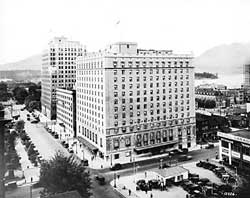
When asked to contribute some writing about the Vancouver cocktail scene to ShakeStir, I figured the best way to begin is, well, at the beginning. My beautiful city of course has its history of saloons and beer halls, and yes, Canada even had a Prohibition, which was different for each province, and thankfully ended in British Columbia in 1921 after being a complete disaster and lasting only four years. This year brought about extremely strict government regulations, many of which are still frustratingly in place today. For example, it's only relatively recently that credit cards can be used in a liquor store, that non-government liquor stores have been allowed to exist, and that one can order a drink without ordering a meal. The archaic system by which we distribute liquor in the province is why it's so expensive, and sometimes impossible, to get so many good products. I digress. This being a cocktail site, I went back as far as I could to find original Vancouver cocktails, and only came up with two - both from the 1950's. We begin with "The Hotel Georgia."

Built in 1927 in the heart of downtown Vancouver, The Hotel Georgia was the swankiest spot in the city, and housed many famous guests over the years, particularly in the music scene as Hornby Street half a block away was home to all the top music clubs in town. Elvis Presley, Louis Armstrong, Nat King Cole, and The Rat Pack were just some of the guests through to the 1960's, around the time that Vancouver stopped being part of the regular big tour schedule for major artists. The Hotel Georgia was also the only hotel in Vancouver at the time that allowed people of both "colours" to stay, mingle, and yes, even drink together in the same bar, making it home in particular to The Rat Pack every time they toured here.
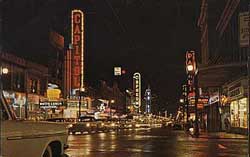
Vancouver in the 1950's was a haven of jazz and burlesque, particularly at the top club in the city, The Cave, which was the first to be granted a legal liquor license. The shows were famously elaborate and Vancouver crowds were famously difficult to arouse. Las Vegas showgirl productions were actually audience-tested first at The Cave before being brought to the strip. Another connection to Las Vegas that many don't realize is that Vancouver was actually the "Neon City" first, and in 1953 had over 19,000 neon signs before city laws prohibited their use in the 1960's. That many lights reflecting off rain-soaked streets was a much talked-about sight to see. Famous jazz acts always passed through Vancouver and played with The Cave's house band, and many also played inside The Hotel Georgia itself, which until 1941 was also home to a music radio station that broadcast from the top floor live shows that were happening in the jazz clubs downstairs.


Let's fast forward again, when The Hotel Georgia was closed in 2006 for renovations, then finally reopened in 2011 as the Rosewood Hotel Georgia, and I can easily say that it is one of the coolest places in the city. Aside from its beautiful design, including historic mahogany walls and marble flooring in the lobby, and one of the country's largest private collections of Canadian art, it has three (soon to be four) places to drink. The 1927 Lobby Lounge, the manager of which was the late Derek Vanderheide, is a well-stocked and well-staffed bar sitting up a few steps in the corner of the lobby, offering sophisticated drinks and high-end spirits. Reflections is a patio lounge on the fourth floor of the hotel with cabanas, fire pits, views of the city skyline, and a much more summer-friendly drink list. Later this year, a music and dance club called Prohibition will be opening in the basement of the hotel, featuring a lot of jazz and another craft cocktail bar, both in honour of the hotel's 1920's roots. Lastly, Hawksworth Bar & Lounge, recently cleaning up at the Vancouver Magazine Awards winning multiple restaurant and bar awards, is the flagship of the hotel with amazing food, and a very solid bar program run by Brad Stanton, Vice-President of the Canadian Professional Bartender's Association. The menu has some very solid, creative but simple originals, and a selection of classics as chosen by each of the bar staff by name. The spirit selection is great here as well, even featuring a handful of mezcals, which is happening more now in Vancouver but was previously unheard of and is still uncommon. If you find even 10 minutes to stop by, the menu features small-sized house aperitifs and digestifs that are perfect for starting or finishing your evening.

On to the cocktail!

The Hotel Georgia cocktail is speculated to have been created at the hotel itself in the 1940's, but it isn't until 1951 that it is first mentioned in print, in Ted Saucier's book, "Bottom's Up" a fun, and very dense collection of over 200 cocktails along with some risqué illustrations. The book is home to a lot of bad drinks, a lot of celebrity drinks, a few really great classics, including The Last Word, and a few forgotten gems, like The Hotel Georgia (complete with a sketch of a naked woman).
The 1951 version is much too sweet and perfume-y, which likely has a lot to do with what the ingredients were like at the time, using 2 ounces of gin, 1 FULL ounce of orgeat, ½ ounce of lemon juice, 10 drops of orange blossom water, and an egg white. I made this at home and could barely handle how sweet it is. Brad altered the recipe for today's tastes, reducing the orange blossom and orgeat, increasing the lemon, and choosing specifically Plymouth gin, "resulting in a silky, stimulating and balanced beauty of a drink to be true to the light, floral, and elegant style of the original." The garnish is what really sold Brad's version to me, as the spice of the nutmeg on your nose as you sip really cuts down the sweetness. It makes an excellent dessert cocktail at home, but if there are any bartenders reading this thinking of making it at your own bar, there is a new tradition: if you make a Hotel Georgia, you must serve it on a Hawksworth Hotel Georgia coaster, so ask for one and make it properly!

The Hotel Georgia

1.75 oz Plymouth Gin
0.75 oz lemon juice
0.5 oz Giffard orgeat
6 drops A. Monteux orange blossom water
1 egg white
Nutmeg


Combine ingredients, beginning with egg white, and dry shake. Add ice then shake vigorously for about 20 seconds. Double-strain the mixture into a cocktail glass and grate a little nutmeg onto the surface of the drink.

To pair with your Hotel Georgia from 1951, I'm going to come back to the Las Vegas and Rat Pack-Vancouver connections and go with Frank Sinatra. Specifically, I'm going with one of my favourite drinking songs (the one after which I in fact named my blog), "One For My Baby, And One More For The Road," from the 1943 musical, "The Sky's The Limit." Recorded more times than we can count, Frankie's are my favourites, the most famous of which is the 1958 one from his extremely sad "Only the Lonely" album. This one is my favourite overall, but since this drink is light and sweet, I'm going with his much happier first recording of it from 1947.


See you at the Hotel Georgia. Enjoy!


Originally published on www.shakestir.com by Rhett Williams


Photography:
Hotel Georgia in 1930 by Leonard Frank via Vancouver Archives 
Granville Street neon circa 1950's courtesy the Vancouver Heritage Society
"Bottom's Up" by Ted Saucier 
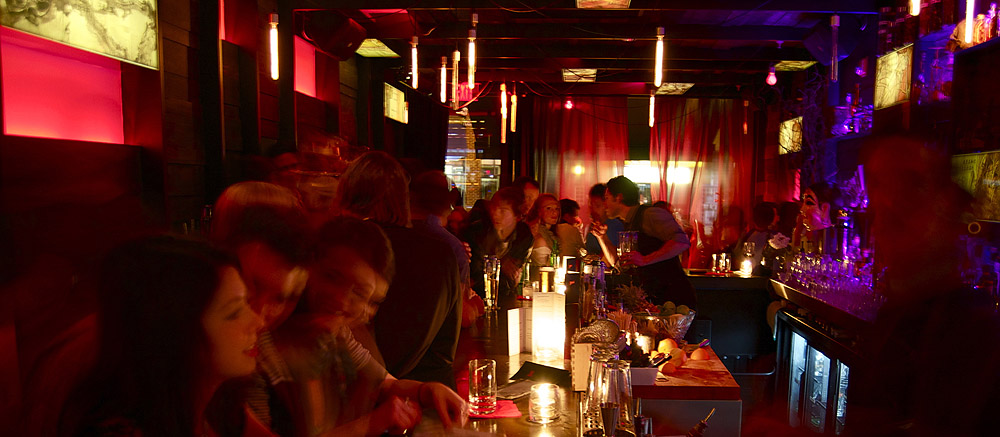
Hotel Georgia Cocktail from Hawksworth Restaurant in The Rosewood Hotel Georgia, Vancouver, by Rhett Williams


Monday, 30 April 2012

Amaro April: "Intro To Aperol" From Audrey Saunders of Pegu Club


"Forty miles up the Rangoon River in the land of the Golden Pagodas, on the hot balmy nights of the late 1800's, one might find themselves at the Pugu Club," as the website for Pegu Club in New York puts it. Pegu itself is a place of rich history - a battleground in both Burmese wars before being taken over by the British in the mid 19th century - and as Kipling puts it in "Sea to Sea," the club was "always filled with lots of people either on their way up or on their way down." The club had a house-cocktail, as most clubs do, but this one became wildly popular everywhere, landing itself in Craddock's Savoy Cocktail Book in 1930, and surviving today because of its perfect balance. Fast forward to 2005, when Audrey Saunders opens a new bar in New York with 27 gins and 3 vodkas (which for the record are kept underneath the bar not on its shelves), at a time when, as she puts it, "99 percent of all the bars in New York had at least 20 vodkas on the back-bar and maybe 3 gins," and names it after this gin classic.

Audrey Saunders, whose original background was in cuisine, famously took one seminar from Dale DeGroff on mixology in the mid 1990's - during the dark ages of the cocktail when such a focus was unheard of - and was smitten. She went on to run several famous and award-winning bar programs in New York before finally opening Pegu Club in 2005, a name that consistently ends up on everyone's top bar lists, and greatly contributed to making some amazing products more accessible and better known, including Chartreuse, Punt e Mes, and yes - amari. Audrey's accomplishments and awards, along with those of Pegu Club are way too vast to mention or even summarize here, and my guess is that if you're reading this blog, you probably already know all this anyway.

Audrey is also one of the most influential and earliest "mixologists" in the sense that she was experimenting with infusions and really modern creative ideas from an experimental and culinary perspective. David Wondrich calls Audrey a "research mixologist, applying scientific method to her cocktails," giving the example of infusing vodka with only pith, the white part of a citrus peel that should be removed to avoid bitterness, just to see how bitter her infusion will be. While most bars were still just learning about how to mix Campari or Chartreuse by going backwards to historical cocktail books, Audrey was already infusing them with fruit to see what she could come up with, something that is fairly common practice now, but even five years ago was fairly outlandish. In fact, for a Canadian perspective, it was actually illegal in B.C. to infuse alcohol with anything until two or three years ago. Now look at where we are with places like The Keefer and The Refinery doing what they do.

Needless to say, it is a great honour to receive a recipe from Audrey for Amaro April, and it's a delicious one at that. Aperol first became available in the U.S. in 2006, and since nobody was familiar with it, she created a cocktail to introduce its flavours through a fairly simple but excellently balanced drink. It's an inverted cocktail, in that the Aperol is 2:1 to the gin, and the gin "acts as a spine for the drink and allows it to stand up, avoiding any potential flabbiness," as she puts it. Beefeater is specifically chosen for its citrus botanicals, namely orange and lemon, which match the lemon juice and strong orange character in the Aperol. Finally, Audrey chooses a flamed orange peel to "deepen the essential oil and mellow it, which works well with the overall brightness of the drink's profile."
Aside from being very tasty, this one is perfect for anyone interested but unfamiliar with Aperol or amari in general as it's very palatable, but still has just a hint of the bitter and herbal character that are the staple of any amaro. It's also very easy to make at home, opposed to the majority of what we've seen this month, so it's a great place to start.

Intro To Aperol

2 oz Aperol
1 oz Beefeater Gin
3/4 oz Lemon Juice
1/4 oz Simple Syrup (1:1)
1 dash Angostura Bitters


Add all ingredients with ice and shake. Strain into a cocktail glass.Garnish with a flamed orange peel.


A quick note on flaming a peel: if you haven't done it before, simply cut a thick and fairly large piece of orange peel and hold it over your glass. Let the flame from your lighter or match touch the peel for a few seconds to heat the oil, then squeeze the oils over the drink like you normally would - through the flame. This will create a small spark of fire (don't worry it's not dangerous). Then drop the peel in the drink.

A big thank you to to Audrey and Pegu Club for contributing; I am most honoured and humbled. If you are at all unfamiliar with her contribution, please just google and catch up, and if you're in New York and haven't been there you should be ashamed and rectify this immediately.


[[ See my post on amaro digestivos here ]]
[[ See my post on amaro aperivos here ]]
[[ See a buying guide for amaro here ]]

[[ See "The One Hit Wonder" from L'abattoir in Vancouver here ]]
[[ See "The Penny Farthing" from Pourhouse here ]]
[[ See an introduction to amaro  here ]]
[[ See "The Imperial Eagle" from Bourbon & Branch here ]]
[[ See "Sevilla" from Beretta here ]]
[[ See "Fallow Grave" from the Toronto Temperance Society here ]]
[[ See "The Black Prince" from Phil Ward here ]]
[[ See "Bad Apple" and "Jackson Ward" from Amor y Amargo here ]]
[[ See "The Four Horsemen" from Jay Jones at Shangri-La here ]]
[[ See Colin MacDougall from Blue Water Cafe here ]]
[[ See "Debbie Don't" from Dutch Kills here ]]
[[ See "Foolish Games" from Russel Davis here ]]
[[ See "Welcome To The Dark Side" from Cin Cin here ]]

[[ Photography courtesy of Pegu Club, and Tales of the Cocktail ]]

Wednesday, 25 April 2012

Amaro April: "Debbie Don't" from Dutch Kills

One bar I really wanted to include this time is an iconic name in the cocktail-scene - Milk & Honey in New York. Getting in touch with owner Sasha Petraske sadly revealed the news that M&H can't participate in any kind of press or promotion "that might increase walk-in foot traffic on Eldridge Street, due to the arrangement with the landlord," which is all fine and good and keeps them enigmatic, but on the bright side it gave me a new place to research a little bit. Sasha, who's behind several New York establishments, gave me his favourite Averna cocktail, courtesy of former bartender (and co-owner of the craft ice company, Hundredweight Ice) Zack Gelinaw-Rubin, at another of Sasha's bars, Dutch Kills in Long Island City.

Sasha, along with former M&H bartender Richard Boccato, opened Dutch Kills, named after the inlet that extends into the heart of Long Island City, in 2009 with a more accessible and older feel (and slightly cheaper prices) than the speakeasy-style, find-the-right-phone-number-to-get-the-right-password-to-enter-through-the-side-door-type establishments in NYC. Checking out the history page on their website reveals that this area of Dutch settlement in the mid 1600's also served as a British Army garrison during the Revolutionary war, unified into Long Island City in 1870, and was finally incorporated into the City of Greater New York in 1898, and this latter time period is really where the bar seems to take its inspiration in terms of history. Upon arriving at said website (dutchkillsbar.com), the music takes you right back to the late 19th century, and I'm ecstatic to find out that there are actual live bands playing ragtime and early jazz at the bar on select evenings. The drink menu is laid out like a turn of the century newspaper, complete with full recipes and instructions, and all of the drinks either fit in with the Jerry Thomas era, are simple classics from the 1930's, or new originals in the aforementioned styles. I love a simple, classic drink, and seeing something like a 2011 original, the "Bloody Knuckle," with just American rye, Aperol, sloe gin, and orange bitters, really gets me excited to have a drink (nothing against modern, creative mixology, I just find myself more interested in the simple and well-crafted). The outside is lit simply by a sign reading "bar," and the amount of brick, concrete, and wood inside and outside really transport you to saloon times - before Prohibition and its speakeasies.

As for today's cocktail, Sasha touts this as "the best Averna cocktail he's ever had," and it takes us back to Tequila, but this time in very different proportions with the Averna at a full ounce, and like the last couple we've seen, simple in concept as its just a Tequila sour. Maple syrup is something you'd see occasionally in post-Prohibition drinks, for example Quebec's Larry Denis cocktails in the 1940's, and the key with using it today is that you use actual maple syrup. Don't buy Aunt Jemima and mix it with your nice spirits.
You may notice that the brand of Tequila is not specified. This is because Sasha believes "picking the base spirit is really up to the individual bartender - it is not for the recipe author to dictate."

Debbie Don't

1oz Tequila Reposado
1oz Averna Amaro
0.75oz lemon juice
0.5oz maple syrup

Combine all ingredients with ice and shake. Strain straight up into a cocktail glass.


Please do check out the website, they have a list of some amazing drinks, with pictures, recipes, instructions, and sources listed both on the menu and gallery pages. I'm going to have to make some of these tonight! They also have an explanation of each type of ice they'll be using to concoct your tipple.
Next time I'm in New York, I'm going to make sure I have time to get to Long Island City, if just to see Dutch Kills, because immersing yourself into an era is the most exciting thing about exploring cocktails, and nothing will do that like ragtime and honky-tonk on an old piano, a polished wood bar, and a couple of well-crafted classic drinks. If you're there, do the same.
Thanks to Sasha and Zack for the contribution!

[[ See my post on amaro digestivos here ]]
[[ See my post on amaro aperivos here ]]
[[ See a buying guide for amaro here ]]

[[ See "The One Hit Wonder" from L'abattoir in Vancouver here ]]
[[ See "The Penny Farthing" from Pourhouse here ]]
[[ See an introduction to amaro  here ]]
[[ See "The Imperial Eagle" from Bourbon & Branch here ]]
[[ See "Sevilla" from Beretta here ]]
[[ See "Fallow Grave" from the Toronto Temperance Society here ]]
[[ See "The Black Prince" from Phil Ward here ]]
[[ See "Bad Apple" and "Jackson Ward" from Amor y Amargo here ]]
[[ See "The Four Horsemen" from Jay Jones at Shangri-La here ]]
[[ See Colin MacDougall from Blue Water Cafe here ]]
[[ See "Welcome to the Dark Side" from Cin Cin here ]]
[[ See "Foolish Games" from Russell Davis here ]]
[[ See "Intro To Aperol" from Audrey Saunders at Pegu Club here ]]


Thursday, 12 April 2012

Amaro April: "The Imperial Eagle" From Bourbon & Branch

Last month we saw a creative cocktail from Jayson Wilde, the general manager at Bourbon & Branch, in which he infused Maraschino liqueur with Meyer lemons, as well as using blood orange syrup, cinnamon, and a black pepper tincture. This month, Jayson is simplifying things a bit, but still uses spice and fruit to play with both the base spirit - this time bourbon - and the modifier, amaro Averna. There are again a lot of elements here - the basic idea is a bourbon sour in which he's using ginger syrup and Averna to sweeten instead of just sugar. He's also using a traditional silver or Ramos Fizz framework, with the sour, spirit, sugar, egg, and bubbles combination, this time using ginger beer instead of just plain soda. Add the two elements together, with a little extra aroma and presentation using peach bitters, and you have a tasty and complex drink.

You can check out Jayson's "Blood Lust" cocktail along with a small review of Bourbon & Branch on this Maraschino March post.

A note on ingredients...
You can get the Eagle Rare 10 Year at the BC Liquor Stores, and it will run you $60. It's $30 or so in the states, and it's an excellent choice for the money. It's made by the Buffalo Trace distillery, so their regular BT bourbon would be a suitable substitution if you have to; I would not use too sweet or soft of a bourbon here (like Maker's Mark). As for the ginger beer, be sure to get a beer and not a ginger ale, which is much sweeter and less ginger-y. Bundaberg is Australian and I've never seen it here, but many markets, liquor stores, Whole Foods, and Gourmet Warehouse all sell good substitutes. Fee's peach bitters can be picked up at Gourmet Warehouse for $8.

The Imperial Eagle

2 oz. Eagle Rare 10 Year Single Barrel Bourbon
1 oz. Lemon Juice
0.5 oz. Ginger Syrup
0.5 oz. Averna
0.5 oz. Egg White
0.75oz Bundaberg Ginger Beer 
1 dash of Fee's Peach Bitters

Shake ingredients with ice, strain into a Collins glass.
Add the ginger beer over top as a float, then add an extra dash of the peach bitters on top of the foam.

[[ See my post on amaro digestivos here ]]
[[ See my post on amaro aperivos here ]]
[[ See a buying guide for amaro here ]]

[[ See "The One Hit Wonder" from L'abattoir in Vancouver here ]]
[[ See "The Penny Farthing" from Pourhouse here ]]
[[ See an introduction to amaro  here ]]
[[ See "Sevilla" from Beretta here ]]
[[ See "Fallow Grave" from the Toronto Temperance Society here ]]
[[ See "The Black Prince" from Phil Ward here ]]
[[ See "Bad Apple" and "Jackson Ward" from Amor y Amargo here ]]
[[ See "The Four Horsemen" from Jay Jones at Shangri-La here ]]
[[ See Colin MacDougall from Blue Water Cafe here ]]
[[ See "Debbie Don't" from Dutch Kills here ]]
[[ See "Welcome to the Dark Side" from Cin Cin here ]]
[[ See "Foolish Games" from Russell Davis here ]]
[[ See "Intro To Aperol" from Audrey Saunders at Pegu Club here ]] 

Monday, 26 March 2012

Maraschino March: "The Blood Lust" from Bourbon & Branch

In the current growing and exciting boom of cocktail culture there are many bars trying to jump on the band wagon and not really taking the time to either find knowledgeable and skilled staff, or at least taking the time to learn and train to at least grasp the concept of classic bartending or modern mixology. Some try to appeal to cocktail aficionados and sports pubbers alike by covering the bar in TV's broadcasting sports highlights and orange-tanned servers in tiny dresses, yet cover the menu in classic and respectable cocktails like the Vieux Carre, Last Word, Aviation, the rare Old Pal, and even some more current concoctions from big names like Pegu Club and Death & Co. The problem with bars such as these is the drinks are often dummed down to appeal to the typical audience (I have particular places in mind); eg. drop the Maraschino to 1/4oz instead of a 1/2 because not everyone likes the taste, add soda to The Last Word to blunt the flavours, shake the Manhattan's because you don't know what you're doing, etc.
Some establishments use a more modern mindset to creating a cocktail, using carbonation, creative infusions, self-made bitters and vermouths, all manners of fire, and even barrel-aging mixtures to come up with new and exciting ways to push "mixology."
Amidst everything that's happening now, and as more and more cities are building up their cocktail-destination repetoirs, there are still names that come up again and again as inspirations, trend-setters, the meccas of mixology, and the ultimate hangouts for connoisseurs of cocktaildom. There are two major cities in the history of the American cocktail: New York, with its PDT, Pegu Club, Death & Co., Milk & Honey (and the list goes on), and San Francisco with its Rickhouse and Bourbon & Branch (this list goes on as well). I am honoured to have Jayson Wilde, the general manager of Bourbon & Branch, contribute a Maraschino cocktail this month (and he will be returning next month with an Averna cocktail as well).
B&B is a cocktail destination (they actually don't serve food) with a focus on Prohibition and the speakeasy culture. The location was a bar since 1867 and an actual speakeasy from 1921 to 1933, and was operated for a time as "JJ Russell's Cigar Shop," during which time John J. Russell the owner brought in booze from none other than Vancouver. The current incarnation of the bar takes its name from the term "branch water," used in the 1800s for pure, clean water (called a "branch"), and of course its brother-in-drink-arms at the time, bourbon (bourbon and water being a typical drink). B&B, like several bars in New York and Tavern Law in Seattle, attempts to retain its speakeasy atmosphere by using passwords to gain entry, and by having a second, secret bar called Wilson & Wilson (Private Detective Agency), where you need a further password to enter, and when you do you taste flights of three cocktails that change every night. B&B also has "house rules" that state, amongst some expected requests (such as that to "please speak-easy"), "no standing at the bar," "please exit quietly," and "don't even think of asking for a 'Cosmo.'" Pretentious? Definitely, but tons of fun, and something I'm sure that the true cocktail-hunters out there will appreciate now that more and more crappy bars are catching on and trying to fake it, or that we'll appreciate just to weed out the appreciative bunch out of the typical Saturday night crowds.
The crew here is skilled, and the cocktail list has had some seriously interesting stuff, like the "Autoroute Alpine," with a Dolin Blanc Vermouth base, Campari, lemon, honey, pepper, basil, and soda, or the "Winny De Puh," with reposado Tequila, lemon, honey, Mezcal, peach bitters, and cardamom, which you can enjoy while sitting in their very classic, warm, and red "library room," or in their maintained/recreated "Russell's Cigar Shop." This skilled crew will even teach you some of their craft in their "Beverage Academy." All in all, B&B is a must for any cocktail aficionado or anyone who cares about the craft.

On to the recipe...
Jayson is combining Maraschino with Tequila, as we have seen a couple times in this series, but aside from the very special pepper and blood orange touches, he's also doing something kind of crazy - infusing the Maraschino with Meyer lemons. If you've gotten into the cocktail world, you've probably seen a lot of infusions, particularly those of gin and maybe bourbon (there are a lot of infused vodkas too, but those are really just tinctures since vodka is flavourless), and maybe you've seen an infused Cointreau or something of that sort, but I for one have never seen an infused Maraschino. The Meyer lemon is a really interesting idea, as they're a little more sweet and soft than regular lemons.
As for the choice of Tequila, Jayson had this to say:
"I chose the Espolon Reposado for a couple of reasons. One is that I wanted something with a little bit of oak flavor to compliment the Cinnamon and Black Pepper. Also, I wanted to use something that wouldn't break the bank. I tried this recipe with a few other Reposado's (Siete Leguas, Partida, etc) and the Espolon actually worked the best with the flavor combinations."
This is all in all a big collection of fruits and spices and just looks delicious. Thank you Jayson and B&B for the contribution!
Cheers!

The Blood Lust

1.5 oz. Espolon Reposado Tequila
0.75 oz. Lemon Juice
0.5 oz. Blood Orange Syrup
0.25 oz. Meyer Lemon Infused Maraschino

1 dash of Black Pepper Tincture

Shake ingredients and strain into a large cocktail glass. Grate cinnamon over top to garnish.

To make the Blood Orange Syrup combine 3 parts Turbinado sugar to 2 parts fresh squeezed blood orange juice.
To make the Meyer Lemon Infused Maraschino infuse 3 thinly sliced Meyer Lemons and 2 full peels per one bottle of Luxardo Maraschino.
To make the Black Pepper Tincture infuse 2 oz. of whole black peppercorns with 6 oz. of Everclear 


[[ see "Oden's Muse" from Tavern Law here ]]
[[ see "The Hemingway Solution" from Vessel here ]]
[[ see "The Division Bell" from Mayahuel here ]]
[[ see "The Shibuya Crusta" from L'Abattoir here ]]
[[ see "The Unforgiven" from Russell Davis of Rickhouse here ]]
[[ see "Cherry Bob-omb" from Veneto here ]]
[[ see "Primer Beso" from The Refinery here ]]
[[ see the Maraschino March introduction here ]]
[[ see the "Rubicon" from Jamie Boudreau at Canon here ]]

Friday, 23 March 2012

The Aviation

Today we will be discussing a classic that is very close to my heart. It's one of my favourite gin cocktails, and my first introduction to Creme de Violette, a liqueur made from macerating violet flowers in usually a grape spirit base, and that ingredient itself brings about an age-old debate about exactly how to make this one properly. It takes us back before the 1920's, and is, as David Wondrich puts it, "one of the last truly great cocktails to be invented before Prohibition." The earliest mention of The Aviation is 1911, but the most obvious first mention is by Hugo Ensslin in his book "Recipes for Mixed Drinks" in 1916, which the German-born bartender wrote while presiding over the bar at the Wallick House hotel in Times Square, New York. This book was an inspiration and great source of information for one of the biggest names in cocktail history, Harry Craddock, who wrote one of the greatest cocktail books, "The Savoy Cocktail Book" in 1930. This is where the controversy begins, though, as Craddock omits the Creme de Violette as an ingredient, partially due to availability, and this omission for the most part continued until 2007 until Rothman & Winter's product showed up on the U.S. market. This coincided with our current cocktail revolution during which many connoisseurs and interested parties began to learn histories and recreate classic cocktails. It is unclear exactly who created the cocktail, but it did begin to achieve popularity in the 1910's and was likely named after the then new American industry and interest of aviation, i.e. the design, development, and use of aircraft, as the first airplanes began to be used for military purposes around the time of World War I. The drink was named as such because the addition of the Creme de Violette turned the drink a slight blue colour.

The Recipe
The original recipe as per Ensslin's book was printed "2/3 parts El Bart gin, 1/3 part lemon, 2 dashes Maraschino, and 2 dashes Creme de Violette" (equating to essentially 2oz gin, 1oz lemon, and a barspoon-full of each Maraschino and Violette). El Bart gin has since disappeared, but was a sponsor of the book itself and therefore should not really be considered a gin that best serves the cocktail. After being reprinted in Craddock's Savoy Cocktail Book without the Violette, a range of recipes has shown up, and I guarantee that each bar you go to will make it slightly differently. Should you want to experiment, here are the reputable recipes I've found:
A newer version of Creme de Violette from Tempus Fugit (which is way more interesting, less sweet, and less floral than Rothman's) suggests a 6:3:2 ratio for gin : lemon : Maraschino/Violette (1.5oz : 3/4oz : 1/2oz), which I find lets the liqueurs really overpower the gin.
David Wondrich suggests 2oz of gin, 3/4oz of lemon, and 1/2oz of Maraschino, which not only omits the Violette, but is also arguably too sour.
Dale Degroff uses 2oz of gin, 1 full ounce of Maraschino, and 3/4oz of lemon, which lets the Maraschino overpower the rest of the flavours.
Gary Regan writes 2oz of gin, 1/2oz of lemon, and 1/2oz of Maraschino, which I find is the best ratio, but still omits the Violette.
Robert Hess from www.drinkboy.com, Small Screen Network, and founder of the Museum of the American Cocktail and The Chanticleer Society, suggests a 8:2:1 ratio for gin : lemon/Marashino: Violette, which I find is the best tasting recipe and is thereby the one I will print in this post. As for the garnish, I've seen no garnish at all, a brandied cherry, and also a flamed lemon peel. The original recipes list no garnish, but I love the taste of the latter so will suggest that.

The Aviation

2oz gin
1/2oz lemon juice
1/2oz Maraschino
1/4oz Creme de Violette
(or even 1/8oz depending on what kind you use. This amounts to a barspoon-full or two - see what you like)
Combine all ingredients in a shaker, add ice and shake, strain into a cocktail glass. To garnish, flame a lemon peel by burning a large piece of peel for a couple seconds, then squeeze the peel towards the glass so the oils ignite over the cocktail.

If you use Tempus Fugit, use 1/4oz, if you use something much more sweet and floral like Rothman's, use 1/8oz which is just about a barspoon-full.

This is a great drink for trying different gins. Anytime I get a new kind of gin that I want to play around with, I usually try it straight, cold and diluted, in a Martini, and in an Aviation. They all play with the fruit and floral in their own ways, and you'll probably find your favourites, but this is always a great cocktail. Hendrick's and Martin Miller's gins are two of my favourite gins and make fantastic and interesting Aviations in really different ways (I'm actually sipping a Martin Miller's one while I'm writing this, and damn, it is good). A good London Dry is the typical way to go (Tanqueray or Junipero work great, for example), or perhaps you may find it fitting to try the "Western Dry" style of Aviation Gin.

The History

The 1910's was a big decade for the U.S. This was the first time that the country was considered a world-leader in terms of industry and power, as it became the most industrialized country in the world. Huge American industries began to boom, including automobiles, popular culture (such as film and music), and tobacco. World War I obviously had a big impact, affecting industry, economy, and culture. The population sat at 92 million, life expectancy was barely 50 years, and divorce was almost non-existent. The film industry was just starting to grow into its "Golden Age," with about 30 million people going to the movies each week. Overall, this was a period of unrest of reform, as labour unions grew, and unsafe working conditions and child labour were slowly abolished. Prohibition was brewing, and by 1919 became law, and the consumption of alcohol became both illegal and secretive, dramatically reinventing cocktail culture, but also being the biggest catalyst in creating organized crime in the U.S. (see my post on Chicago in the 1920's via The Southside Cocktail). In art, realism, cubism, futurism, Fauvism, industrialization, Dadaism, and primitism all became popular forms, and most notably, photography became both possible and recognized as an art form. D.H. Lawrence and H.G. Wells were popular writers at the time, the latter being one of the more important names in early science fiction. For style, comfort began to take priority in what people wore. Fabrics got lighter and looser, necklines got lower, and styles like the sack, sheath, harem trousers, hobble skirts, Hellenic tunic, Asian oriental costumes, and brighter colours became popular. For men, the top hat, frock coat, striped trousers and blazers, lounge suits, and tweed jackets were all prominent. All in all this seems a period of growth ultimately leading to the 1920's, which had a much stronger and more unique identity.

Musically, the U.S.'s greatest product - jazz - was only just beginning in the slums of New Orleans. This was the age of Tin Pan Alley, the age of sheet music, early show tunes and early pop songs. All major works were published on West 28th between 5th and 6th Avenue in New York City, and the area, and music period, was named supposedly for the sound of the cheap pianos constantly playing in each and every publisher's office (a cacophony of banging tin pans). Cole Porter, Fats Waller, George Gershwin, Scott Joplin, and Irving Berlin were all big names in Tin Pan Alley, all of whom had their music reinvented at some point during the jazz age to come. Ragtime had evolved, stride piano playing brought about the swing arrangements to come, band leaders like James Reese Europe were creating early jazz, and Louis Armstrong was honing it into the art form and influence on popular music it was going to become.
One of the more famous songs of this period, written by one of the more famous songwriters of the subsequent music industry, was "Alexander's Ragtime Band" by Irving Berlin. This piece shows great influence of stride and ragtime by writers like Scott Joplin, but is also a great showcase of the swing that was just starting to happen at the time, and while it was Berlin's first successful song, it became a classic covered by many artists well into the 1950's.

I encourage you to drink your Aviation the traditional way, with a dash or two of Violette (head to a reputable bar for this, and don't accept it if any bar omits the Maraschino - they are not serving you an Aviation!), and enjoy it while listening to some very early American popular music by Irving Berlin. Here is "Alexander's Ragtime Band."

[[ cocktail photography by Jimmy Nichol ]]

Thursday, 22 March 2012

Maraschino March: "Rubicon" from Jamie Boudreau of Canon

We are nearing the end of Maraschino March now, and have only two more new, original cocktails to see before I move on to some historical ones. The first of the two takes us back to Canon in Seattle where Jamie Boudreau, whom we met for the Denny Triangle in Fernet February, will be cooking up - literally - something herbal and delicious.
Setting cocktail ingredients on fire is not just for show, it does actually change the flavours in sometimes dramatic ways, and Jamie puts this to use with the Rubicon by cooking a sprig of rosemary in flaming Green Chartreuse. By burning the Charteuse, in Jamie's words, "a lot of the alcohol edge is burned off, and the botanicals seem to blend and integrate more smoothly." He even suggests just trying a spoonful taste of it normally, then trying one that's been burned for about 6 seconds so you can see the difference. Cooking the rosemary will strengthen its presence in the cocktail as well.
Be warned that, obviously, fire is dangerous and you need to be careful when using it, but also be careful what you're cooking the ingredients IN. I made the mistake of burning the rosemary and Chartreuse in a poor quality glass that ended up cracking in half after a few seconds of flame. Also, don't leave the rosemary on fire too long or you'll burn and blacken it. Jamie uses an olive oil mister filled with Chartreuse to spray through the flame into the glass, but it is possible to just light the liquid inside the glass by hand (I would definitely suggest using one of those long candle lighters and not a typical cigarette lighter). This drink is still delicious without the fire, and is even delicious with a rosemary tincture instead of actual rosemary, but you should stay true to the original if you can. Also, the crushed ice added afterwards is key because the flavours are quite potent and need a little extra dilution to even out a bit.
Here is the video from Raising The Bar on the Small Screen Network where you can see Jamie making this cocktail himself.

As for the name, Jamie explains: "The rosemary curled in the glass reminded me of Caesar’s laurels and therefore I’ve named this libation after the famous river Caesar crossed in 49 BC after uttering the now famous words: ‘Let us go where the omens of the Gods and the crimes of our enemies summon us! THE DIE IS NOW CAST!’ It is with this action that the Roman Empire began, and western civilization as we know it."

Jamie's bar, Canon, simply must be at or near the top of your Seattle bar list, and when you stop by, have Jamie make you a proper Rubicon - unless he something even more exciting in mind.

Rubicon

1.5oz Plymouth Gin
0.5oz Green Chartreuse
0.5oz Maraschino
0.5oz Lemon Juice
2 full sprigs of rosemary

Arrange a small rosemary wreath in the bottom of a rocks glass and soak it in the Chartreuse.
Combine other ingredients in a shaker with ice, shake, and set aside.
Light Chartreuse on fire by misting Chartreuse through a flame into the glass and let burn for about 6 seconds. 
Put out the flame by pouring the shaken ingredients into the glass. 
Top with crushed ice and another sprig of rosemary.


[[ Photography by Jamie Boudreau ]]

[[ see "Oden's Muse" from Tavern Law here ]]
[[ see "The Hemingway Solution" from Vessel here ]]
[[ see "The Division Bell" from Mayahuel here ]]
[[ see "The Shibuya Crusta" from L'Abattoir here ]]
[[ see "The Unforgiven" from Russell Davis of Rickhouse here ]]
[[ see "Cherry Bob-omb" from Veneto here ]]
[[ see "Primer Beso" from The Refinery here ]]
[[ see the Maraschino March introduction here ]]

Tuesday, 13 March 2012

Maraschino March: "The Shibuya Crusta" from L'Abattoir

Tonight we head back to Gastown to once again visit Shaun Layton at one of my favourite places for food and drink in Vancouver, L'Abattoir. (You can check out my review here)

Shaun combined a few different cocktails to come up with this one, namely a Brandy Crusta and a Japanese. The former was originally a style of drink (much like the "Cocktail") using a spirit, lemon, Maraschino, Cointreau, bitters, and served with a large piece of lemon peel wrapped around the inside of the glass. The latter is simply brandy, orgeat, and Angostura bitters. Shaun is also adding sparkling wine to the mix and upping the amount of the bitters, like a Champagne Cocktail or Seelbach. Add all these elements together and you've got a fairly complicated, yet light, creative drink. Shaun manages to balance a lot of elements here, in particular using the orgeat to calm down the seven (as he says, "that's right, seven") dashes of Angostura - or perhaps the bitters calms down the orgeat? The Cava really ties everything together, and the Crusta-style of presentation makes this a truly enjoyable drink on all levels.

The Shibuya Crusta

20 ml Hennessy VS Cognac
15 ml Maraschino
30 ml fresh lemon juice
10 ml orgeat syrup
7 dashes Angostura bitters
Top with Cava

Add all ingredients to a shaker tin minus the Cava. Shake, fine strain into sugar decked flute. Top with Cava. Garnish with a long orange peel around the inside of the flute.


 Head down to L'Abattoir to check this one out, and do yourself a favour and stay for dinner and extra cocktails. 
Thanks to Shaun and & L'Abattoir for contributing!

[[ see "Oden's Muse" from Tavern Law here ]]
[[ see "The Hemingway Solution" from Vessel here ]]
[[ see the Maraschino March introduction here ]]
[[ see "The Division Bell" from Mayahuel here ]]
[[ see "The Unforgiven" from Russell Davis of Rickhouse here ]]
[[ see "Cherry Bob-omb" from Veneto here ]]
[[ see "Primer Beso" from The Refinery here ]]
[[ see "The Rubicon" from Jamie Boudreau at Canon here ]] 

Thursday, 1 March 2012

The Leap Year Cocktail

So it's close to midnight and therefore kind of late for this post, but I'll do it anyway.

It's February 29th, 2012. A leap year. So, obviously, what is a more fitting cocktail than the Leap Year Cocktail? The great thing about this one is that it's a classic from one of the greatest bartenders of all time, Mr. Harry Craddock of the Savoy Hotel in London. The great thing about discussing any Craddock cocktail is that I get to share an Al Bowlly song, since they both worked at the Savoy Hotel at the same time, and Bowlly is one of my favourite singers ever.
(You can read a little more about Craddock and Al Bowlly here in the post about the Corpse Reviver #2).

One of the exciting things about the Leap Year is that we can actually pinpoint exactly when and by whom it was created. Craddock, while running the bar at the Savoy after fleeing from Prohibition America, created the drink specifically for the leap year party at the Savoy on February 29th, 1928. This is also the year that Bowlly first made his appearances at the Savoy with Fred Elizalde, before moving on to work with Ray Noble and record the most famous songs of his career (while also playing at the same hotel).

So first, let's find out how to make the cocktail...

The Leap Year

2oz gin
1/2oz Grand Marnier (other orange liqueurs will do)
1/2oz sweet vermouth
dash lemon juice (measuring about a barspoon-full is a good way to go)

Combine ingredients in a mixing glass, add ice, stir, strain into a coupe, and garnish with a lemon twist.

So here is a cocktail containing juice that you won't be shaking. (Previously I've mentioned a general rule that you should only shake cocktails that contain juice, cream, or egg, and everything else should be stirred). Because the amount of juice is so small, there isn't as much force required to fully mix the ingredients, and stirring works just fine. If you want to shake it, feel free, but it's not really necessary.

The Music
Al Bowlly we've already discussed on my post about the Corpse Reviver #2, so let's just talk about Elizalde. As a young man he bounced between Europe and America, between law school and leading jazz bands. By 1927, he had truly chosen music as his calling, and led a new band in England on some famous late 20's recordings, and performing regularly at the Savoy Hotel. He openly criticized European jazz for being too classical-minded, and tried to adopt more American rhythms and styles into his band (fitting, what with jazz being American and all). Savoy Hotel crowds were famously split in their reception of his band, with the younger crowds loving the dirty, rhythmic, and American big band sound, and the older crowds were offended. By 1929, the BBC radio chose not to renew his contract because of this mixed response, and further poor receptions marked the end of the band. He thereafter composed mostly classical music, and worked with such famous composers as Wagner and Ravel, and after a fairly long life (for the time), retired and passed on. While his jazz years were very short-lived, they were integral to modern European music as he pushed for real jazz, and therefore the most important modern movements in music, to become a mainstay.

For the Leap Year Cocktail, please enjoy this collaboration between Fred Elizalde and Al Bowlly in 1928, when they were both working at the Savoy Hotel in London while Harry Craddock was creating and serving this particular cocktail. (Note how much higher and thinner Bowlly's voice is as it's just at the beginning of his professional recording career).


[ Photography by Eat Magazine from Shawn Soole at Clive's Classic Lounge in Victoria ]

Monday, 20 February 2012

Fernet February: "The Chinatown Sour" from The Keefer

We've seen Fernet with a range of spirits, juice, fruit, fortified wines, bitters, amari, and liqueurs, in a wide array of styles. We've even seen Fernet coming in at over an ounce but not being totally overpowering. What we haven't seen yet are some crazy infusions, and that's where The Keefer comes in.
The Keefer is a fairly new establishment (as a lot of our great bars in Vancouver seem to be) located in Chinatown in the midst of the night markets. The decor is amazing, with a long, dark, black and red space sprinkled with backlit pictures of anatomy between jars of bitters and infusions containing ingredients that look like failed Area 51 experiments preserved in fermaldehyde. (Check out these great photos)
Like The Refinery, they make a range of house-bitters, syrups, and infusions, but what makes The Keefer unique is what ingredients they use. There are syrups infused with traditional Chinese medicinal herbs and roots like Yunzhi and astragalus, tea and ginger make numerous appearances, and fruit flavours like pear, apricot, and muroise show up as well. There's even a section at the end of the menu to add herbal health shots to your cocktails like you would at a juice bar.
I must admit that this creative and outlandish use of ingredients turned me off my first visit, but my second visit showed me that not only are the people running the bar skilled, but most of the drinks are variations on classics with creative embellishments, which is how mixology and bartending evolved in the first place, so what am I worried about? If it tastes good, that's what matters, right?

I strategically showed up early in the evening and was lucky to have not only Danielle Tatarin, the bar manager, but also the assistant bar manager, Keenan Hood make me the Chinatown Sour listed below, a new and impromptu Fernet cocktail using ginger and cassis, and a more traditional style original libation using tequila called the Diablo Blanco. I even got to see how they serve their group shots, which is using an old hospital IV drip. I'll get more into The Keefer soon when I post my review. In the meantime, check out these originals:

The Chinatown Sour is a variation on the Trinidad Sour (which uses a whole ounce of Angostura bitters with orgeat syrup to balance) but uses Fernet as the bitters and infuses the orgeat with astragalus root, which has a very earthy, nutty flavour that gives the drink a fuller taste. The Storm Chaser is a spicy, bitter-sweet storm of flavours, which I must repeat was an improvised cocktail by Danielle for my Fernet adventure. I was shocked to hear how much Fernet was actually in there; the lime really cuts through, the ginger spice takes a lot of focus away from the Fernet, and the cassis really calms things down. It's not my usual style, but I was impressed and it was very interesting and refreshing.

Check out The Keefer if you feel like something very different, or just check them out in general. They even have burlesque on thursday nights. I should really finish that review. Or maybe I should just drop by for another drink...


Chinatown Sour
By Keenan Hood

1 oz Overproof Whiskey
3/4 oz Fernet Branca
3/4 oz Astragalus & Orgeat Syrup
1 oz Lemon Juice
Shake all ingredients for 10 seconds then fine strain into a cocktail glass.


Storm Chaser
By Danielle Tatarin

1 1/2 oz Fernet Branca
1 oz Lime Juice
3/4 oz Ginger Syrup
Top Soda
1/2 oz Cassis
Build first three ingredients on ice in Collins glass. Top with soda & crushed ice.
Drizzle Cassis over crushed ice to finish.
Garnish with grated lime zest.

Photo from www.thekeeferbar.com

[[ see the Fernet February introduction here ]]
[[ see the "Gastown Swizzle" from L'Abattoir here ]]
[[ see the "Dark and Fernet-y" from Rob Roy here ]]
[[ see "Pandemonium" from Veneto Tapa Lounge here ]]
[[ see "The Bittercup" from Pourhouse here ]]
[[ see "The Vested Bartender" from Boneta here ]]
[[ see "The Parliament" from The Diamond here ]]
[[ see "Parliament Hill" from The Hideout here ]]
[[ see "The Lucky Lady" from The Refinery here ]]
[[ see "The Denny Triangle" from Jamie Boudreau / Canon here ]]

Tuesday, 14 February 2012

Fernet February: "The Lucky Lady" from The Refinery

Tonight's cocktail is from a gem in the heart of downtown Vancouver's entertainment district - The Refinery. Now this is unique for a particular reason - there is basically no other purpose for coming to this part of downtown for drinks or food. Granville street is packed with bridge and tunnel crowds and restaurants and clubs that appease this population. Coming here on a Saturday night is a good idea if you like to watch parades of orange tans and un-buttoned silk or flannel shirts crowd the asphalt while whooping and blurting "bro" on their way to Caprice and AuBar. Too pretentious? Whatever.
The point is that in the heart of all this nonsense is a bar hidden upstairs with fantastic drinks and food, an interesting cocktail program, and constant fun events. Whether it's Wednesday night Mad Hatter Tea Parties, or the now-extinct Cocktail Kitchen, or Tales of the Cocktail spirited dinners, The Refinery always has something going on. If you're looking for good drinks and you're downtown, The Refinery is the place to go. They make some really interesting house syrups, bitters, and even a "Chartreuse pop," and offer an "impromptu punch" should you be unsure what drink to order off their excellent menu.
This drink is created by bar manager Graham Racich, and features at least one interesting ingredient: Pinot Des Charentes. This is basically a Cognac combined with a lightly fermented grape juice. It's quite sweet, but still has a little herbal character in the spirit of a fortified wine. Along with some housemade peach bitters, and the lately constant theme of Fernet, this drink comes out tasting deep yet light, and exciting. In fact, it might just be my favourite drink of all the Fernet February cocktails.

I have a review of The Refinery coming up soon (based on the pleasure of visiting them for Dine Out Vancouver) [[ it's done now, you can read it here ]], and possibly another excellent cocktail from resident 'mixologist,' Joel, and I will link these soon. In the meantime, I highly suggest heading to The Refinery, particularly on an event night (find these at their website www.therefineryvancouver.com). "The Lucky Lady" listed below is not on the cocktail menu yet, but if you're 'lucky' enough to have Graham working the night you visit, ask for this cocktail - it's fabulous.

The Lucky Lady

1.5oz Alberta Premium Rye

1oz Pinot Des Charentes
0.5oz lemon juice
0.25oz Fernet Branca

Dash of simple syrup
Dash of peach bitters

Finish with a twist of lemon

Add all ingredients to a shaker, shake with ice, strain into a cocktail glass and garnish with a lemon twist. 

[[ see the Fernet February introduction here ]]
[[ see the "Gastown Swizzle" from L'Abattoir here ]]
[[ see the "Dark and Fernet-y" from Rob Roy here ]]
[[ see the "Chinatown Sour" from The Keefer here ]]
[[ see "Pandemonium" from Veneto Tapa Lounge here ]]
[[ see "The Bittercup" from Pourhouse here ]]
[[ see "The Vested Bartender" from Boneta here ]]
[[ see "The Parliament" from The Diamond here ]]
[[ see "Parliament Hill" from The Hideout here ]]
[[ see "The Denny Triangle" from Jamie Boudreau / Canon here ]]