Part of the fun of drinking cocktails is tapping into a history and a culture of a particular time. This is a discussion of drinks, spirits, bartending, and history for beginners and professionals alike.
Follow me on Twitter for more! @RhettAWilliams
August is film noir month at the Pacific Cinematheque in downtown Vancouver. Lately for me every month has been film noir month as I've been renting droves of dark and depressing classics from the library. I've named several of my few original drinks after some of these films and will be sharing a couple recipes. I highly encourage you to make it to at least one of the films being shown at the Cinematheque as they have consistently great programming and operate almost entirely on the generosity of volunteers. Commemorate your visit with a classic cocktail, or perhaps even with one of mine.
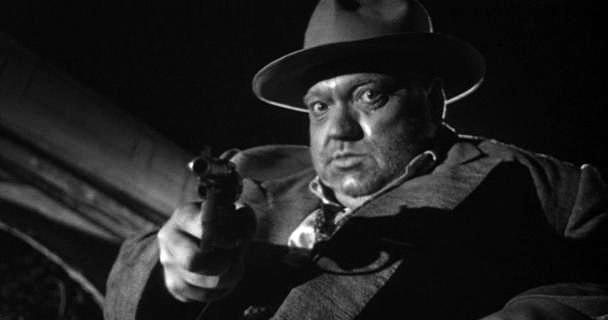
First is a Martinez variation named after one of Orson Welle's most famous films, 1958's "Touch of Evil." This film follows a Mexican narcotics officer played by Charlton Heston who is caught up in a drug war involving both Mexican and American police and crime families. He finds corruption in the most dangerous of places, an American Police Captain played by a bloated and slimy Welles, and the more he uncovers the more he puts both himself and his new wife (Janet Leigh) in danger. This movie is dark and disturbing (including a surprisingly unsubtle gang-rape scene), visually ahead of its time, and has a last act that will have you on the edge of your seat.
Interestingly, at first Welles wanted nothing to do with the picture, and when he became involved the script underwent some major changes. Heston actually agreed to do the film under the impression that Welles was going to direct, but this was a misunderstanding and the studio had no such intention. Heston supposedly refused to do the film unless Welles did in fact direct, and the studio changed its mind. Unfortunately the studio essentially fired him after the shooting was finished and made major alterations to the editing of the film. Before his death, Welles left instructions on how he wanted the film recut, which were carried out and the film was re-released in 1998 to his specifications.
This cocktail smells and tastes of smoke and dark spices, reminding me of Welles in this film. It is still quite smooth, however, and the proportions and addition of Jerry Thomas bitters make it delightfully dry. On a further conceptual (and silly) note, the Martinez is an American drink with a Spanish name and I am using Mexican spirits rather than the usual English gin. In Touch of Evil, Heston - an American actor - plays a Mexican whom they call "Mike," a typical American name. All in all it's just a fun twist on a classic. Cheers!
Touch of Evil 1oz mezcal 1oz tequila reposado or anejo 1/2oz Carpano Antica sweet vermouth 1/4oz maraschino Dash Bitter Truth Jerry Thomas' Own Decanter Bitters
Stir ingredients with ice and strain into a cocktail coupe.
Last
post (found here)we went through some of the best classic cocktails for a lady, but
the list to me feels incomplete without the following runner-ups. Stinger This
drink is very simple and not particularly interesting in flavour - in
fact, it can be way too sweet if made according to classic recipes.
However, it is an excellent digestif to end your dinner or evening, and
opens the door to some very interesting experimentation. Having a
half-sized cocktail of Cognac or brandy with bitters, or amaro, and some
representation of the mint flavour (be it Giffard menthe de pastille or
Branca Menta or an amaro like Nardini) has become a mainstay of my
drinking evenings. The drink also has a long American history, dating in
literature back to 1917’s “Ideal Bartender” book, which lists it simply
as equal parts of brandy and white crème de menthe. It was popular
amongst pilots in WWI because the young men preferred drinks not to
taste of alcohol, but also because the mint oil disguised the liquor on
their breath (as cocktail historian David Wondrich reasons). The Stinger
was a favourite of Billie Holiday, as well as enjoyed by the lovely
Grace Kelly [right] in 1956’s “High Society,” Katherine Hepburn in 1940’s
“Philadelphia Story,” and Jayne Mansfield and Cary Grant in 1957’s “Kiss
Them For Me” (in which Grant says “stingers - and keep them coming.”)
Giffard’s menthe de pastille can be substituted for crème de menthe (to
better effect in my opinion), but is more potent and should be balanced
accordingly. The below recipe is Wondrich’s:
2.25oz brandy 0.75oz white crème de methe
Shake well with cracked ice, then strain into a cocktail coupe. Pink Lady The
name is a little obvious for a lady cocktail choice, the drink is
pretty-looking, tastes fruity, but it still packs a punch. It also
carries a foggy history. Originally the recipes only included gin,
grenadine, and egg white (Cafe Royal Cocktail Book, 1937), but later
incarnations included lemon juice, applejack or apple brandy, and even
cream. Esquire’s 1949 “Handbook for Hosts” (mentioned last post) also
has this one in the ‘for the girls’ section. In popular culture, 1950’s
sex symbol Jayne Mansfield [right] used to drink them before meals, and in the
1937 film “Topper,” Constance Bennett gives one to Cary Grant. The most accepted recipe comes from David Embury’s “Fine Art of Mixing Drinks” in 1948:
1.5oz gin 0.5oz apple brandy (or applejack) 0.5oz lemon juice 0.25oz grenadine egg white
Shake ingredients without ice, then add ice and shake again. Strain into a cocktail coupe.
Twentieth Century This
is an excellent introduction to gin, or an excellent trick for anyone
who claims they don’t like gin. It originated in 1937’s Cafe Royal
Cocktail Book, credited to C.A. Tuck, a British bartender who created
the drink in honour of the Twentieth Century Limited. At the time this
was a wonder of modern technology: the world’s fastest and most
luxurious train that ran from Chicago to New York at 60 miles per hour
from 1902 to 1967. So fancy was this train and its many dining and
drinking cars, that passengers boarded and exited the train upon a red
velvet carpet, which is actually the origin of the phrase “red carpet
treatment.” The train was featured in several films, most prominently in
Alfred Hitchcock’s very influential “North by Northwest” (1959). The
drink itself is like a chocolate meringue dessert, but can still be made
dry enough to enjoy. Below is the traditional recipe, but click here to
see a variation using egg white and substituting a Giffard white
chocolate syrup for the very flat crème de cacao, along with a more
detailed history.
1.5oz Plymouth gin 0.75oz Lillet Blanc 0.75oz white crème de cacao 0.75oz lemon juice
Shake with ice and strain into a cocktail coupe. Jack Rose This
pink and fruity sour has several theories of inception: named after a
lying gambler who had a famous run-in with the law in 1912 (and who may
have invented the drink himself), named after the Jaquemot rose because
of the colour (as claimed in the book “Old Waldorf Bar Days” in 1931),
or as recently uncovered in print in 1905, simply invented by a
bartender at Gene Sullivan’s Cafe in Jersey City. Sadly the oldest
printed account is the most likely one, negating the much more
interesting Jack Rose the gambler story, which also lends the parallel
of the drink itself being a liar, with its pink colour and fruity
flavour masking what is actually a very strong drink. It is nonetheless a
clever name, having both applejack and a rose
colour. To be traditional, applejack should be used, but calvados is
also acceptable and will offer a softer and fruitier drink. The juice is
not specified between lemon or lime in the history books, but I find
lime much more interesting. There are recipes galore on how to make
this, and a major factor is how you make your grenadine. The simplest
way is just to make a 1:1 simple syrup with real pomegranate juice in
place of water, and this will enable you to balance drinks the usual
way. Below is David Wondrich’s recipe:
2oz applejack (or Calvados) 1oz lime juice 0.5oz grenadine Shake all ingredients with ice and strain into a cocktail coupe.
Aviation A
favourite among cocktail enthusiasts, the Aviation dates back to the
1910’s but underwent a recipe change in by 1930 when the Savoy Cocktail
Book omitted one of its ingredients: crème de violette. Throughout the
next seventy-five years violette was for the most lost and forgotten as
manufacture ceased, but thankfully in 2007 Rothman & Winter
reproduced it and now we have several kinds available to us in North
America. An Aviation without violette has none of the blueish colour for
which it was likely named, and a much flatter-tasting drink altogether.
Maraschino is somewhat of a challenge to the uninitiated, but with the
balance of citrus and floral flavours makes this an excellent
introduction. Below is Robert Hess’ adapted recipe. Click here tosee a more in-depth history of the Aviation.
2oz gin 0.5oz lemon juice 0.5oz maraschino liqueur 0.24oz crème de violette Shake all ingredients with ice and strain into a cocktail coupe.
I was going to continue on with another Aperol cocktail from Pegu Club in New York, which in hindsight would have been the best cocktail to start everything off (being an introduction to Aperol, which is a great introduction itself to amaro), but I've decided instead to head a couple blocks west of L'Abattoir in Gastown and visit my good friends at Pourhouse.
This is one of my favourite Pourhouse originals (again a creation by bar manager Christopher Flett, the man who brought us both "The Bittercup" for Fernet February and the amazingly delicious "Don't Mind If I Do") and actually the reason I bought my first bottle of Averna. It's fairly unique in its choice of base spirit - gin - because amari are typically darker and denser in taste and body, which means that they will typically be paired with darker and denser spirits, like whiskey or dark rum. Lighter spirits are usually overpowered by more potent ingredients, so Flett's choice of gin with a dark amaro here makes for an immediately intriguing drink, and a great showcase for amaro's versatility.
The specific ingredients here are key - I've tried it with other gins and it's still a great cocktail, but not quite the same, and I've tried it with other orange bitters, but Fee's is the one that without a doubt really makes this work. While not my favourite orange bitters at all, as it's much less complex and interesting, it does work exceptionally better in certain cocktails, plus will only run you $8 at Gourmet Warehouse. Victoria Gin from Victoria Spirits in, yes, Victoria, is one of my favourite gins (as you may have already seen in my Beginner's Guide to Buying Gin in B.C.) and is probably very different from what you've had before. It has a much softer juniper component, which allows its other spices and citrus to really create a different balance than you're used to in a London Dry-style gin, and despite its higher proof has a really soft and buttery feel in your mouth. Using Averna brings out certain botanicals in the gin, and using the very orange Fee's orange bitters brings out the citrus notes. Maraschino cuts through as you would expect, but in the spirit of a cocktail like the Martinez, doesn't overpower and almost makes a seemingly dark drink taste and smell lighter.
While the ingredients are not all cheap (with Victoria gin coming in at $45-$50 in B.C.), they're all worth every penny, and this drink is true evidence of this. (I should also note that you can get a half bottle at 375mL of Victoria Gin for $28 should you want to save a little and try it out, but only non-government stores carry it).
Cheers to Flett and the boys at Pourhouse for continually mixing high-quality, classic-style cocktails. Head to Pourhouse immediately for this and many other a cocktail whenever you're in Vancouver.
The Penny Farthing 1.5oz Victoria Gin 1/2oz Averna Amaro 1/4oz Luxardo Maraschino 2 dashes Fee's Orange Bitters
Stir over ice and strain into a cocktail coupe.
[[ See my post on amaro digestivos here ]]
[[ See my post on amaro aperivos here ]]
[[ See a buying guide for amaro here ]]
[[ See "The One Hit Wonder" from L'abattoir in Vancouver here ]]
[[ See an introduction to amaro here ]]
[[ See "The Imperial Eagle" from Bourbon & Branch here ]]
[[ See "Sevilla" from Beretta here ]]
[[ See "Fallow Grave" from the Toronto Temperance Society here ]]
[[ See "The Black Prince" from Phil Ward here ]]
[[ See "Bad Apple" and "Jackson Ward" from Amor y Amargo here ]]
[[ See "The Four Horsemen" from Jay Jones at Shangri-La here ]]
[[ See Colin MacDougall from Blue Water Cafe here ]]
[[ See "Debbie Don't" from Dutch Kills here ]]
[[ See "Welcome to the Dark Side" from Cin Cin here ]]
[[ See "Foolish Games" from Russell Davis here ]]
[[ See "Intro To Aperol" from Audrey Saunders at Pegu Club here ]]
Today we will be discussing a classic that is very close to my heart. It's one of my favourite gin cocktails, and my first introduction to Creme de Violette, a liqueur made from macerating violet flowers in usually a grape spirit base, and that ingredient itself brings about an age-old debate about exactly how to make this one properly. It takes us back before the 1920's, and is, as David Wondrich puts it, "one of the last truly great cocktails to be invented before Prohibition." The earliest mention of The Aviation is 1911, but the most obvious first mention is by Hugo Ensslin in his book "Recipes for Mixed Drinks" in 1916, which the German-born bartender wrote while presiding over the bar at the Wallick House hotel in Times Square, New York. This book was an inspiration and great source of information for one of the biggest names in cocktail history, Harry Craddock, who wrote one of the greatest cocktail books, "The Savoy Cocktail Book" in 1930. This is where the controversy begins, though, as Craddock omits the Creme de Violette as an ingredient, partially due to availability, and this omission for the most part continued until 2007 until Rothman & Winter's product showed up on the U.S. market. This coincided with our current cocktail revolution during which many connoisseurs and interested parties began to learn histories and recreate classic cocktails. It is unclear exactly who created the cocktail, but it did begin to achieve popularity in the 1910's and was likely named after the then new American industry and interest of aviation, i.e. the design, development, and use of aircraft, as the first airplanes began to be used for military purposes around the time of World War I. The drink was named as such because the addition of the Creme de Violette turned the drink a slight blue colour.
The Recipe The original recipe as per Ensslin's book was printed "2/3 parts El Bart gin, 1/3 part lemon, 2 dashes Maraschino, and 2 dashes Creme de Violette" (equating to essentially 2oz gin, 1oz lemon, and a barspoon-full of each Maraschino and Violette). El Bart gin has since disappeared, but was a sponsor of the book itself and therefore should not really be considered a gin that best serves the cocktail. After being reprinted in Craddock's Savoy Cocktail Book without the Violette, a range of recipes has shown up, and I guarantee that each bar you go to will make it slightly differently. Should you want to experiment, here are the reputable recipes I've found:
A newer version of Creme de Violette from Tempus Fugit (which is way more interesting, less sweet, and less floral than Rothman's) suggests a 6:3:2 ratio for gin : lemon : Maraschino/Violette (1.5oz : 3/4oz : 1/2oz), which I find lets the liqueurs really overpower the gin.
David Wondrich suggests 2oz of gin, 3/4oz of lemon, and 1/2oz of Maraschino, which not only omits the Violette, but is also arguably too sour.
Dale Degroff uses 2oz of gin, 1 full ounce of Maraschino, and 3/4oz of lemon, which lets the Maraschino overpower the rest of the flavours.
Gary Regan writes 2oz of gin, 1/2oz of lemon, and 1/2oz of Maraschino, which I find is the best ratio, but still omits the Violette.
Robert Hess from www.drinkboy.com, Small Screen Network, and founder of the Museum of the American Cocktail and The Chanticleer Society, suggests a 8:2:1 ratio for gin : lemon/Marashino: Violette, which I find is the best tasting recipe and is thereby the one I will print in this post. As for the garnish, I've seen no garnish at all, a brandied cherry, and also a flamed lemon peel. The original recipes list no garnish, but I love the taste of the latter so will suggest that.
The Aviation
2oz gin
1/2oz lemon juice
1/2oz Maraschino
1/4oz Creme de Violette (or even 1/8oz depending on what kind you use. This amounts to a barspoon-full or two - see what you like)
Combine all ingredients in a shaker, add ice and shake, strain into a cocktail glass. To garnish, flame a lemon peel by burning a large piece of peel for a couple seconds, then squeeze the peel towards the glass so the oils ignite over the cocktail.
If you use Tempus Fugit, use 1/4oz, if you use something much more sweet and floral like Rothman's, use 1/8oz which is just about a barspoon-full.
This is a great drink for trying different gins. Anytime I get a new kind of gin that I want to play around with, I usually try it straight, cold and diluted, in a Martini, and in an Aviation. They all play with the fruit and floral in their own ways, and you'll probably find your favourites, but this is always a great cocktail. Hendrick's and Martin Miller's gins are two of my favourite gins and make fantastic and interesting Aviations in really different ways (I'm actually sipping a Martin Miller's one while I'm writing this, and damn, it is good). A good London Dry is the typical way to go (Tanqueray or Junipero work great, for example), or perhaps you may find it fitting to try the "Western Dry" style of Aviation Gin.
The History
The 1910's was a big decade for the U.S. This was the first time that the country was considered a world-leader in terms of industry and power, as it became the most industrialized country in the world. Huge American industries began to boom, including automobiles, popular culture (such as film and music), and tobacco. World War I obviously had a big impact, affecting industry, economy, and culture. The population sat at 92 million, life expectancy was barely 50 years, and divorce was almost non-existent. The film industry was just starting to grow into its "Golden Age," with about 30 million people going to the movies each week. Overall, this was a period of unrest of reform, as labour unions grew, and unsafe working conditions and child labour were slowly abolished. Prohibition was brewing, and by 1919 became law, and the consumption of alcohol became both illegal and secretive, dramatically reinventing cocktail culture, but also being the biggest catalyst in creating organized crime in the U.S. (see my post on Chicago in the 1920's via The Southside Cocktail). In art, realism, cubism, futurism, Fauvism, industrialization, Dadaism, and primitism all became popular forms, and most notably, photography became both possible and recognized as an art form. D.H. Lawrence and H.G. Wells were popular writers at the time, the latter being one of the more important names in early science fiction. For style, comfort began to take priority in what people wore. Fabrics got lighter and looser, necklines got lower, and styles like the sack, sheath, harem trousers, hobble skirts, Hellenic tunic, Asian oriental costumes, and brighter colours became popular. For men, the top hat, frock coat, striped trousers and blazers, lounge suits, and tweed jackets were all prominent. All in all this seems a period of growth ultimately leading to the 1920's, which had a much stronger and more unique identity.
Musically, the U.S.'s greatest product - jazz - was only just beginning in the slums of New Orleans. This was the age of Tin Pan Alley, the age of sheet music, early show tunes and early pop songs. All major works were published on West 28th between 5th and 6th Avenue in New York City, and the area, and music period, was named supposedly for the sound of the cheap pianos constantly playing in each and every publisher's office (a cacophony of banging tin pans). Cole Porter, Fats Waller, George Gershwin, Scott Joplin, and Irving Berlin were all big names in Tin Pan Alley, all of whom had their music reinvented at some point during the jazz age to come. Ragtime had evolved, stride piano playing brought about the swing arrangements to come, band leaders like James Reese Europe were creating early jazz, and Louis Armstrong was honing it into the art form and influence on popular music it was going to become.
One of the more famous songs of this period, written by one of the more famous songwriters of the subsequent music industry, was "Alexander's Ragtime Band" by Irving Berlin. This piece shows great influence of stride and ragtime by writers like Scott Joplin, but is also a great showcase of the swing that was just starting to happen at the time, and while it was Berlin's first successful song, it became a classic covered by many artists well into the 1950's.
I encourage you to drink your Aviation the traditional way, with a dash or two of Violette (head to a reputable bar for this, and don't accept it if any bar omits the Maraschino - they are not serving you an Aviation!), and enjoy it while listening to some very early American popular music by Irving Berlin. Here is "Alexander's Ragtime Band."
We are nearing the end of Maraschino March now, and have only two more new, original cocktails to see before I move on to some historical ones. The first of the two takes us back to Canon in Seattle where Jamie Boudreau, whom we met for the Denny Triangle in Fernet February, will be cooking up - literally - something herbal and delicious.
Setting cocktail ingredients on fire is not just for show, it does actually change the flavours in sometimes dramatic ways, and Jamie puts this to use with the Rubicon by cooking a sprig of rosemary in flaming Green Chartreuse. By burning the Charteuse, in Jamie's words, "a lot of the alcohol edge is burned off, and the botanicals seem to blend and integrate more smoothly." He even suggests just trying a spoonful taste of it normally, then trying one that's been burned for about 6 seconds so you can see the difference. Cooking the rosemary will strengthen its presence in the cocktail as well.
Be warned that, obviously, fire is dangerous and you need to be careful when using it, but also be careful what you're cooking the ingredients IN. I made the mistake of burning the rosemary and Chartreuse in a poor quality glass that ended up cracking in half after a few seconds of flame. Also, don't leave the rosemary on fire too long or you'll burn and blacken it. Jamie uses an olive oil mister filled with Chartreuse to spray through the flame into the glass, but it is possible to just light the liquid inside the glass by hand (I would definitely suggest using one of those long candle lighters and not a typical cigarette lighter). This drink is still delicious without the fire, and is even delicious with a rosemary tincture instead of actual rosemary, but you should stay true to the original if you can. Also, the crushed ice added afterwards is key because the flavours are quite potent and need a little extra dilution to even out a bit. Here is the video from Raising The Bar on the Small Screen Network where you can see Jamie making this cocktail himself.
As for the name, Jamie explains: "The rosemary curled in the glass reminded me of Caesar’s laurels and therefore I’ve named this libation after the famous river Caesar crossed in 49 BC after uttering the now famous words: ‘Let us go where the omens of the Gods and the crimes of our enemies summon us! THE DIE IS NOW CAST!’ It is with this action that the Roman Empire began, and western civilization as we know it."
Jamie's bar, Canon, simply must be at or near the top of your Seattle bar list, and when you stop by, have Jamie make you a proper Rubicon - unless he something even more exciting in mind.
Rubicon
1.5oz Plymouth Gin 0.5oz Green Chartreuse 0.5oz Maraschino 0.5oz Lemon Juice 2 full sprigs of rosemary
Arrange a small rosemary wreath in the bottom of a rocks glass and soak it in the Chartreuse. Combine other ingredients in a shaker with ice, shake, and set aside. Light Chartreuse on fire by misting Chartreuse through a flame into the glass and let burn for about 6 seconds. Put out the flame by pouring the shaken ingredients into the glass. Top with crushed ice and another sprig of rosemary.
[[ Photography by Jamie Boudreau ]]
[[ see "Oden's Muse" from Tavern Law here ]]
[[ see "The Hemingway Solution" from Vessel here ]]
[[ see "The Division Bell" from Mayahuel here ]]
[[ see "The Shibuya Crusta" from L'Abattoir here ]]
[[ see "The Unforgiven" from Russell Davis of Rickhouse here ]]
[[ see "Cherry Bob-omb" from Veneto here ]] [[ see "Primer Beso" from The Refinery here ]]
[[ see the Maraschino March introduction here ]]
As promised, we move on to a cocktail that uses, no joke, a full ounce and a half of Maraschino. General manager at The Refinery, Graham Racich, informed me upon accepting the challenge this month that he was going to use it as a base, and I believed him... but maybe I didn't really believe him. Once again, Tequila shows up as a complimentary ingredient to the Maraschino, and like The Last Word, so do Green Chartreuse and lime, but it's difficult to imagine how any flavours can poke through that ounce and a half. However, in The Last Word, both the lime and Chartreuse really prove to not only calm down the Maraschino but blend really well with it, and this is, as Graham puts it, an inverted version of it. Upon tasting, you got a strong hit of the Maraschino, but it backs off really quickly and you start to get the lime flavours, then last you get all the herbs and a bit of spice from the Chartreuse and Tequila. It's a surprisingly tame cocktail considering what's in it, and while very sweet in texture, isn't too much so in flavour. There's definitely room for experimenting here with other bitters, but if you want the true experience, get to The Refinery and have him make it with his house-made lime one.
Thanks to Graham and The Refinery for the contribution!
(you can check out my review of The Refinery here)
Here is, Primer Beso (meaning "first kiss" in Spanish).
Primer Beso
1.5 oz Maraschino
0.75oz Blanco Tequila
0.75oz fresh lime Juice
0.5oz Green Chartreuse
Dash of homemade lime bitters Shake and strain.
[[ see "Oden's Muse" from Tavern Law here ]]
[[ see "The Hemingway Solution" from Vessel here ]]
[[ see the Maraschino March introduction here ]]
[[ see "The Division Bell" from Mayahuel here ]]
[[ see "The Shibuya Crusta" from L'Abattoir here ]]
[[ see "The Unforgiven" from Russell Davis at Rickhouse here ]]
[[ see "The Rubicon" from Jamie Boudreau at Canon here ]]
We head north again for the next two original cocktails, both of which use a lot more Maraschino than you'd expect, or probably have ever seen. First, is the "Cherry Bob-omb" (which I'm told is a Scott Pilgrim reference) from Simon Ogden at Veneto in Victoria. (You can see my review here).
Simon, head bartender at Veneto, is also a founding member and writer for the Lyric Stage Project (a collective of artists involved in theatre), spends much of his time not behind the bar on or around a theatre stage, and contributes as well to local publications and websites discussing drink in B.C. (such as Urban Diner). You can check out his personal blog here.
His influence is felt here in Vancouver as well, where you can go to the Clough Club (one of my favourite new cocktail bars) and order both his creation from Veneto "The Wax Poetic" (with bourbon, grapefruit, agave, lemon, Peychaud's, egg white, and flamed grapefruit peel), and "The Ogden" (bourbon, maple syrup, absinthe, menthe pastille, and flamed orange). The latter was created by Jay Jones, a director on the Canadian Professional Bartenders Association, and recently named the 2012 Canadian Bartender of the Year (you can find him at Market in the Shangri-la Hotel in downtown Vancouver).
Simon is one of many reasons why Veneto is such a great place, and to reiterate my review, I encourage anyone in Victoria to head down there as soon as possible if you enjoy well-crafted cocktails and delicious food.
Simon has created a cocktail specifically for this series that is "built to showcase the Maraschino specifically, and even with the light Tequila at the base, everything frames it nicely." It looks really interesting, and I'm excited to see how everything balances, but this is not one most of us will be able to make at home due to the addition of Guignolet, a cherry liqueur from Angers in France (from the same place and in part the same people who make Cointreau). The solution is simple - get to Veneto and have Simon make you one.
Cherry Bob-omb
1.5 oz El Jimador Blanco Tequila
1 oz Maraschino (I used Luxardo)
1 oz Giffard Guignolet D'Angers
1 oz Fresh Grapefruit Juice
2 dashes Bitter Truth Grapefruit Bitters
Stir together ice and strain into a cocktail glass. Garnish with a flamed grapefruit zest.
A point of interest here as well is the "stir" word showing up in a juice cocktail. I often say "shake anything with juice, cream, or egg - stir everything else," but this is a general rule and is thereby probably meant to be broken (much like shaking a Martini, which is fairly common). Simon says: "I personally stir most drinks with citrus juice. I think the notion that all citrus drinks should be shaken is a fallacy - citric acid blends just fine with alcohol on its own. It depends a lot on the size of the ice you're using and the other products. For example, syrup and egg white drinks should be shaken, but that's more of a function of aeration rather than dilution. It's my contention that the vast majority of cocktails being served on the planet right now are being served too cold, to the detriment of the component flavours. The shaker is a uniquely effective tool for doing what it's designed to do; it's a sledgehammer, if you will, while a barspoon is a screwdriver. The spoon offers much more control."
A couple thoughts on this. First, he hits the nail (or screws the screw?) on the head by saying that shaking is a function of aeration, as most drinks that are shaken have a particular look and consistency to uphold and thereby should be shaken. Is it actually necessary to shake these drinks? Well, no, I guess not. (But please, PLEASE don't take this too far and stir your egg whites). Secondly, on the subject of drink temperature, this has been the subject of much debate in the past, namely in deciding whether it is "better" to shake or stir a Martini. There were even double-blind tests done, which basically revealed that people prefer colder Martini's, and therefore the better way to make one is to shake it. However, then you lose the pristine look of a stirred one, and some don't like that, etc, etc. I am, however, with Simon one this one (though not in all cases, as this has to be on a drink-to-drink basis as always) in a way because the colder your drink the less aromatic it will be, and in many cases, the less flavour you will get from it. That's why Scotch, or high-end Tequila and whiskey is enjoyed neat, at room temperature - so you can get the most out of the flavour and aroma. Drinking a $100 bottle of Scotch on the rocks is a bit of a waste because you won't be enjoying it to its full potential. However, we're talking about cocktails, not neat spirits, and therefore the goal is to ensure that the flavours mix and balance through chilling and diluting the ingredients, and a warm cocktail is a very different experience than a cold one (though now Russell Davis has got me very intrigued - check this out). Either way, this is a debate for another post, so I will continue it there. Stirring is how Simon designed the cocktail, so that's how it should be made, damn it!
Russell Davis from Rickhouse mixed his drink without even using ice, Simon stirs his cocktail with juice while using a full ounce of Maraschino, and next post we'll see Graham Racich from The Refinery use a full ounce and a half (!) of Maraschino by making it the base for his cocktail.
Thanks to Simon and Veneto for this contribution!
[[ if you're interested in drink-temperature science, check this out ]]
[[ see "Oden's Muse" from Tavern Law here ]]
[[ see "The Hemingway Solution" from Vessel here ]]
[[ see the Maraschino March introduction here ]]
[[ see "The Division Bell" from Mayahuel here ]]
[[ see "The Shibuya Crusta" from L'Abattoir here ]]
[[ see "The Unforgiven" from Russell Davis at Rickhouse here ]] [[ see "Primer Beso" from The Refinery here ]]
[[ see "The Rubicon" from Jamie Boudreau at Canon here ]]
We are heading back down south for a very different and interesting cocktail from Mr. Russell Davis at Rickhouse in San Francisco. Who is Russell? Ok deep breath...
Russell is a southern gentleman who ran Peche in Austin, Texas, before heading up north to San Francisco to work both Bourbon & Branch and Rickhouse, where he collected numerous competition wins and awards from San Francisco Magazine, Germain-Robin Craft Distiller's Cocktail Competition, and others, was just named Nightclub & Bar's 2012 Bartender of the Year, represented Rickhouse when it was awarded "High Volume Cocktail Bar of the Year" at Tales of the Cocktail, has been written up in lots of magazines and newspapers like Details, Imbibe, and the San Francisco Chronicle, and works with brands like Anchor Distilling (Junipero, Luxardo, etc), Dulce Vida Organic Tequila, No.3 Gin, St. George Spirits, and Michael Collins Irish Whisky. The list really does go on (here's a decent list from last year).
Russell has several non-bar ventures as well, doing online videos for infusing Tito's Handmade Vodka (for example), and currently is a consultant for San Francisco's Ice Cream Bar, literally a soda fountain bar. Something most people don't realize (including me until very recently) is that bartending and soda actually have a connected history. Once Prohibition began, many bartenders fled to Europe where they could practice their craft in peace, many continued to work with cocktails in secret at speakeasies, and some actually became "soda jerks." Creating soda flavours involves mixing tinctures and extracts to create a balanced flavour, and thereby has a lot in common with cocktail mixology. Russell says "there was a beautiful way of mixing that was refined during this period" that he believes will have have an influence on crafting cocktails. If you're interested in soda bars, jerks, and pumps, and their history, The Ice Cream Bar in San Francisco is definitely the place to go (where their floats are "built to the same specifications as they would have made them in 1894 Chicago"), and I also suggest checking out Darcy O'Neil's site and his book on the subject, "Fix the Pumps."
Back to cocktails.
Something Russell has been experimenting with is using room-temperature water instead of ice to dilute and mix a cocktail to be more true to the accurate history of 19th century bartending. He wrote a great description for me himself, so I'll just let him talk:
"After doing a bit of research on ice, I began to discover that during the 1800's, before refrigeration, the production of ice was a gigantic industry that died as soon as it became obsolete. These factories were as big as some of the giant factories you see now in industrial areas. They would cut giant hunks of ice out of frozen rivers and lakes and transfer them by waterway where they were stacked and stored stories high (which was very dangerous - it wasn't uncommon for workers to lose limbs or die) and then loaded onto train or ships or some other form of transportation and then distributed. This wasn't cheap or easy at all. So, keeping that in mind, I started to reconsider how some of these drinks that were developed in that era may have really been done. Along the Barbary Coast here in California, it was filled with some of the most down and out, dangerous wild west saloons you could think of. I bet it was pretty tough to get ice in your Martinez (or any drink unless you were in a "fancy" hotel or other "fancy" venue) in Martinez California during the 1880's. As a result, I don't add ice to this drink, but instead, add 1/2 oz of water just for dilution purposes and to bring the flavors together. Try it on your next Manhattan, Old Fashioned, or Sazerac. Instead of adding ice to stir, just add 1/2 oz - 3/4 oz of water to your taste. On this cocktail I also was inspired by the Martinez, yet wanted to create something that I would make for Clint Eastwood if he was ever sitting at my bar. I also like to joke around that this is going to be the official drink of the Apocalypse. Aged Old Tom Gin and Mezcal (I think Mezcal is the wild man's scotch). Here we go!"
The Unforgiven
1 oz Mezcal Vida 1 oz Ransom Gin 3/4 oz Carpano Antica 1/4 oz Luxardo Maraschino 1/2 oz Spring Water 2-3 drops Tobacco Tincture (pipe tobacco infused in moonshine; use a good chocolatey tobacco) Dukes Orange (1"x3" piece of orange zest cut off the orange using a vegetable peeler)
Combine mezcal, gin, vermouth, maraschino, and water into a mixing glass. Zest dukes orange over the mixing glass, pinch over the mixture to release the essential oils, and take the zest and rub around the inner and outer lip of a small rocks glass and then drop into the mixing glass. Now stir the mixture 3 times WITHOUT ICE. This is a room temperature drink. Pour the contents of the mixing glass into your rocks glass. Drop 2-3 drops of tobacco tincture on top.
This one isn't on the menu at Rickhouse, but as Russell puts it, it was somewhat of an underground favourite that people still ask about, but he would only serve to "the most serious of cocktail drinkers." So if that's you, see if you can catch him at Rickhouse and have him make one for you.
Thanks to Russell and Rickhouse for the exciting contribution!
[[ see "Oden's Muse" from Tavern Law here ]]
[[ see "The Hemingway Solution" from Vessel here ]]
[[ see the Maraschino March introduction here ]]
[[ see "The Division Bell" from Mayahuel here ]]
[[ see "The Shibuya Crusta" from L'Abattoir here ]]
[[ see "Cherry Bob-omb" from Veneto here ]] [[ see "Primer Beso" from The Refinery here ]]
[[ see "The Rubicon" from Jamie Boudreau at Canon here ]]
Tonight we head back to Gastown to once again visit Shaun Layton at one of my favourite places for food and drink in Vancouver, L'Abattoir. (You can check out my review here)
Shaun combined a few different cocktails to come up with this one, namely a Brandy Crusta and a Japanese. The former was originally a style of drink (much like the "Cocktail") using a spirit, lemon, Maraschino, Cointreau, bitters, and served with a large piece of lemon peel wrapped around the inside of the glass. The latter is simply brandy, orgeat, and Angostura bitters. Shaun is also adding sparkling wine to the mix and upping the amount of the bitters, like a Champagne Cocktail or Seelbach. Add all these elements together and you've got a fairly complicated, yet light, creative drink. Shaun manages to balance a lot of elements here, in particular using the orgeat to calm down the seven (as he says, "that's right, seven") dashes of Angostura - or perhaps the bitters calms down the orgeat? The Cava really ties everything together, and the Crusta-style of presentation makes this a truly enjoyable drink on all levels.
The Shibuya Crusta
20 ml Hennessy VS Cognac
15 ml Maraschino
30 ml fresh lemon juice
10 ml orgeat syrup
7 dashes Angostura bitters
Top with Cava
Add all ingredients to a shaker tin minus the Cava. Shake, fine strain into sugar decked flute. Top with Cava. Garnish with a long orange peel around the inside of the flute.
Head down to L'Abattoir to check this one out, and do yourself a favour and stay for dinner and extra cocktails.
Thanks to Shaun and & L'Abattoir for contributing!
[[ see "Oden's Muse" from Tavern Law here ]]
[[ see "The Hemingway Solution" from Vessel here ]]
[[ see the Maraschino March introduction here ]]
[[ see "The Division Bell" from Mayahuel here ]]
[[ see "The Unforgiven" from Russell Davis of Rickhouse here ]]
[[ see "Cherry Bob-omb" from Veneto here ]] [[ see "Primer Beso" from The Refinery here ]]
[[ see "The Rubicon" from Jamie Boudreau at Canon here ]]
I just have to include this cocktail because it's one of my favourites right now (I seem to have somewhat of an addiction to smoke). It is a variation on The Last Word (you can see my full historical post on this cocktail here), but switches up gin for the very hard-to-find Mezcal, and Green Chartreuse for Aperol, giving a totally new complexion adding more fruit, bitter, and tons of smoke, and removing a lot of herbal flavours. It also makes for a very pretty, deep orange cocktail in darkened bar-light. Creator Phil Ward at Mayahuel in the East Village, New York, named it "The Division Bell," after the Pink Floyd album.
Mayahuel is entirely devoted to 'paying homage to the wonderful history of Mexico and honouring her spirit with the finest Mezcals and Tequilas, and the honest labours of their kitchen.' The very serious and obviously passionate mission statement on their website reminds us to "bear in mind some simple truths: Tequila should be sipped not shot, most certainly salt and lime; Mezcal need not encase a worm, or any larvae for that matter; and mixtos are missing the point altogether." The same sentiments I tried to instill through all of my Tequila posts so far. While they lay it on a little thick, I'm actually glad they do, as I appreciate the passion and dedication the team there so obviously has for Mexican culture, cuisine, and the "Agave Goddess." I think a warning like that might still be necessary too, because at some point "drinking Tequila" translated to "doing shots of Jose Cuervo," and I've known so many people who "don't drink Tequila anymore" because they've gotten sick from the aforementioned mixto crap. The more I learned about the Mexican spirits, the more I enjoyed them, and the more I realized what an exciting treat places like Mayahuel or Tommy's in San Francisco are because whiskey knowledge and appreciation, for example, is so much more commonplace, and so much easier to accomplish than that of Tequila or Mezcal. I especially get excited having a very interesting and creative cocktail like the Division Bell, considering how incredibly difficult it is to get Mezcal in Canada, and how limited and over-priced the selection of Tequila is.
Alright, I'm digressing big-time, so let's move on.
The only place I've ever had this cocktail is Pourhouse in Vancouver, but more and more places are getting bottles of Mezcal, so I'm sure you could hit up L'Abattoir or Clough Club (where'd they get all those bottles from?!) and have this made as well. The guys at Pourhouse tell me they make this drink with a 3:1 Mezcal:everything else, but I've also seen a recipe online for 3:2:1 for Mezcal:lime and Aperol:Maraschino. That doesn't sound like it would balance as well, but supposedly that one came FROM Pourhouse, and it tasted pretty awesome to me. I'm going to post the recipe from Mr. Ward himself.
The Division Bell
1.5 oz Mezcal (Del Maguey San Luis Del Rio or Chichicapa preferred) 0.75 oz Aperol 0.75 oz lime juice 0.75 oz Maraska Maraschino (OR 0.5oz Luxardo Maraschino)
Shake all ingredients with ice, strain into a cocktail glass, garnish with grapefruit zest (be sure to get the oils on the drink and around the rim).
For the Maraschino, I've seen both Maraska and Luxardo listed. Yes, there is more than one type. Luxardo is the most common, and the only one I've seen in real life. Maraska, which is made in Zara in the original Maraschino factory, is reviewed as having a more pronounced cherry flavour with a hint of almond. It's much less dense overall and has a shorter finish, stopping it from overpowering other flavours so easily. Changing the type will change the cocktail, which can easily explain why other recipes for this cocktail have popped up. Try all the recipes and see what you like, but again, the one I've listed in bold above is the one actually from Mayahuel.
Thanks to Mayahuel and Phil Ward for an awesome cocktail, and for being so passionate about Mexican food and drink.
If you're reading this and you're in New York, Mayahuel looks amazing from the menu to the decor to the spirit list, and I envy you getting to go there before the next time I'm in New York. So go do it.
Also check out some more fun recipes from their "Magic of Mezcal" event.
[[ see "Oden's Muse" from Tavern Law here ]]
[[ see "The Hemingway Solution" from Vessel here ]]
[[ see the Maraschino March introduction here ]]
[[ see "The Shibuya Crusta" from L'Abattoir here ]]
[[ see "The Unforgiven" from Russell Davis of Rickhouse here ]]
[[ see "Cherry Bob-omb" from Veneto here ]] [[ see "Primer Beso" from The Refinery here ]]
[[ see "The Rubicon" from Jamie Boudreau at Canon here ]]
[[ photography by Adrian Salonga, Loungerati, and Justin Goodman ]]
The next cocktail for our month of Maraschino hails from a widely respected bar from Seattle by the name of Tavern Law. It's a winner of many honours, including being named one of the Top 25 Bars In America from GQ Magazine, and is often mentioned, even in the New York Times, in the same sentence as such infamous names as Milk & Honey in New York and Bourbon & Branch in San Francisco. The chef pairing of Brian McCracken and Dana Tough are multiple award-winners as well, even being named in the Top 5 New Chefs by Gayot. Needless to say, it's a pretty amazing establishment.
Being somewhat easy to miss from the outside in Prohibition speakeasy fashion, but also having a secret second bar upstairs behind a black metal door called "Needle & Thread," really sets the perfect mood for imbibing, and the cocktail menu has a generally more traditional focus to match. To even get upstairs to the Needle, you need to call from the on-site telephone (similar to PDT in New York), and if one of the 25 seats are available, or more importantly, if you sound like you deserve a great drink, the bartender will buzz you up. There's no menu up there, so the incredibly skilled staff will create libations based on your mood and spirit preference.
I feel the mission statement on their website says more than I could about this place:
"In 1832 the Pioneer Inn and Tavern Law legalized drinking in public bars and saloons. The Golden Age of cocktails thrived for nearly a century until the 1919 Volstead Act almost destroyed the craft of the American bartender by outlawing the production and pleasure of alcoholic beverages. However, in hidden rooms and dark basements, thirsty patrons still sought spirits. And so the Speakeasy was born, booming until the repeal of Prohibition in 1933. Neatly another century after Prohibitions repeal, left with only the fond memories and old bar manuals, the art of mixing drinks is alive today thanks to the efforts of dedicated bartenders, historians and drinkers alike. It's because of their diligence and passion that the pleasures of artfully crafted cocktails, fine wine, and masterfully prepared food has kept the spirits of the night dancing on our tongues and in our hearts. Welcome to the celebration of our history."
Sounds like the kind of place I'd want to get a drink. You?
It's an honour to have a contribution this month from Tavern Law, courtesy of event coordinator / bartender, Monica Buntha. To continue a sub-theme here, she uses Aquavit (like "The Hemingway Solution" from Vessel), but this time going for a stirred drink, using the fantastic (and impossible to get in Canada) Dolin dry vermouth, along with Cynar amaro and Fee Brother's Whiskey Barrel-Aged Bitters. Cynar is an amaro (Italian bitter liqueur) made with artichokes, and is one of the more bitter of its ilk, opposed to Averna or Ramazzotti. You can very rarely find it in the government liquor stores, but Legacy will have it for just under $40. The bitters are the Fee Brothers Old-Fashioned Bitters (which have a heavy cinnamon flavour) that have literally been aged in whiskey barrels for a period of time to add a subtle layer of complexity, and to smooth the flavours out. These you can pick up at Gourmet Warehouse, but not all the time, as they're aged and therefore supply is somewhat limited.
Thank you so much to Monica and Tavern Law for contributing, and I implore all of you to head there for a drink if you're in Seattle, and hope that you're lucky enough to make it up to Needle & Thread as well.
Cheers!
Oden's Muse 1.5 oz Linie Aquavit 0.75 oz Dolin Dry Vermouth 0.5 oz Cynar 0.25 oz Maraschino Liqueur 1 dash of Fee Brother's Whiskey Barrel Bitters Combine all ingredients in a mixing glass, add ice and stir, strain into a coupe.
[[ see "The Hemingway Solution" from Vessel here ]]
[[ see the Maraschino March introduction here ]]
[[ see "The Division Bell" from Mayahuel here ]]
[[ see "The Shibuya Crusta" from L'Abattoir here ]]
[[ see "The Unforgiven" from Russell Davis of Rickhouse here ]]
[[ see "Cherry Bob-omb" from Veneto here ]] [[ see "Primer Beso" from The Refinery here ]]
[[ see "The Rubicon" from Jamie Boudreau at Canon here ]]
[[ photography courtesy of Seattle Weekly (sign), and Bob Peterson (roulette/bar) ]]
To kick off Maraschino March we're heading to a city filled with cocktail culture - Seattle. One of the biggest bar names in the city's scene, and actually in North America altogether as it was named by Esquire as one of the "Best Bars in America," is Vessel. According to David Wondrich, world-reknowned cocktail writer/historian, "the cocktails are as modern as the design; a benchmark 21st century mix of tweaked, often molecularized classics and clever new creations - style never tasted so good." 5 years ago when Vessel opened, the bar was definitely raised for cocktail culture in the Pacific Northwest, and it happened at such a time when interest was really beginning to boom.
After a change in some high level personnel (including Jamie Boudreau, who was formerly the bar manager there), and a closure of its location next to the history 5th Avenue Theatre in downtown Seattle in December 2010, Vessel is finally planning to reopen in late April 2012 a few blocks away. The new location was previously a speakeasy of sorts in the 1950's called "El Gaucho," and is twice the size of the previous building. While the decor and design it was so famous for is gone, it's a guarantee to be one of the best places in the city to get a great cocktail.
One of Vessel's specialties is cocktail carbonation, which may sound a little crazy - and it is. Co-owner and bar manager Jim Romdall is one of the first bartenders to make use of the "Perlini Cocktail Carbonation System," (actually invented in Seattle as well by Evan Wallace) which you can see put to use here on the Small Screen Network. It's a CO2 injection system that will carbonate a cocktail without diluting it with club soda. Imagine drinking a Martini that tastes the same, but is bubbling. It's a little unimaginable, so I suggest you just head down to Vessel when they reopen and try it out yourself.
The recipe today is courtesy of Mr. Jim Romdall himself, and uses a spirit you don't often see in mixology - aquavit (or Akvavit). This is a Scandanavian grain or potato spirit that is infused with herbs, spices, or fruit oils, and often aged in oak casks. The main flavour is usually caraway, or dill, and adding that to thyme, mint, and Maraschino will give a complex collection of herbal flavours in the cocktail. If you want to try this at home, you can get some akvavit in the B.C. government liquor stores and bigger independents like Legacy, but I encourage you to put your name on the Vessel mailing list at www.vesselseattle.com so you can get down there as soon as they reopen and have Jim make you one himself!
The Hemingway Solution 1.5oz Krogstad aquavit 0.5oz Luxardo Maraschino 0.75oz fresh lime juice 0.25oz simple syrup 1 sprig thyme 2 mint leaves Combine all ingredients in a shaker, add ice, then shake and fine/double strain into cocktail glass. Garnish with a sprig of thyme.
[[ see "Oden's Muse" from Tavern Law here ]]
[[ see the Maraschino March introduction here ]]
[[ see "The Division Bell" from Mayahuel here ]]
[[ see "The Shibuya Crusta" from L'Abattoir here ]]
[[ see "The Unforgiven" from Russell Davis of Rickhouse here ]]
[[ see "Cherry Bob-omb" from Veneto here ]] [[ see "Primer Beso" from The Refinery here ]]
[[ see "The Rubicon" from Jamie Boudreau at Canon here ]]
 August is film noir month at the Pacific Cinematheque in downtown Vancouver. Lately for me every month has been film noir month as I've been renting droves of dark and depressing classics from the library. I've named several of my few original drinks after some of these films and will be sharing a couple recipes. I highly encourage you to make it to at least one of the films being shown at the Cinematheque as they have consistently great programming and operate almost entirely on the generosity of volunteers. Commemorate your visit with a classic cocktail, or perhaps even with one of mine.