Showing posts with label egg. Show all posts

Friday, 11 January 2013

Five Classic Cocktails for a Fancy Lady

Taste should not be gender-specific. Good food and drink are enjoyed by any, and there shouldn't be "manly" drinks and "girly" drinks - but there are. There are a few reasons for this:
- Generally, women taste things differently than men - they tend to be more sensitive to flavour, particularly bitter. Because of this sensitivity, women often have more distinguished palates. (Again, this is a generalization, but scientific research does support it).
- In western culture, the woman was seen as the weaker sex and therefore shouldn't be enjoying the same things men do, such as strong drink. This is particularly true for cocktails in the first half of the twentieth century when many a book and magazine told women what they should be drinking in order to be a proper and all-around good lady. These drinks were colourful and sweeter.

In the dark ages of bartending (the 1970's-1990's) the above points were interpreted into drinks involving copious amounts of sugar, artificial colour, drinks with 'feminine' names, and a lot of vodka so as to further disguise the taste of alcohol. Many of the classics had both pretty colours and names but also happened to be great drinks, and strong ones at that. These cocktails were not gender-specific, or often started as a "gentleman's drink" (see the Clover Club) before becoming popular amongst the female folk, likely due to the media and populace deciding that a pink drink should be for a woman.

For this list, I'm taking inspiration from the 1920's to 1940's in particular, when men were gentlemen and women were ladies, and there were excellent drinks on both sides to be enjoyed by all. Should you wish to drink like a fancy lady of the time, below are some classic suggestions.

Clover Club
This light and pink drink predates Prohibition when it was enjoyed by the members of the Philadelphia men's club of the same name. By the 1930's, it had lost popularity, and 1949's "Handbook for Hosts" from Esquire placed it in the "something for the girls" section. If made properly this drink can be drier than expected, using fresh raspberries and not artificial liqueurs or commercial sweeteners. The Okanagan Spirits liqueur is an excellent substitution for real raspberry, tasting both dry and natural. If using a home-made raspberry syrup, bump up the gin and juice or lower the sugar amount. Below is the recipe from Pourhouse in Vancouver, which is fairly close to the recipe of old:

1.5oz London Dry gin
0.5oz fresh lemon juice
0.5oz simple syrup
0.5oz Okanagan Spirits Raspberry Liqueur
1 egg white

Combine ingredients and dry-shake. Then add ice and shake again. Strain into a cocktail coupe.  

French 75
A refreshing start to your evening, particularly a celebratory one due to the addition of sparkling wine. As with any drink, it should be made dry so as to awaken your palate and if so it makes an excellent aperitif. Created in 1915 by Harry MacElhone at the New York Bar in Paris, it was named after the WWI French 75mm field gun - which “packed quite a punch." German officers famously order it at Humphrey Bogart's bar in 1942's "Casablanca." Cocktail historian David Wondrich suggests increasing the gin to 2oz and serving over ice in a Collins glass. While this tastes better, I prefer the drink in more elegant attire. Here is the Savoy Cocktail Book recipe from 1930:

2/3 gin [1oz]
1/3 lemon juice [0.5oz]
1 teaspoon powdered sugar [0.5oz simple syrup]

Shake ingredients with ice and strain into a Champagne glass or cocktail coupe, then top with chilled Champagne or a dry sparkling wine (Brut).

Sidecar
This cocktail's origins are of some dispute, as so many are, but while the Ritz Hotel in Paris claims its birthplace, there are earlier and more reputable sources that differ. Harry MacElhone's 1922 cocktail book "Harry's ABC of Mixing Cocktails" gives credit to Pat MacGarry at Buck's Club in London some time after WWI. It was named after the motorcycle sidecar in which an American army captain was driven to the Paris bistro where the drink was created for him. It is essentially a Brandy Daisy, a style of drink dating to the mid 19th century. There are several recipes, namely the "French school" which has each ingredient at equal parts, and the "London school," which has 2:1:1 brandy to liqueur to lemon. David Embury's very influential "The Fine Art of Mixing Drinks" in 1948 recommends 8:2:1. I like my drinks dry, and below is my go-to recipe. Avoid the sugar rim, a practice that popped up in the 1930's and is both sticky and unnecessary. This drink is fruity but boozy and perfect for an elegant lady who has come in from the cold. It also happens to be Cointreau's signature drink, a liqueur represented by the fanciest lady alive today: Dita Von Teese.

2oz Cognac or other brandy
0.5oz Cointreau
0.5oz lemon juice

Shake ingredients with ice and strain into a cocktail coupe.

Champagne Cocktail
In the 19th century this drink was one of the very first variations on the “cock-tail,” a combination of spirit, sugar, water, and bitters. Embellishments were inevitable, and the best of them is likely the addition of brandy (technically making this a “Brandy Champagne Cocktail”). Adding this extra punch to the equation balances the sugar much better. This cocktail has shown up in both literature and film, most famously in 1957’s “An Affair To Remember” with Cary Grant and Deborah Kerr, and again in “Casablanca.” Don’t skimp on the bitters, and be sure to use a very dry sparkling wine lest the drink be cloyingly sweet.

1 raw sugar cube
Several dashes of aromatic bitters (Angostura)
1oz Cognac or other brandy (optional)
Champagne or dry sparkling wine

Drop the sugar into a Champagne coupe or glass and soak it in the bitters. Pour in the brandy, then top with the wine. Garnish with a lemon twist.

Arsenic and Old Lace
This one is a little more obscure, but perfectly fit for a classic lady in that it’s floral, light purple in colour, and dry. Descending from the pre-Prohibition Attention Cocktail, this one hails from the 1940’s and was considerably more dry. Modern recipes for both are basically the same, with the Attention having the addition of orange bitters, which makes for a more interesting drink with a less interesting name. The name comes from the black comedy play from 1939 which was later adapted by Frank Capra into a film starring Cary Grant. The story revolves around a drama critic who tries to protect his homicidal aunts who like to murder old men with poisoned elderberry wine. The recipe below changes the classic one by reducing 0.5oz of pastis to an absinthe rinse. Absinthe makes the flavour more complex, but is more potent than pastis and can overwhelm the drink so no more than a rinse is necessary. It employs crème de violette, an ingredient lost for decades until a few years ago. The quality of this violet flower liqueur will determine the overall quality of this drink, so be sure to avoid overly perfumey artificial ones and to balance accordingly.

1.5oz gin
0.5oz dry vermouth
0.25-0.5oz crème de violette
Absinthe rinse

Rinse a cocktail coupe with absinthe by pouring a little into the glass and spinning so it coats the inside before discarding the excess. Stir gin, vermouth, and violette with ice, and strain into the coupe. Garnish with a lemon twist and express the oils over the top of the drink.

Next post (which you can see here) I'll be sharing another five classic cocktails for a lady, then we'll get into those for the gentlemen.
[The science of taste and intoxication and how they relate to gender can be found in the science section of this site.]

Wednesday, 19 December 2012

Winter Cocktails: "The Yukon Cornelius" from Veneto in Victoria

Last week Veneto shared their "Rockefeller" - a Manhattan with chai-spiced whiskey. Bar manager Simon Ogden has contributed another tasty winter drink, again employing the infused rye. This nog finds its name from the 1964 holiday stop-motion classic, "Rudolph: The Red-Nosed Reindeer." In the film, Rudolph meets the self-proclaimed "greatest prospector in the north," Yukon Cornelius, who eventually finds what he's spent his whole life seeking: the legendary peppermint mine. This drink is brimming with Christmas flavours, and is an excellent reason to make a chestnut syrup, which makes for some festive baking as well as cocktails.

The Yukon Cornelius
2 oz Chai spice-infused rye whiskey
1/2oz chestnut-infused syrup
A whisper of Menthe Pastille mint liqueur
1 whole egg

Dry shake all ingredients together, then shake briskly with ice and strain. 
Finish with a little fresh-grated nutmeg and cinnamon bark.


Sunday, 16 December 2012

Winter Cocktails: "Cold & Delicious" from The Violet Hour in Chicago

Now that we've seen some history on eggnog, we can try some modern variations. Today's contribution is from a new bar and a new city to the site: The Violet Hour in Chicago. Touting not only a sophisticated and solid cocktail menu and program, the design of the place itself is designed to showcase a partitioned bar and the bartenders themselves. As they explain on their site, "the early 19th century English club and French salon were the beginning of the modern venue for socializing and drinking" and the space takes inspiration from this era. It uses partitions and high wing back furniture to "create places of intimacy conducive to the art of conversation."

The house rules include not only wearing proper attire, but refraining from cell-phone use and serving Jager-bombs, Grey Goose, and light beer. Drinks for the most part showcase the flavours of the spirits, while using interesting bitters (like Root Beer), amari (like Abano), and the occasional fruit syrup and preserves.

I'm excited to have such a great establishment from such a beautiful city contributing to the site this winter. Bar manager Robert Haynes has passed along The Violet Hour recipe for their "easy and fun alternative to the bad eggnog that permeates the holiday season." Sticking with a more English-style, they adopt Cognac and port but also add Christmas spices, walnut, and apple flavours to the mix.

Cold & Delicious
2oz Pierre Ferrand 1840 Cognac
3/4oz Dow's Ruby Port
1/2oz Spice Trader Syrup
1/4oz Nux Alpina Walnut Liqueur
9 drops House-made Apple Bitters
1 whole egg

Combine all ingredients in a shaker. 
Shake vigorously to incorporate egg. 
Add ice, shake and strain into a rocks glass. 
Top with grated cinnamon. 

Spice Trader syrup: 2:1 demerara syrup. While heating the sugar/water add a small handful of blade mace, cardamom, and vanilla. Let simmer for 10 minutes, then strain and cool. 

As for the apple bitters, there are some available, but making bitters at home is not as complicated as one might think. I'm currently tweaking my own apple bitters recipe, which I plan on sharing here in the near future. The idea behind any bitters recipe is simply to steep herbs and bittering agents in a high-proof alcohol. That makes it sound a lot easier than it is, but experimentation is the fun of the process.

Thanks to Robert and The Violet Hour! Cheers!

More Holiday Drinks!
[["Yukon Cornelius" from Veneto in Victoria ]]
[[ "The Rockefeller" from Veneto in Victoria ]]
[[ The Hot Toddy ]]
[[ Winter drinks from Smuggler's Cove in San Francisco ]]
[[ "Bear Skin" from The Refinery in Vancouver ]]
[[ "Cold & Delicious" from The Violet Hour in Chicago ]]
[[ The history of Eggnog ]]
[[ "Gold," "Frankincense," and "Myrrh" from Trevor Kallies in Vancouver ]]
[[ "Old Saint Juan" from Shea Hogan in Vancouver ]]
[[ "Hot Buttered Rhum Cider" from Slanted Door in San Francisco ]]
[[ The history of mulled wine ]]
[[ The history of The Flip ]]
[[ Hot Buttered Rum ]]

Saturday, 15 December 2012

Winter Cocktails: Eggnog

Eggnog, the most popular of seasonal drinks, has a clouded history likely due to its old age. It is believed to have derived from the English "posset," a mixture of hot milk curdled with wine or ale and usually spiced that dates back to the fourteenth century. It was prescribed as a cold remedy, and over time became more a drink of leisure, adding egg to the mix and often consumed for breakfast. Milk and eggs, however, were not always easy to come by, and the drink was eventually most popular amongst the higher class. When it was brought to the American colonies where most had their own chickens and cows the drink gained a new popularity. However, the sherry, Madeira wine, or brandy that were traditionally added were scarce or highly taxed, so naturally the Americans added rum instead, which was about as easy and cheap to find as water at the time.

The name "eggnog" has several possible origins, one being simply a simplification of "egg and grog," or "egg'n'grog." Grog was a watered-down rum consumed by sailors in the 17th century. The water taken on-board ships at the time spoiled over time in the sea-soaked barrels, and the rum rations (and earlier ale or wine) were used to mask the terrible taste and conversely to reduce the sailors' intoxication levels. Citrus juice was often added to the mix to combat scurvy. Adding egg to a rum and water mixture could be described as "egg and grog," leading eventually to the drink's modern name.

The suffix "nog," at one point also referred to a strong ale, which could have benefited from the addition of an egg at mealtime or wintertime, leading to "egg and nog."

The more accepted origin of the name is from the word "noggin," referring to a small wooden mug that was often used in taverns to serve drinks at tables (while drinks served near the fire used "tankards"). An egg drink served in a noggin could easily be compounded to "eggnog."

Regardless of the origins, eggnog as we know it today became a staple of American drinking culture, particularly in the colder months likely due to the drink's hearty nature. It was often consumed in a punch style, with copious amounts of sugar, cream, and booze, while being left out at room temperature for days. Making such a drink in warmer weather would have made for faster (or more unbearable) spoilage, which is likely another reason it became a winter drink. Everyone had a good recipe, including George Washington (a particularly boozy one), and by the mid 19th century when Jerry Thomas published his fundamental cocktail book, "How To Mix Drinks," eggnog had become optionally a single-glass drink. Below are two of the most classic of nog recipes, Thomas' single serving Egg Nogg, and his recipe for the drink he claims to have created (though it was later proved actually preceded his birth), Tom & Jerry. I have also included the recipe we use at Pourhouse, where we try to approximate as many drinks as possible to the style and mentality of the Golden Age (1850's-1920's). This recipe is essentially the same, but with less milk and slightly less liquor.

In the coming weeks I will be sharing some modern nog recipes as well, so stay tuned.

Egg Nogg (Jerry Thomas, 1862)
1 table-spoonful of fine white sugar, dissolved with
1 table-spoonful cold water
1 egg
1 wine-glass of Cognac brandy [2oz]
1/2 wine-glass of Santa Cruz rum [1oz]
1/2 tumblerfull of milk [3oz]

Fill the tumbler 1/4 full with shaved ice, shake the ingredients until they are thoroughly mixed together, and grate a little nutmeg on top. Every well ordered bar has a tin egg-nogg "shaker" which is a great aid in mixing this beverage. 

Tom & Jerry (Jerry Thomas, 1862)
5lbs sugar  
12 eggs
1/2 small glass of Jamaica rum [1oz]
1&1/2 tea-spoonful of ground cinnamon
1/2 tea-spoonful of ground cloves
1/2 tea-spoonful of ground allspice

Beat the whites of the eggs to a stiff froth, and the tolks until they are thin as water, then mix together and add the spice and rum; thicken with sugar until the mixture attains the consistence of a light batter. A tea-spoonful of cream of tartar, or about as much carbonate of soa as you can get on a dime, will prevent the sugar from settling to the bottom of the mixture. 

To serve: Take a small bar-glass, and to one table-spoonful of the above mixture, add one wine-glass [2oz] of brandy, and fill the glass with boiling water; grate a little nutmeg on top. 

In David Wondrich's "Imbibe," where he lists so many of these classic Jerry Thomas recipes, 2lbs of sugar is suggested instead of 5, because that's a "crazy amount of sugar." Also, he suggests substituting the hot water for hot milk, "as they often did at the turn of the century." My lady is lactose-intolerant, so I make a fair share of this just with water and enjoy it all the same. If you suffer a similar affliction, I also suggest using almond milk, which has a thicker consistency so will give you that nog texture you want. Also, Thomas himself suggests using a mixture of 1/2 brandy, 1/4 Jamaica rum, and 1/4 Santa Cruz rum instead of just straight brandy. I love making my egg nog with a mix of brandy and rum, anywhere from 3:1 to 1:1.
A final note is that this mixture is easily scaled down. I have made some for small parties of 4 by dividing by 6, for example. Experiment and taste as you go along.

Traditional Eggnog (Pourhouse, Vancouver)
2oz rum
1oz 1:1 simple syrup
1oz whipping cream
1 whole egg

Combine ingredients in a shaker with ice and shake hard to thoroughly mix. Strain into an old-fashioned glass and grate some fresh nutmeg over top.  


More Holiday Drinks!
[["Yukon Cornelius" from Veneto in Victoria ]]
[[ "The Rockefeller" from Veneto in Victoria ]]
[[ The Hot Toddy ]]
[[ Winter drinks from Smuggler's Cove in San Francisco ]]
[[ "Bear Skin" from The Refinery in Vancouver ]]
[[ "Cold & Delicious" from The Violet Hour in Chicago ]]
[[ The history of Eggnog ]]
[[ "Gold," "Frankincense," and "Myrrh" from Trevor Kallies in Vancouver ]]
[[ "Old Saint Juan" from Shea Hogan in Vancouver ]]
[[ "Hot Buttered Rhum Cider" from Slanted Door in San Francisco ]]
[[ The history of mulled wine ]]
[[ The history of The Flip ]]
[[ Hot Buttered Rum ]]

Thursday, 6 December 2012

Winter Cocktails: The Flip

"The Flip" is one of the earliest recorded mixed drinks, dating back to at least the late 17th century in colonial American taverns. Sugar or molasses, spices, and rum were added to a large bowl of beer, a practice likely derived from masking or delaying spoilage similar to mulling wine. A red hot loggerhead, or fire poker, was inserted into the mixture, causing it to froth and the sugar to caramelize - a process called "flipping." As far as is known the recipe remained unchanged until the mid-19th century, listed in Jerry Thomas' seminal tome "How To Mix Drinks" (1862). Here warmed ale and a mixture of eggs, sugar, rum or brandy, and ground nutmeg, ginger, and lemon peel are tossed between pitchers until smooth (perhaps another origin of the name "flip"). Likely due to the streamlining of this time-intensive process, the Flip (like the Punch before it) evolved into a single-glass drink and the hot temperature became optional. In Thomas' 1887 revision of his book he included seven cold and six hot Flips, each listed simply as a liquor with egg, sugar, and water (hot or ice), topped with freshly ground nutmeg.

(A note here that while the modern [meaning 19th century] Flip seems similar to Egg Nog, they differ in one important aspect: milk. Nog contains milk or cream while the Flip does not. It  was often made in a punch bowl, but like the Flip it did have a by-the-glass recipe as well. More on Nog later this month.)  

Flips have evolved into a whole range of uniquely satisfying drinks, and I will be sharing some modern ones soon. For now I'll share Jerry Thomas' 1887 recipes for both a Hot and Cold Flip, and then his Hot English Flip of old.

Hot Flip (Jerry Thomas, 1887)
1 tsp sugar 
1 wine-glass liquor (2oz) 
Yolk of one egg

Dissolve the sugar in a little hot water, add the brandy and egg, shake up thoroughly. Pour into a
medium bar-glass and fill it one-half full of boiling water. Grate a little nutmeg on top, and serve.

Here, many liquors are possible. Thomas listed brandy, rum, Holland gin, and whiskey, but feel free to experiment. For the sugar, you can replace it with the same amount of 2:1 simple syrup, or twice the amount of 1:1.

Cold Flip (Jerry Thomas, 1887)
1 tsp powdered sugar 
1 wine-glass of liquor (2oz)
A little water
1 fresh egg
2-3 lumps of ice

Dissolve the sugar in the water, add the liquor, egg, and ice, shake up thoroughly. Strain into a small bar-glass. Grate a little nutmeg on top, serve. 

Thomas here listed brandy, rum, Holland gin, whiskey, port, and sherry. When shaking a Cold Flip, ensure you shake long and hard to really emulsify the egg. See above for replacing sugar with simple syrup.

Lastly, here is the original Flip using ale and rum.

Hot English Rum Flip (Jerry Thomas, 1887)
1 quart of ale
1 gill of old rum (4oz)
4 raw fresh eggs
4oz of moist sugar
1 tsp of grated nutmeg (or ginger)


Heat the ale in a saucepan ; beat up the eggs and sugar, add the nutmeg and rum, and put it all in a pitcher. When the ale is near to a boil, put it in another pitcher, pour it very gradually in the pitcher containing the eggs, etc, stirring all the while very briskly to prevent the eggs from curdling, then pour the contents of the two pitchers from one to the other until the mixture is as smooth as cream.

To make a "Hot English Ale Flip," simply omit the rum and two of the eggs. 


Monday, 29 October 2012

Halloween Cocktails: "The Bay Harbour Butcher" by Shaun Layton

Our drinks are slowly getting more violent as we creep ever close to Halloween. Today's contribution comes from Shaun Layton of L'Abattoir, located in Blood Alley in Vancouver's Gastown. He shares his bloody creation named after the AMC series, "Dexter," about a blood spatter specialist with the Miami Police Department who moonlights as a serial killer. This cocktail is a fruity and herbal twist on the pisco sour, and Shaun incorporates some interesting ingredients, including Liquore Strega. This bright yellow herbal liqueur was supposedly created by an Italian witch coven in the 1800's. "Strega," actually meaning "witch" in Italian, was originally medicinal in nature, but became later known as a kind of love-potion. It is said that if a couple drinks Strega together they will be forever united.
(I will be talking a little more about Strega before Halloween).

The Bay Harbour Butcher

45ml pisco
30ml lemon juice
10ml Liquore Strega
10ml Campari
Dash of raspberry puree
1 egg white


Combine all ingredients and dry shake, then shake again with ice. 
Fine strain into a chilled coup and make blood-splatter-like dashes on top of the froth with Peychaud's bitters.

If you don't have raspberry liqueur handy, a great substitute (and one I use in Clover Clubs as well) is the award-winning Raspberry Liqueur by Okanagan Spirits. It's a surprisingly tart and dry liqueur made with real raspberries.

You can see Shaun's other contributions to this site here:
Maraschino March
Amaro April
Fernet February
The Butchertown

Stay tuned - there's a final Halloween drink still to come!

The Fall Series:
You can see the series introduction here
and more terrible Halloween cocktails here
"Death & Oranges" by Donnie Wheeler
"Jones' Bitter Aperitif" by Evelyn Chick 
"The Satchmo" by Simon Ogden 
"Dark City" by Jay Jones 
Classic Halloween Cocktails 
"The Giant Huntsman" by Lauren Mote 
"A Nightmare On Juniper Street" by Shea Hogan


[[ "Dexter" image belongs to AMC
cocktail photography by Shaun Layton ]]

Wednesday, 24 October 2012

Fall Cocktails: "The Satchmo" by Simon Ogden

Next we trek across the ocean to Victoria where seasoned veteran and CPBA Vice-President Simon Ogden at the Veneto Tapa Lounge shares his rendition of fall, employing spice, fruit, and smoke.

Simon explains:  "Named in honour of the great Jazzman, this cocktail is what I imagine Louis Armstrong's voice tastes like. Honey and smoke, with autumnal bitters providing the bass notes. A twist on the classic whiskey sour."

The Satchmo

2oz Black Grouse Scotch
1 oz lemon juice
3/4 oz honey syrup
3/4 oz egg white
4-5 dashes Apple and Cinnamon bitters

Shaken thoroughly and strained into a chilled glass. Finished with a spritz of Ardbeg.


Honey Syrup: 
boil equal parts water and liquid honey until dissolved.

Apple & Cinnamon Bitters: 

B.C. Gala apples and broken cinnamon bark with lemon peel, cardamom, cloves, gentian root, and star anise all steeped in whiskey.

Later this month as part of the fall series I will be offering a couple recipes for bitters, including apple, so keep this on your to-make list until then.
Another great option is the "Crabapple and Cardamom" Bittered Sling Extract by Kale & Nori. Click here for a list of current retailers for their products.

Also be sure to check out Simon's previous contributions to this site:
"The Cherry Bob-omb" for Maraschino March
"Barjonesing"

We are creeping closer to Halloween and starting next post the drinks will begin to get ghoulish, bloody, and generally more scary...

The Fall Cocktail Series:
You can see the series introduction here
and more terrible Halloween cocktails here
"Death & Oranges" by Donnie Wheeler
"Jones' Bitter Aperitif" by Evelyn Chick
"Dark City" by Jay Jones
Classic Halloween Cocktails 
"The Giant Huntsman" by Lauren Mote
"The Bay Harbour Butcher" by Shaun Layton  
"A Nightmare On Juniper Street" by Shea Hogan 

[[ Photo by Simon Ogden ]]

Monday, 1 October 2012

Brian Grant Shares the Love in Vancouver

Pourhouse is timeless. Step into the century-old building from Vancouver's historic Gastown to find a seat along the saloon-style wood and it feels like it's been there forever, even at the ripe old age of three years. Is it this feeling that makes Pourhouse so unique? Is it the lush, turn-of-the-century decor? The knowledgeable and friendly service? Perhaps the fantastic and revered bar program? The bar top itself, made from 1920's reclaimed Douglas fir and stretching thirty-eight feet, is the centre-piece of the space, with the entire backbar sitting in front of a bronze mirror meeting in the middle at a vintage boiler modified to dispense draught beer. Along with the look, the bar program focuses on the "golden age of cocktails," from Jerry Thomas to Prohibition; the techniques, drink-styles, and roles assumed by the bartenders are intended to recreate how an experience from that time might be. Refusing (politely) from the start to serve anything overly sweet, using only fresh ingredients, and never stocking any flavoured spirits or poor quality products, Pourhouse quickly established itself as both a destination for classic cocktail-lovers and those who want to learn.
Perhaps what makes it truly great is its warm, personal atmosphere that is without the expected air of pretension. The staff are just as excited for you to have a beer or a glass of wine from the mostly local list as they are to craft a new and unique cocktail catered to your desired tastes. They're likewise as excited to serve the suit-ed business-lunch crowd as the short-ed passerbys. It's this welcoming and homey atmosphere overall that brings people back time and again.   
As to be expected with any current trend, people were practicing the craft long before anyone was paying attention. Pourhouse co-owner and bartender Brian Grant is one such man. He graciously took time off mixing drinks, boxing and training for the Aprons for Gloves initiative, and his business plans for creating Vancouver's first distillery for a little chat...

RW: Everyone has a different preferred title for this profession, and I find I often have to ask: what do you call yourself?

BG: I'm just a bartender. I make drinks. I think if you look up the term "bartender" in the dictionary I think it says ‘purveyor of alcoholic beverages.’

RW: Where did you find your interest in classic cocktails?

BG: Eighteen years ago I was bartending at a country club and I bought Gary Regan's "New Classic Cocktails" and that really inspired me. I was making amaretto sours for people there but adding egg white, and people really looked at me like I was a freak at the time. People started to come around and things really picked up and my interest grew as well.

RW: What sets Pourhouse apart from other bars in Vancouver?

BG: Serving cocktails that are well-researched, well-thought-out, and that we like. There are a lot of cocktails that may be "classic," but they're not that great. We really do what we love here, whether its beer, wine, cocktails, or food. Service-wise, we explain things politely to people and we have a passion for what we do. I think people see that at the bar. We really try to make everyone welcome and share our passions rather than ever talking down to people - not to say that other places are doing that. There are a lot of places you can go to get a great cocktail and a great story and great service. A few years back that wasn't the case. The long bar and the style of the space here is nice and personal as well. The bar is really the focus of the entire place no matter where you're sitting. Plus, you can come in jeans and a t-shirt or wearing a suit and you can be pretty comfy here either way.

RW: Did the owners intellectualize the bar program and atmosphere beforehand?

BG: Definitely. We talked about the golden age of cocktails - from the 1850's to the 1910's - and how it affected cocktail culture and what we drink today. Most of the old drinks we have now are from that age and not really afterwards. There is some stuff that Prohibition affected and that influenced us too, but we just love that particular era. As well, this area in Gastown was really booming at that time, so it made sense to put those things together. I think it was [co-owner] Nick Rossi who really came up with that - it was a lot of his ideas. He had the idea to see where things were going and do something with it.

RW: Everything fits together here. There are many amazing bar programs that seem to be an afterthought to the design and intention of the place, but Pourhouse is different.

BG: There was really a vision at the beginning. There was definitely an angle and everyone worked towards it. I think we're successful in a lot of ways because of that. A lot of people want Caesars and Jagerbombs, and right from the beginning we kind of put our foot down on that. We were very clear right from the start - this is what we do, and if you want those types of things there are a lot of other places you can go instead - but we always tried to do it without talking down to people. It's like being a vegetarian restaurant and putting steak on your menu because a lot of people like steak - that doesn't make sense. Do what you do well and hopefully people will come and enjoy it.

RW: When someone walks into Pourhouse, what would you like them to walk away with?

BG: Just a smile on their face. My favorite thing about bartending is making a drink for someone when it's the first time they've had that drink. I've made it a million times, but it's the first for them and they smile - that's a moment of truth and honesty. People can't lie - you'll know right away if someone doesn't like your drink. That moment of truth when they smile - that's what I love about my job. Doesn't matter who they are or where they're from or anything. Maybe it was just that moment or maybe five years from now they're thinking "Man, I had a drink in Vancouver this one time and it's driving me nuts!" You always remember those special experiences. I just try to share some of the love of what I do.

RW: Where do you see Vancouver's cocktail culture going?

BG: Things change and things become trendy, and the more people know about it the more trendy it becomes and there's usually a backlash because of that. It's definitely becoming more widespread now, and people are expecting bars that didn't do what we do to suddenly serve great drinks. Some people are even walking into chain restaurants and ordering an Old-Fashioned and the bartenders there don't know what to do. In a lot of ways, people move from one thing to another. But people were drinking Martinis and Manhattans ten or twenty or a hundred years ago. If you stay in this business for another twenty years and people are drinking out of test tubes again like in the 80's, then that's what happens. But I really think this current interest in quality food and drink will last because people are becoming more educated about what they put into their bodies.

RW: Did you decide to focus on the one age of cocktail culture that survived all trends?

BG: Definitely. It's like blue jeans - people wore them from the turn of the century until now. The style has changed, but they're still here. Martinis were one to one, so they've changed a lot, but they're still here. They still have an iconic status and still have a flavour that people are drawn to. Some things are trends and some things are blue jeans.

RW: Do you pay attention to the trends?

BG: I think I basically got lucky. The era I was interested in happened to come around with the trend - I think that happened to a lot of us. We were bartending away and making tinctures long before people were interested in it and they thought we were nuts. Now they think we're cool because it's becoming more of a part of popular culture, but at some point they'll probably think we're nuts again. The trend will come and go, but there's something great and fun in the middle of it that will never disappear completely. There may not be the number of speakeasy-style bars that have been popping up over the last five years, but there will always be a place for this type of thing and the iconic ideas that are there. As for finding new ideas, I used to scour cocktail menus from all over the world and see what people were up to. I don't really do that anymore, but it's not because I'm uninterested, I just know what we do here and I'm happy with it.

RW: When you're creating an original drink, where do you start?

BG: Sometimes it's an ingredient, but sometimes it's just an idea. For example, the cocktail we have on the menu right now called "The Testarossa": my grandfather was a red-head and they called him "The Red Lieutenant" during World War II - despite only being a corporal - because he escaped four times during the war, including once in Africa, and eventually made it home. That was the inspiration, and I wanted to create something with Aperol because it's an Italian aperitif, and I wanted to use gin because my grandfather was from Newcastle in England, so those elements came together and I built it from there. Everything is built on old ideas. As much as you like to think you're coming up with something new, it's probably been done. You're influenced by everyone you work with and everyone you know - I've been influenced by every book I've read and every bartender I've worked with. It's a compilation of all those experiences that makes a good bartender. And, this stuff wasn't taught to me so I could guard it against the rest of humanity, it was taught to me so I could share it with everyone I know.

On that note, here is an original cocktail from Brian Grant at Pourhouse in Vancouver, "The Testarossa," featuring the house-favourite Martin Miller's gin.


Testarossa
  • 1.5oz Martin Miller's Gin
  • 1oz Aperol
  • 3/4oz lemon juice
  • 1/4oz simple syrup
  • 1 egg white
Combine all ingredients and dry shake, then add ice and shake again vigorously to emulsify the egg white. Strain once into a rocks glass.


[Originally published on www.shakestir.com]
[Photography by Rhett Williams]

Monday, 25 June 2012

Bittered Sling Extracts: Danielle Tatarin at The Keefer

To kick off the local originals we are heading to Vancouver's Chinatown and visiting The Keefer. Bar manager - and President of the Canadian Professional Bartenders Association - Dani Tatarin runs a unique program here that ties modern 'mixology' techniques of infusing spirits and syrups and making bitters in-house with Chinese apothecary medicine. So, at The Keefer, the syrup you get in your gin or whiskey sour variation won't just be a typical fruit or spice, it's likely to be astragalus, ginseng, or another root you probably haven't heard of with health benefits you probably didn't realize. The new cocktail menu (which just kicked off last week) features a little glossary at the back describing each of these herbs and roots and their medicinal uses, so the experience is full of fun and learning. It's one of the coolest-looking bars you'll see, and while the cocktail list is full of outlandish and exciting things you'll want to try, everyone there is talented and can just as easily make you a perfect classic cocktail.
You can see an old review of The Keefer here, along with their contribution to Fernet February.


Dani is one of the handful of bartenders not only working with the Bittered Sling Extracts but also with a cocktail using them on her menu. Today she shares with us the recipe for the "Haokan," a gin sour with some depth and bitterness, and a ton of herbal flavours. The simple syrup is infused with pomelo rose tea (pomelo being a south/south-east Asian citrus fruit similar to grapefruit), not only adding subtle flavours but also a big list of proposed health benefits - as is Dani's way. Kale & Nori's health-forward bitters fit perfectly.


Haokan

2 oz Hendricks Gin
1/2 oz Aperol
1/2 oz Pomelo Rose Tea Syrup
3/4 oz Lemon Juice
1 egg white
3 dashes Bittered Sling Crabapple & Cardamom Bitters
Shake and strain into a cocktail glass. 
As with any egg white drink (and as I've discussed numerous times before!), add the egg white to your tin first so you don't accidentally get shells or yolks into your booze, and dry-shake without ice first to help the egg emulsify, then add ice and shake again. 

Take a trip to The Keefer and give their new menu a try, and while you're at it, drop by Legacy Liquor and pick up a bottle of the Crabapple & Cardamom extract from Bittered Sling to try something similar at home!


See the Bittered Sling introduction here
See Justin Taylor from Yew mix up some infused and barrel-aged spirits here
See Evelyn Chick from Uva Wine Bar create some twisted classics here

Monday, 7 May 2012

The Hotel Georgia

When asked to contribute some writing about the Vancouver cocktail scene to ShakeStir, I figured the best way to begin is, well, at the beginning. My beautiful city of course has its history of saloons and beer halls, and yes, Canada even had a Prohibition, which was different for each province, and thankfully ended in British Columbia in 1921 after being a complete disaster and lasting only four years. This year brought about extremely strict government regulations, many of which are still frustratingly in place today. For example, it's only relatively recently that credit cards can be used in a liquor store, that non-government liquor stores have been allowed to exist, and that one can order a drink without ordering a meal. The archaic system by which we distribute liquor in the province is why it's so expensive, and sometimes impossible, to get so many good products. I digress. This being a cocktail site, I went back as far as I could to find original Vancouver cocktails, and only came up with two - both from the 1950's. We begin with "The Hotel Georgia."

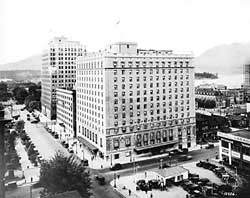
Built in 1927 in the heart of downtown Vancouver, The Hotel Georgia was the swankiest spot in the city, and housed many famous guests over the years, particularly in the music scene as Hornby Street half a block away was home to all the top music clubs in town. Elvis Presley, Louis Armstrong, Nat King Cole, and The Rat Pack were just some of the guests through to the 1960's, around the time that Vancouver stopped being part of the regular big tour schedule for major artists. The Hotel Georgia was also the only hotel in Vancouver at the time that allowed people of both "colours" to stay, mingle, and yes, even drink together in the same bar, making it home in particular to The Rat Pack every time they toured here.
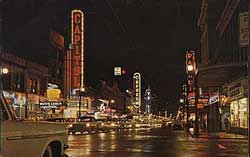
Vancouver in the 1950's was a haven of jazz and burlesque, particularly at the top club in the city, The Cave, which was the first to be granted a legal liquor license. The shows were famously elaborate and Vancouver crowds were famously difficult to arouse. Las Vegas showgirl productions were actually audience-tested first at The Cave before being brought to the strip. Another connection to Las Vegas that many don't realize is that Vancouver was actually the "Neon City" first, and in 1953 had over 19,000 neon signs before city laws prohibited their use in the 1960's. That many lights reflecting off rain-soaked streets was a much talked-about sight to see. Famous jazz acts always passed through Vancouver and played with The Cave's house band, and many also played inside The Hotel Georgia itself, which until 1941 was also home to a music radio station that broadcast from the top floor live shows that were happening in the jazz clubs downstairs.


Let's fast forward again, when The Hotel Georgia was closed in 2006 for renovations, then finally reopened in 2011 as the Rosewood Hotel Georgia, and I can easily say that it is one of the coolest places in the city. Aside from its beautiful design, including historic mahogany walls and marble flooring in the lobby, and one of the country's largest private collections of Canadian art, it has three (soon to be four) places to drink. The 1927 Lobby Lounge, the manager of which was the late Derek Vanderheide, is a well-stocked and well-staffed bar sitting up a few steps in the corner of the lobby, offering sophisticated drinks and high-end spirits. Reflections is a patio lounge on the fourth floor of the hotel with cabanas, fire pits, views of the city skyline, and a much more summer-friendly drink list. Later this year, a music and dance club called Prohibition will be opening in the basement of the hotel, featuring a lot of jazz and another craft cocktail bar, both in honour of the hotel's 1920's roots. Lastly, Hawksworth Bar & Lounge, recently cleaning up at the Vancouver Magazine Awards winning multiple restaurant and bar awards, is the flagship of the hotel with amazing food, and a very solid bar program run by Brad Stanton, Vice-President of the Canadian Professional Bartender's Association. The menu has some very solid, creative but simple originals, and a selection of classics as chosen by each of the bar staff by name. The spirit selection is great here as well, even featuring a handful of mezcals, which is happening more now in Vancouver but was previously unheard of and is still uncommon. If you find even 10 minutes to stop by, the menu features small-sized house aperitifs and digestifs that are perfect for starting or finishing your evening.

On to the cocktail!

The Hotel Georgia cocktail is speculated to have been created at the hotel itself in the 1940's, but it isn't until 1951 that it is first mentioned in print, in Ted Saucier's book, "Bottom's Up" a fun, and very dense collection of over 200 cocktails along with some risqué illustrations. The book is home to a lot of bad drinks, a lot of celebrity drinks, a few really great classics, including The Last Word, and a few forgotten gems, like The Hotel Georgia (complete with a sketch of a naked woman).
The 1951 version is much too sweet and perfume-y, which likely has a lot to do with what the ingredients were like at the time, using 2 ounces of gin, 1 FULL ounce of orgeat, ½ ounce of lemon juice, 10 drops of orange blossom water, and an egg white. I made this at home and could barely handle how sweet it is. Brad altered the recipe for today's tastes, reducing the orange blossom and orgeat, increasing the lemon, and choosing specifically Plymouth gin, "resulting in a silky, stimulating and balanced beauty of a drink to be true to the light, floral, and elegant style of the original." The garnish is what really sold Brad's version to me, as the spice of the nutmeg on your nose as you sip really cuts down the sweetness. It makes an excellent dessert cocktail at home, but if there are any bartenders reading this thinking of making it at your own bar, there is a new tradition: if you make a Hotel Georgia, you must serve it on a Hawksworth Hotel Georgia coaster, so ask for one and make it properly!

The Hotel Georgia

1.75 oz Plymouth Gin
0.75 oz lemon juice
0.5 oz Giffard orgeat
6 drops A. Monteux orange blossom water
1 egg white
Nutmeg


Combine ingredients, beginning with egg white, and dry shake. Add ice then shake vigorously for about 20 seconds. Double-strain the mixture into a cocktail glass and grate a little nutmeg onto the surface of the drink.

To pair with your Hotel Georgia from 1951, I'm going to come back to the Las Vegas and Rat Pack-Vancouver connections and go with Frank Sinatra. Specifically, I'm going with one of my favourite drinking songs (the one after which I in fact named my blog), "One For My Baby, And One More For The Road," from the 1943 musical, "The Sky's The Limit." Recorded more times than we can count, Frankie's are my favourites, the most famous of which is the 1958 one from his extremely sad "Only the Lonely" album. This one is my favourite overall, but since this drink is light and sweet, I'm going with his much happier first recording of it from 1947.


See you at the Hotel Georgia. Enjoy!


Originally published on www.shakestir.com by Rhett Williams


Photography:
Hotel Georgia in 1930 by Leonard Frank via Vancouver Archives 
Granville Street neon circa 1950's courtesy the Vancouver Heritage Society
"Bottom's Up" by Ted Saucier 
Hotel Georgia Cocktail from Hawksworth Restaurant in The Rosewood Hotel Georgia, Vancouver, by Rhett Williams


Thursday, 12 April 2012

Amaro April: "The Imperial Eagle" From Bourbon & Branch

Last month we saw a creative cocktail from Jayson Wilde, the general manager at Bourbon & Branch, in which he infused Maraschino liqueur with Meyer lemons, as well as using blood orange syrup, cinnamon, and a black pepper tincture. This month, Jayson is simplifying things a bit, but still uses spice and fruit to play with both the base spirit - this time bourbon - and the modifier, amaro Averna. There are again a lot of elements here - the basic idea is a bourbon sour in which he's using ginger syrup and Averna to sweeten instead of just sugar. He's also using a traditional silver or Ramos Fizz framework, with the sour, spirit, sugar, egg, and bubbles combination, this time using ginger beer instead of just plain soda. Add the two elements together, with a little extra aroma and presentation using peach bitters, and you have a tasty and complex drink.

You can check out Jayson's "Blood Lust" cocktail along with a small review of Bourbon & Branch on this Maraschino March post.

A note on ingredients...
You can get the Eagle Rare 10 Year at the BC Liquor Stores, and it will run you $60. It's $30 or so in the states, and it's an excellent choice for the money. It's made by the Buffalo Trace distillery, so their regular BT bourbon would be a suitable substitution if you have to; I would not use too sweet or soft of a bourbon here (like Maker's Mark). As for the ginger beer, be sure to get a beer and not a ginger ale, which is much sweeter and less ginger-y. Bundaberg is Australian and I've never seen it here, but many markets, liquor stores, Whole Foods, and Gourmet Warehouse all sell good substitutes. Fee's peach bitters can be picked up at Gourmet Warehouse for $8.

The Imperial Eagle

2 oz. Eagle Rare 10 Year Single Barrel Bourbon
1 oz. Lemon Juice
0.5 oz. Ginger Syrup
0.5 oz. Averna
0.5 oz. Egg White
0.75oz Bundaberg Ginger Beer 
1 dash of Fee's Peach Bitters

Shake ingredients with ice, strain into a Collins glass.
Add the ginger beer over top as a float, then add an extra dash of the peach bitters on top of the foam.

[[ See my post on amaro digestivos here ]]
[[ See my post on amaro aperivos here ]]
[[ See a buying guide for amaro here ]]

[[ See "The One Hit Wonder" from L'abattoir in Vancouver here ]]
[[ See "The Penny Farthing" from Pourhouse here ]]
[[ See an introduction to amaro  here ]]
[[ See "Sevilla" from Beretta here ]]
[[ See "Fallow Grave" from the Toronto Temperance Society here ]]
[[ See "The Black Prince" from Phil Ward here ]]
[[ See "Bad Apple" and "Jackson Ward" from Amor y Amargo here ]]
[[ See "The Four Horsemen" from Jay Jones at Shangri-La here ]]
[[ See Colin MacDougall from Blue Water Cafe here ]]
[[ See "Debbie Don't" from Dutch Kills here ]]
[[ See "Welcome to the Dark Side" from Cin Cin here ]]
[[ See "Foolish Games" from Russell Davis here ]]
[[ See "Intro To Aperol" from Audrey Saunders at Pegu Club here ]] 

Tuesday, 7 February 2012

Fernet February - "Pandemonium" from Veneto Tapa Lounge

Welcome to cocktail #2 for Fernet February!
This next one comes from a fantastic bar/restaurant in Victoria with a very talented bar staff - Veneto. The menu is exciting, separated into originals, twisted classics, sparkling, and other small sections (including a "de lux" section with a $50 Sazerac using Sazerac 18 year-old rye). There are numerous originals on the menu that are delicious, creative, and worth the trip if you're in the area.
You can see my review of Veneto here.

They have been incredibly friendly and excited when it comes to this endeavor of mine and have contributed an original recipe from Katie McDonald (the skilled one mentioned in my review) in a flip style using a very interesting syrup infused with black pepper and vanilla bean. It is recommended as a later-in-the-evening cocktail, as it "packs a wallop."
A 'flip' style cocktail was a drink in the late 1600's using beer, sugar, and rum, and was served hot, making the drink foam. Over time the beer and heat were dropped, and eggs were incorporated to create the foam. Jerry Thomas's book "How To Mix Drinks" from 1862 was the first listed to add eggs to a 'flip,' and the style became very popular before being lost in the dark ages of cocktaildom (namely, the 1980's and 90's), but is often popping up nowadays at savvy and classic-minded bars. Cocktails often contain egg white (such as a Clover Club, or a traditional Whiskey Sour), but flips contain the entire egg. This primarily adds texture and viscosity, but also a slight flavour. The traditional way to use egg in a cocktail is to shake the ingredients without ice first, then add ice and shake again. This will give a full cocktail foam and texture to the drink. You can see a great example of this with the Don't Mind If I Do cocktail.
Flips make perfect winter drinks, and will also work as a perfect finish to your evening.

Representing Victoria, B.C., is Katie McDonald from the wonderful Veneto Tapa Lounge with her Fernet cocktail, Pandemonium: 

Pandemonium

1.5 oz Wray and Nephew Overproof Rum
3/4 oz Fernet Branca
1/2 oz Black Pepper and Vanilla Bean syrup
1 whole egg
Orange Zest

Combine all ingredients except orange in a cocktail shaker and shake briskly. 

Fine-strain into a chilled wine glass. Garnish with the orange zest.

If you find yourself in Victoria, you simply must stop by Veneto and try their original cocktails.

Please share your favourite Fernet cocktails, or your original creations below in the comments section!
And, be sure to stop by again in a few days for another original creation using Fernet by another local bar...

[[ see the Fernet February introduction here ]]
[[ see the "Gastown Swizzle" from L'Abattoir here ]]
[[ see the "Dark and Fernet-y" from Rob Roy here ]]
[[ see the "Chinatown Sour" from The Keefer here ]]
[[ see "The Bittercup" from Pourhouse here ]]
[[ see "The Vested Bartender" from Boneta here ]]
[[ see "The Parliament" from The Diamond here ]]
[[ see "Parliament Hill" from The Hideout here ]]
[[ see "The Lucky Lady" from The Refinery here ]]
[[ see "The Denny Triangle" from Jamie Boudreau / Canon here ]]

Monday, 9 January 2012

Don't Mind If I Do

Sticking with a theme here, this is another modern cocktail using egg white. It also uses one of my absolute favourite gins - Hendrick's - and possibly the most delicious thing you will ever put in your mouth - St. Germain liqueur. As well, we will be using a kind of bitters that was at one time popular then disappeared for ages before the saints at Bitter Truth made a new recipe (which has resulted in a lot of mixologists bringing back some forgotten cocktails and trying some new and fantastic ones) - celery bitters. It may sound strange to some of you, but it's really delicious and pairs extremely well with gin, particularly very herbal, floral, and vegetal ones like Hendrick's or Martin Miller's.
This drink was created by Christopher Flett at Pourhouse in Vancouver, which has some of the best bartenders I've met, including from my travels to San Francisco, Seattle, and Las Vegas. Christopher mentioned that he modeled the cocktail after something shown to him by legend Murray Stenson, previously from Zig Zag in Seattle, who was seen as one of the best modern bartenders in North America (he is supposedly the one who rediscovered and popularized the Last Word cocktail).
If you find yourself at Pourhouse, I highly recommend you try this one out, and if you get your hands on some St. Germain and celery bitters, you simply must try it at home too. Here's the Don't Mind If I Do:

1.5 oz Hendrick's Gin
3/4 oz fresh lime juice
1/2 oz St. Germain liqueur
1/2 oz simple syrup
2-3 dashes Celery Bitters
1 egg white

Shake all ingredients vigorously without ice first, then add ice and shake again. Strain into a chilled rocks glass. 

Tips

We discussed egg whites briefly last post with the Petruchio, and I will mention another very important thing here: add the egg white to your shaker FIRST. This way, if you accidentally get some yolk or egg shells into your mix, you don't have to discard some very expensive and tasty alcohol. A good tip in general is to add your ingredients from cheapest to most expensive, so if there are any screw ups early on, you're only wasting the cheapest stuff.
If you are still worried about having egg white (and you shouldn't be) this cocktail is still amazing without, but will balance differently and won't have the intended dessert-like consistency. 

As for the ingredients, I am proud to announce that there IS actually a place in Vancouver to get bitters!! I only found it recently, had a mixology-gasm, sent some excited pictures to my like-minded brother, then promptly bought some new bottles. This magical place, which also has some great syrups, flavoured waters (like rose and orange), organic foods, and awesome cookware, is called Gourmet Warehouse and it's on Hastings Street right next to the Waldorf. Go there! You can get Fee's Brothers peach bitters, for example, for $8. Bitters other than Angostura are also available at Legacy Liquor Store, and The Bitter Truth can also be found at some Whole Foods locations. Theirs is the best of the celery bitters in my opinion, but other brands such as Fee's offer one as well.
St. Germain is $55 at the B.C. liquor store and I can plainly say mine is worth every penny. I've gone through half a bottle in almost half a year, so it will last you (though I speculate that I use it less than I'd like to because I spent so much on it), and I'm not exaggerating how delicious it is. Sometimes I open the bottle so my lady and I can just smell it. She often says that she would "drink dish detergent if it was mixed with St. Germain." If you get to the States, I saw it around for $28-40 (and you Alberta folks can pick it up for about $45).
As for the gin, you can check out my blog on buying gin here, but I will make a couple notes: Hendrick's is $45 in B.C. so is a real treat, and my other suggestion of Martin Miller's runs $50 or so. If you're not ready to make that kind of commitment, I suggest going with Tanqueray. The cocktail really tastes like a delicious garden, so you want to use a gin that has a lot of vegetable and herb notes like Tanqueray, whereas Beefeater would be too light and citrusy, one like Bombay is much too perfumey, and Gordon's is too boring. Tanqueray really is the gin that most of the time will step in when you can't get the special, expensive ones (and this is a compliment, not a slight to Tanqueray).

Enjoy!